Digital programme booklet
-
Dvořák
Symphony No. 7 in D minor, Op. 70
1. Allegro maestoso
2. Poco adagio
3. Scherzo. Vivace
4. Finale. AllegroBartók
Bluebeard’s Castle, Op. 11, Sz. 48, BB 62Featuring:
Jennifer Johnston – mezzo-soprano
Gerald Finley – bass-baritone
Royal Concertgebouw OrchestraConductor:
Klaus Mäkelä
-
The world-renowned Royal Concertgebouw Orchestra has a history inextricably linked with the celebrated Amsterdam concert hall with which it shares its name. The ensemble was founded in 1888 and has been led by some of the greatest conductors of all time over the course of nearly 140 years. Willem Kes, Willem Mengelberg, Eduard van Beinum, Eugen Jochum, Bernard Haitink, Riccardo Chailly, Mariss Jansons and Daniele Gatti have all upheld the highest standards with regard to the orchestra’s concerts and recordings.
One of the most prestigious orchestras in the world:
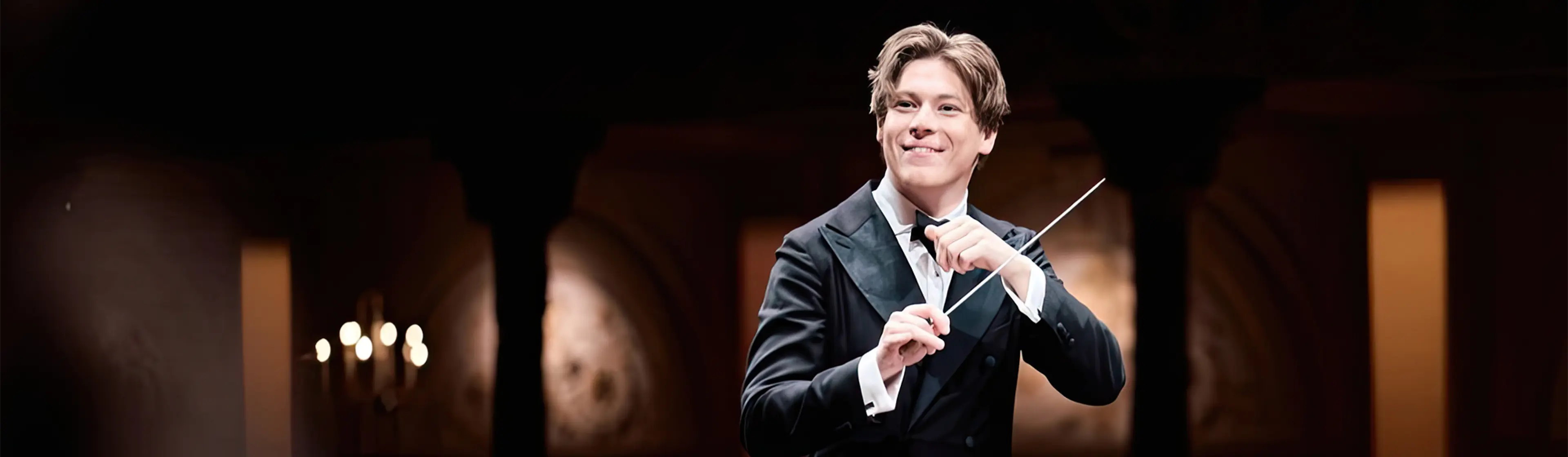
Klaus Mäkelä (b. 1996) first appeared with the Dutch orchestra as a guest in 2020. The Finnish conductor studied with the legendary pedagogue Jorma Panula at the Sibelius Academy in Helsinki. He served as chief conductor of the Oslo Philharmonic from 2020 to 2026 and has been music director of the Orchestre de Paris since 2021. He begins his tenure as chief conductor of the Royal Concertgebouw Orchestra in 2027 – the same year in which he will take up the position of music director of the Chicago Symphony Orchestra.
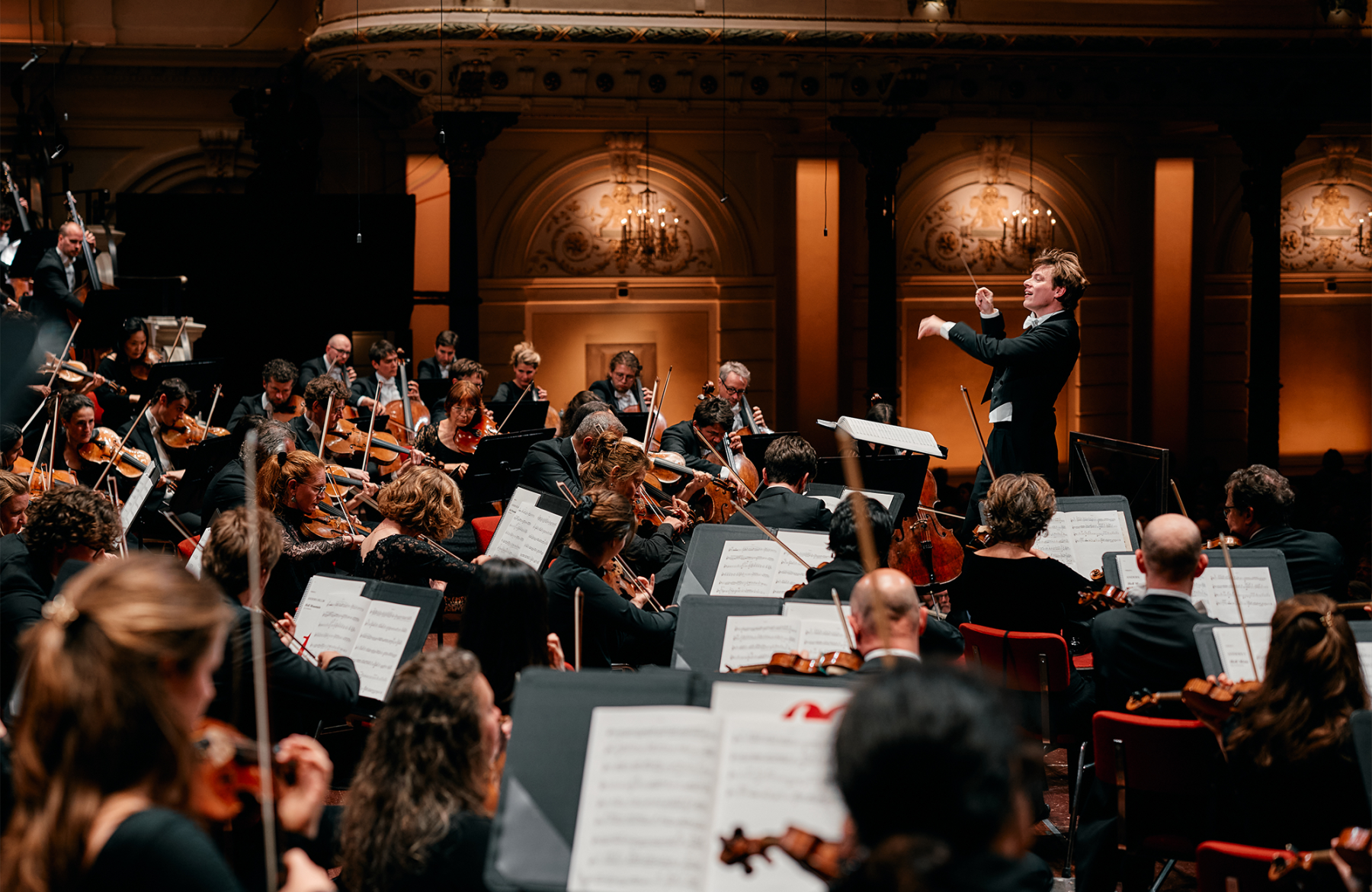
© Eduardus Lee
The evening’s two soloists, the British mezzo-soprano Jennifer Johnston and the Canadian bass-baritone Gerald Finley, are equally at home on the operatic stage and in concert. Both artists possess rich, versatile repertoires and perform both classical masterpieces and more recent works with equal enthusiasm. They are both frequent collaborators with the world’s finest conductors, and returning guests of the top opera houses and festivals.
Antonín Dvořák’s (1841–1904) Symphony No. 7 was composed in 1884–85. The four-movement work, written on a British commission, marks the beginning of the Czech composer’s most mature symphonic period. While Brahms’s influence can occasionally still be felt, the music is already dominated by Dvořák’s own unmistakable style. The London premiere, conducted by the composer himself, was met with great acclaim.
Béla Bartók (1881–1945) wrote his one-act mystery opera Bluebeard’s Castle in 1911 to a symbolist-Secessionist libretto by one of his contemporaries, the poet Béla Balázs (1884–1949). The work received its premiere in 1918. This redemption drama, filled with secrets and prohibitions, with its tragic and pessimistic portrayal of the impossibility of genuine connection between man and woman, stands at the stylistic crossroads of late Romanticism, Impressionism and folk music.
The fifth door opens:
-
Dvořák
Symphony No. 7 in D minor, Op. 70
1. Allegro maestoso
2. Poco adagio
3. Scherzo. Vivace
4. Finale. AllegroBartók
Bluebeard’s Castle, Op. 11, Sz. 48, BB 62Featuring:
Jennifer Johnston – mezzo-soprano
Gerald Finley – bass-baritone
Royal Concertgebouw OrchestraConductor:
Klaus Mäkelä
-
The world-renowned Royal Concertgebouw Orchestra has a history inextricably linked with the celebrated Amsterdam concert hall with which it shares its name. The ensemble was founded in 1888 and has been led by some of the greatest conductors of all time over the course of nearly 140 years. Willem Kes, Willem Mengelberg, Eduard van Beinum, Eugen Jochum, Bernard Haitink, Riccardo Chailly, Mariss Jansons and Daniele Gatti have all upheld the highest standards with regard to the orchestra’s concerts and recordings.
One of the most prestigious orchestras in the world:
Klaus Mäkelä (b. 1996) first appeared with the Dutch orchestra as a guest in 2020. The Finnish conductor studied with the legendary pedagogue Jorma Panula at the Sibelius Academy in Helsinki. He served as chief conductor of the Oslo Philharmonic from 2020 to 2026 and has been music director of the Orchestre de Paris since 2021. He begins his tenure as chief conductor of the Royal Concertgebouw Orchestra in 2027 – the same year in which he will take up the position of music director of the Chicago Symphony Orchestra.
© Eduardus Lee
The evening’s two soloists, the British mezzo-soprano Jennifer Johnston and the Canadian bass-baritone Gerald Finley, are equally at home on the operatic stage and in concert. Both artists possess rich, versatile repertoires and perform both classical masterpieces and more recent works with equal enthusiasm. They are both frequent collaborators with the world’s finest conductors, and returning guests of the top opera houses and festivals.
Antonín Dvořák’s (1841–1904) Symphony No. 7 was composed in 1884–85. The four-movement work, written on a British commission, marks the beginning of the Czech composer’s most mature symphonic period. While Brahms’s influence can occasionally still be felt, the music is already dominated by Dvořák’s own unmistakable style. The London premiere, conducted by the composer himself, was met with great acclaim.
Béla Bartók (1881–1945) wrote his one-act mystery opera Bluebeard’s Castle in 1911 to a symbolist-Secessionist libretto by one of his contemporaries, the poet Béla Balázs (1884–1949). The work received its premiere in 1918. This redemption drama, filled with secrets and prohibitions, with its tragic and pessimistic portrayal of the impossibility of genuine connection between man and woman, stands at the stylistic crossroads of late Romanticism, Impressionism and folk music.
The fifth door opens: