Digital programme booklet
-
J. S. Bach
Passacaglia and Fugue in C minor, BWV 582Saint-Saëns
Danse macabre, Op. 40Vierne
Organ Symphony No. 6, Op. 59 – FinalRavel
Le Tombeau de Couperin, M. 68 – Rigaudon, Menuet, ToccataDebussy
Petite Suite, L. 65 – Cortège, BalletFauré
Dolly Suite, Op. 56 – Berceuse, Mi-a-ou, Le jardin de Dolly Kitty-valse, Tendresse, Le pas espagnolPoulenc
Suite Française, FP 80Patrice Caratini
La valse des crayonsPiazzolla
Invierno porteñoPiazzolla
Muerte del ángelFeaturing:
Vincent Dubois – organ
Marie-Andrée Joerger – accordion -
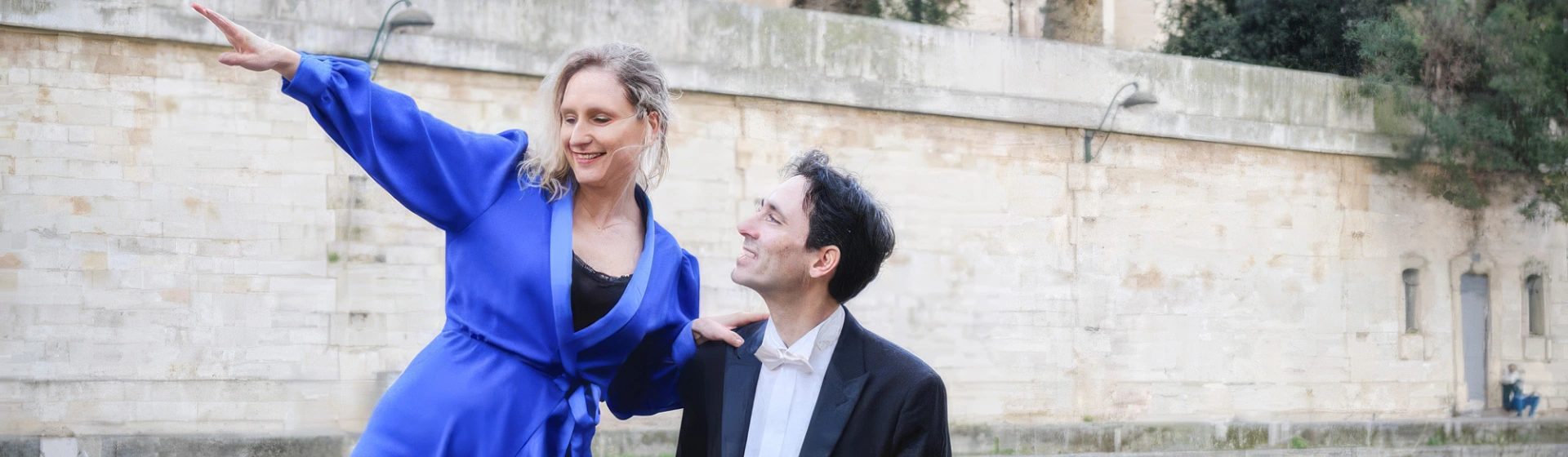
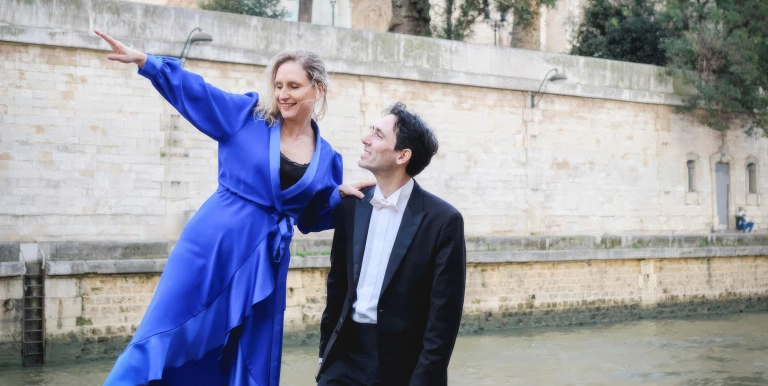
The pairing of the organ and the classical accordion may at first seem surprising, yet organist Vincent Dubois and accordionist Marie-Andrée Joerger maintain that this unique combination has the power to cast familiar classical works in an entirely new light. The central motif of their Budapest concert is dance, and their repertoire extending from Bach to Piazzolla showcases the versatility of both instruments.
A little taste: Piazzolla, Fauré, Debussy
Although the histories, roles and repertoires of the organ and the accordion differ, they are united by the fact that both are aerophones powered by air. The accordion is an extraordinarily flexible and adaptable instrument capable of conveying the subtlest nuances, while the organ creates a monumental, orchestral soundscape. When played together, the accordion often takes on the role of a soloist, with the organ enriching the melody with its lively colouration. “Achieving balance between the two demands great sensitivity and attentiveness,” say the artists, who have considerable experience in arranging classical works for this combination of instruments. They believe that any interpretation should not aim to imitate the original pieces but rather to highlight the distinctive qualities of the two instruments and create a unique reading that raises the works to a new plane. “Four-hand piano pieces work particularly well in this configuration, but even a Bach chorale can be transcribed,” notes the titular organist of Notre-Dame de Paris. “Performing Romantic works, however, represents a serious challenge, as the accordion lacks the piano’s natural decay, yet it is still capable of producing lyricism and delicate dynamic shadings,” adds Marie-Andrée Joerger.
Vincent Dubois possesses outstanding improvisational skills; alongside classical and contemporary works, he enjoys playing lesser-known pieces and insists that the organ is far more than a church instrument – it can produce rhythmic, percussive effects as well. This is precisely why the dance music selected for the Müpa Budapest concert sounds so exceptionally beautiful on it. Marie-Andrée Joerger describes the accordion as a “chameleon” capable of assuming virtually any musical character, from fast and dynamic to soft and lyrical. The accordionist says that her soul dances when she plays. Their joint work presents classical music listeners with a fresh, creative approach that builds a bridge between tradition and rediscovery.
-
J. S. Bach
Passacaglia and Fugue in C minor, BWV 582Saint-Saëns
Danse macabre, Op. 40Vierne
Organ Symphony No. 6, Op. 59 – FinalRavel
Le Tombeau de Couperin, M. 68 – Rigaudon, Menuet, ToccataDebussy
Petite Suite, L. 65 – Cortège, BalletFauré
Dolly Suite, Op. 56 – Berceuse, Mi-a-ou, Le jardin de Dolly Kitty-valse, Tendresse, Le pas espagnolPoulenc
Suite Française, FP 80Patrice Caratini
La valse des crayonsPiazzolla
Invierno porteñoPiazzolla
Muerte del ángelFeaturing:
Vincent Dubois – organ
Marie-Andrée Joerger – accordion -
The pairing of the organ and the classical accordion may at first seem surprising, yet organist Vincent Dubois and accordionist Marie-Andrée Joerger maintain that this unique combination has the power to cast familiar classical works in an entirely new light. The central motif of their Budapest concert is dance, and their repertoire extending from Bach to Piazzolla showcases the versatility of both instruments.
A little taste: Piazzolla, Fauré, Debussy
Although the histories, roles and repertoires of the organ and the accordion differ, they are united by the fact that both are aerophones powered by air. The accordion is an extraordinarily flexible and adaptable instrument capable of conveying the subtlest nuances, while the organ creates a monumental, orchestral soundscape. When played together, the accordion often takes on the role of a soloist, with the organ enriching the melody with its lively colouration. “Achieving balance between the two demands great sensitivity and attentiveness,” say the artists, who have considerable experience in arranging classical works for this combination of instruments. They believe that any interpretation should not aim to imitate the original pieces but rather to highlight the distinctive qualities of the two instruments and create a unique reading that raises the works to a new plane. “Four-hand piano pieces work particularly well in this configuration, but even a Bach chorale can be transcribed,” notes the titular organist of Notre-Dame de Paris. “Performing Romantic works, however, represents a serious challenge, as the accordion lacks the piano’s natural decay, yet it is still capable of producing lyricism and delicate dynamic shadings,” adds Marie-Andrée Joerger.
Vincent Dubois possesses outstanding improvisational skills; alongside classical and contemporary works, he enjoys playing lesser-known pieces and insists that the organ is far more than a church instrument – it can produce rhythmic, percussive effects as well. This is precisely why the dance music selected for the Müpa Budapest concert sounds so exceptionally beautiful on it. Marie-Andrée Joerger describes the accordion as a “chameleon” capable of assuming virtually any musical character, from fast and dynamic to soft and lyrical. The accordionist says that her soul dances when she plays. Their joint work presents classical music listeners with a fresh, creative approach that builds a bridge between tradition and rediscovery.