Digital programme booklet
-
Dohnányi
Six Pieces for Piano, Op. 41 – No. 5 Ländler, No. 4 CascadeDelibes–Dohnányi
Waltz from CoppeliaR. Strauss
Sonata in F major for Cello and Piano, Op. 6
1. Allegro con brio
2. Andante ma non troppo
3. Finale – Allegro vivoBeethoven
Trio in B-flat major, Op. 11
1. Allegro con brio
2. Adagio
3. Tema con variazioniFeaturing:
Ilona Prunyi – piano
Miklós Perényi – cello
Ádám Banda – violin -
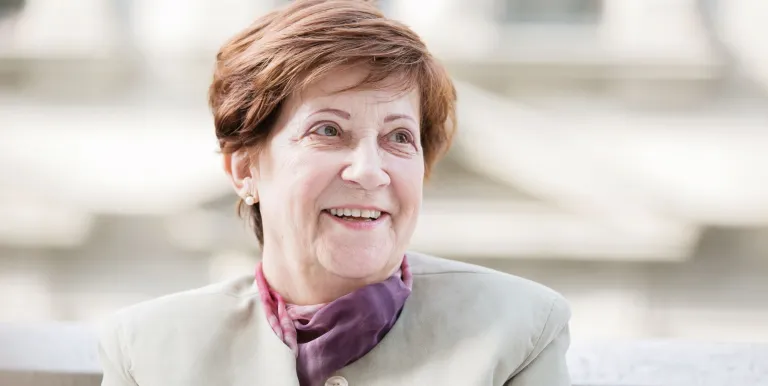
There is hardly anyone in Hungarian musical life who do not know Ilona Prunyi, or who are unaware of what an exceptional artist and teacher she is. A pianist with a vast repertoire, she is able to immerse herself in the music just as much when working as a répétiteur or correcting deeply ingrained faults in her students’ piano playing as she does in a solo recital or as the soloist in a piano concerto. Her birthday concert promises to be a multi-layered celebration. First and foremost, this will of course be her own personal celebration, but it is also a celebration of chamber music – an art form that the 19th century endowed with the attributes of representative art, transforming it from aristocratic entertainment and an economical, witty form of private music-making in bourgeois homes into a concert-hall genre.
Ludwig van Beethoven’s early chamber works served as lively channels of social and professional communication. The Gassenhauer Trio (Op. 11), for example, made direct reference to a fashionable dramma giocoso of the day, which was premiered at the Vienna Hoftheater in 1797; Beethoven used one of its themes for the variation sequence in the trio’s finale. The piece also became the basis for a different kind of musical dialogue: on one occasion Beethoven was irritated by how little inventive improvisation one of his pianist colleagues was able to produce from his work. In response, he delivered a brilliantly condescending improvisation that thoroughly embarrassed his rival. By the end of the century, however, chamber music offered opportunities for far more disciplined forms of expression. A successful work could serve equally as the jewel in the crown of an established composer’s oeuvre or as a young artist’s professional calling card. Richard Strauss’s Cello Sonata in F major belongs in the latter category; the composer clearly used it to highlight his emerging portfolio in the early 1880s.
Ilona Prunyi – the central figure of the Hungarian Dohnányi renaissance:
In addition, Prunyi will perform three piano pieces by Ernő Dohnányi as a distinguished expert in the composer’s oeuvre. For the chamber works, she will be joined by two colleagues from the Liszt Academy: Miklós Perényi, the doyen of Hungarian cellists, and violinist Ádám Banda.
-
Dohnányi
Six Pieces for Piano, Op. 41 – No. 5 Ländler, No. 4 CascadeDelibes–Dohnányi
Waltz from CoppeliaR. Strauss
Sonata in F major for Cello and Piano, Op. 6
1. Allegro con brio
2. Andante ma non troppo
3. Finale – Allegro vivoBeethoven
Trio in B-flat major, Op. 11
1. Allegro con brio
2. Adagio
3. Tema con variazioniFeaturing:
Ilona Prunyi – piano
Miklós Perényi – cello
Ádám Banda – violin -
There is hardly anyone in Hungarian musical life who do not know Ilona Prunyi, or who are unaware of what an exceptional artist and teacher she is. A pianist with a vast repertoire, she is able to immerse herself in the music just as much when working as a répétiteur or correcting deeply ingrained faults in her students’ piano playing as she does in a solo recital or as the soloist in a piano concerto. Her birthday concert promises to be a multi-layered celebration. First and foremost, this will of course be her own personal celebration, but it is also a celebration of chamber music – an art form that the 19th century endowed with the attributes of representative art, transforming it from aristocratic entertainment and an economical, witty form of private music-making in bourgeois homes into a concert-hall genre.
Ludwig van Beethoven’s early chamber works served as lively channels of social and professional communication. The Gassenhauer Trio (Op. 11), for example, made direct reference to a fashionable dramma giocoso of the day, which was premiered at the Vienna Hoftheater in 1797; Beethoven used one of its themes for the variation sequence in the trio’s finale. The piece also became the basis for a different kind of musical dialogue: on one occasion Beethoven was irritated by how little inventive improvisation one of his pianist colleagues was able to produce from his work. In response, he delivered a brilliantly condescending improvisation that thoroughly embarrassed his rival. By the end of the century, however, chamber music offered opportunities for far more disciplined forms of expression. A successful work could serve equally as the jewel in the crown of an established composer’s oeuvre or as a young artist’s professional calling card. Richard Strauss’s Cello Sonata in F major belongs in the latter category; the composer clearly used it to highlight his emerging portfolio in the early 1880s.
Ilona Prunyi – the central figure of the Hungarian Dohnányi renaissance:
In addition, Prunyi will perform three piano pieces by Ernő Dohnányi as a distinguished expert in the composer’s oeuvre. For the chamber works, she will be joined by two colleagues from the Liszt Academy: Miklós Perényi, the doyen of Hungarian cellists, and violinist Ádám Banda.