Digital programme booklet
-
Cast
Nosferatu: Daichi Uematsu
Mina Murray: Lea Napsugár Joó
Jonathan Harker, Mina’s betrothed: Richard Szentiványi
Lucy Westenra, Mina’s friend: Eszter Adria Herkovics
Siamese beings: Eszter Kovács, Adrienn Matuza, Luka Dimic, Bálint Sebestyén
Demons: Tetiana Baranovska, Diána Gyurmánczi, Franciska Nagy, Chaewon Park, Barbara Tüű
Human beings: Melinda Berzéki, Margarida Filipe, Gerda Guti, Tatiana Shipilova, Rebeka Szendrey, Nikolas Askonidis, Borna Cicak, Patrik Engelbrecht, Máté Gémesi, Thales Henrique, Luigi Iannone, Zoltán Jekli, Joāo Oliveira, Ábel Ónódy, Levente Puczkó-Smith
Children: Diána Akaró, Hunor Bercel Benke, Erika Finta, Abigél Gyarmati, Zente Kada Horváth, Panka Luca Nagy, Katalin Szeredi, Sámuel Szeredi, Hanga Teiszler – ballet students of the Széchenyi István University’s Primary School, High School and College for Dance and Fine ArtsCreators
Assistants: Levente Bajári, Krisztina Szőllősi
Set designer: Lajos Katavics, Ibolya Váray
Costume designer: Gabi Győri
Lighting designer: Ferenc Stadler
Music: montage
Dramaturg: Alexandra Csepi
Choreographer: László VelekeiThe performance is recommended for those aged 12 and over.
Due to the use of strobe lighting and striking visual effects, the performance is not advised for anyone sensitive to intense lighting.
-
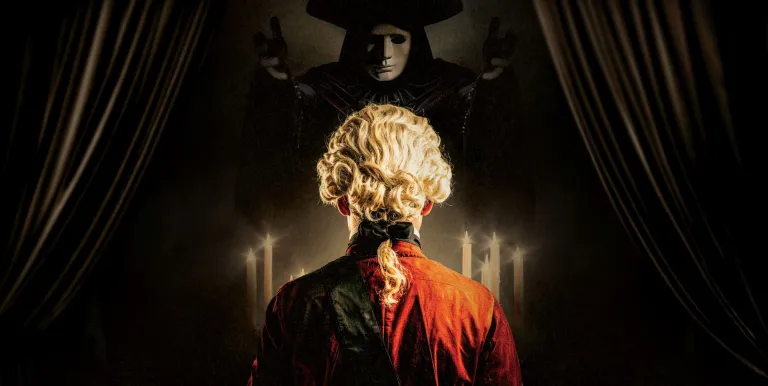
The myth of Nosferatu grew out of the darker, more “infectious” branch of the Dracula stories: here the vampire is not an elegant aristocrat, but a diseased foreign body that suddenly appears in society. Friedrich Wilhelm Murnau’s silent film of 1922 entitled Nosferatu – A Symphony of Horror was an unauthorized adaptation of Bram Stoker’s novel: instead of Dracula, Count Orlok arrives, bringing rats and the plague along with him. Although Stoker’s widow won a lawsuit ordering the destruction of the copies, the film survived and soon became a cornerstone of horror’s visual language.
Robert Eggers’ 2024 film is not a simple remake: it reconnects the story to the rotting, corporeal nightmare of folk vampire beliefs, while also emphasizing the perspective of the female protagonist. The film presents desire and danger in a suffocating atmosphere, suggesting that the monster lurks not only in the darkness. The story still works today because Nosferatu speaks of anxiety about contagion, fear of the outsider, and unspoken desire. The infection may be disease, possession, or the very longing that destroys order. And the myth keeps changing, because every era writes its own fears into it.
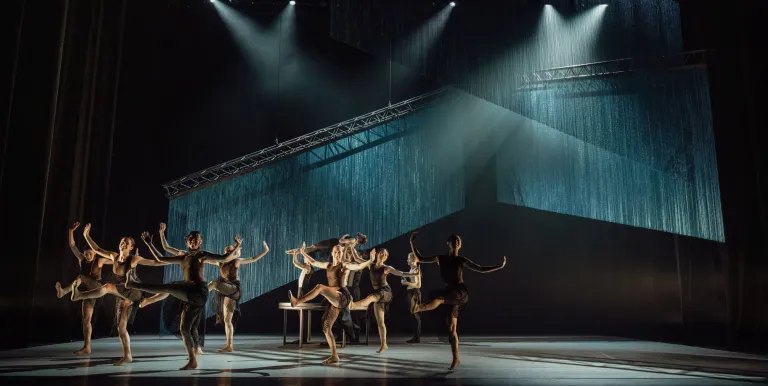
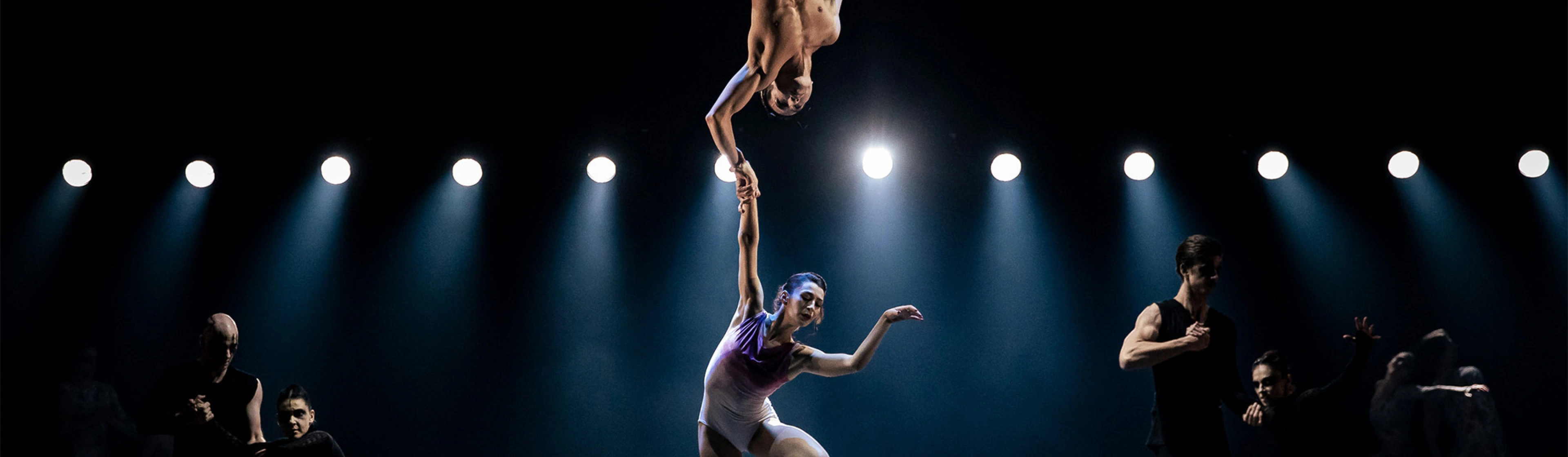
“The vampire’s movements, his ability to float like a sleepwalker, the sharp dramaturgy of light and shadow – these are fertile terrain for creators who think in terms of the language of the body,” says László Velekei, choreographer and director at the Ballet Company of Győr. “Although my genre is closer to fantasy, it’s true that everything that pushes me out of my comfort zone attracts me. In a work of horror, too, it is not gratuitous scares that interest me, but a well-constructed story that also affects me personally. Let’s be honest: in the safety and warmth of home, a bit of horror can sometimes be to everyone’s enjoyment.”
See the trailer of the production:
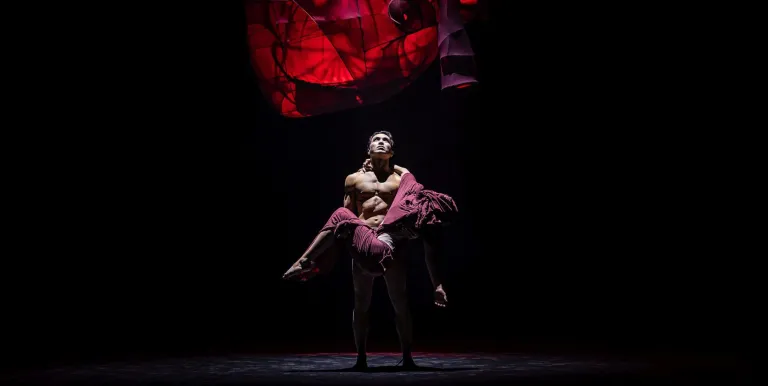
But what does the Ballet Company of Győr’s Nosferatu add to the continuously expanding mythology of the past hundred years and more? “At the heart of all my work is contemporary man; how he reflects on his environment, how he engages in dialogue with it. We are living in strange times: someone we feared as the arch-villain a few decades ago can become an object of adoration today. I’m thinking of how we endow even evil with personality traits that make it fallible. Our Nosferatu is not a cruel, bloodthirsty being; his desires are not primarily physical: he yearns for human existence. Immortality is a curse for Nosferatu: the knowledge that the moment lasts forever makes it lose its value. Accepting our desires and understanding ourselves – I can hardly imagine a more timely question today.”
-
Cast
Nosferatu: Daichi Uematsu
Mina Murray: Lea Napsugár Joó
Jonathan Harker, Mina’s betrothed: Richard Szentiványi
Lucy Westenra, Mina’s friend: Eszter Adria Herkovics
Siamese beings: Eszter Kovács, Adrienn Matuza, Luka Dimic, Bálint Sebestyén
Demons: Tetiana Baranovska, Diána Gyurmánczi, Franciska Nagy, Chaewon Park, Barbara Tüű
Human beings: Melinda Berzéki, Margarida Filipe, Gerda Guti, Tatiana Shipilova, Rebeka Szendrey, Nikolas Askonidis, Borna Cicak, Patrik Engelbrecht, Máté Gémesi, Thales Henrique, Luigi Iannone, Zoltán Jekli, Joāo Oliveira, Ábel Ónódy, Levente Puczkó-Smith
Children: Diána Akaró, Hunor Bercel Benke, Erika Finta, Abigél Gyarmati, Zente Kada Horváth, Panka Luca Nagy, Katalin Szeredi, Sámuel Szeredi, Hanga Teiszler – ballet students of the Széchenyi István University’s Primary School, High School and College for Dance and Fine ArtsCreators
Assistants: Levente Bajári, Krisztina Szőllősi
Set designer: Lajos Katavics, Ibolya Váray
Costume designer: Gabi Győri
Lighting designer: Ferenc Stadler
Music: montage
Dramaturg: Alexandra Csepi
Choreographer: László VelekeiThe performance is recommended for those aged 12 and over.
Due to the use of strobe lighting and striking visual effects, the performance is not advised for anyone sensitive to intense lighting.
-
The myth of Nosferatu grew out of the darker, more “infectious” branch of the Dracula stories: here the vampire is not an elegant aristocrat, but a diseased foreign body that suddenly appears in society. Friedrich Wilhelm Murnau’s silent film of 1922 entitled Nosferatu – A Symphony of Horror was an unauthorized adaptation of Bram Stoker’s novel: instead of Dracula, Count Orlok arrives, bringing rats and the plague along with him. Although Stoker’s widow won a lawsuit ordering the destruction of the copies, the film survived and soon became a cornerstone of horror’s visual language.
Robert Eggers’ 2024 film is not a simple remake: it reconnects the story to the rotting, corporeal nightmare of folk vampire beliefs, while also emphasizing the perspective of the female protagonist. The film presents desire and danger in a suffocating atmosphere, suggesting that the monster lurks not only in the darkness. The story still works today because Nosferatu speaks of anxiety about contagion, fear of the outsider, and unspoken desire. The infection may be disease, possession, or the very longing that destroys order. And the myth keeps changing, because every era writes its own fears into it.
“The vampire’s movements, his ability to float like a sleepwalker, the sharp dramaturgy of light and shadow – these are fertile terrain for creators who think in terms of the language of the body,” says László Velekei, choreographer and director at the Ballet Company of Győr. “Although my genre is closer to fantasy, it’s true that everything that pushes me out of my comfort zone attracts me. In a work of horror, too, it is not gratuitous scares that interest me, but a well-constructed story that also affects me personally. Let’s be honest: in the safety and warmth of home, a bit of horror can sometimes be to everyone’s enjoyment.”
See the trailer of the production:
But what does the Ballet Company of Győr’s Nosferatu add to the continuously expanding mythology of the past hundred years and more? “At the heart of all my work is contemporary man; how he reflects on his environment, how he engages in dialogue with it. We are living in strange times: someone we feared as the arch-villain a few decades ago can become an object of adoration today. I’m thinking of how we endow even evil with personality traits that make it fallible. Our Nosferatu is not a cruel, bloodthirsty being; his desires are not primarily physical: he yearns for human existence. Immortality is a curse for Nosferatu: the knowledge that the moment lasts forever makes it lose its value. Accepting our desires and understanding ourselves – I can hardly imagine a more timely question today.”