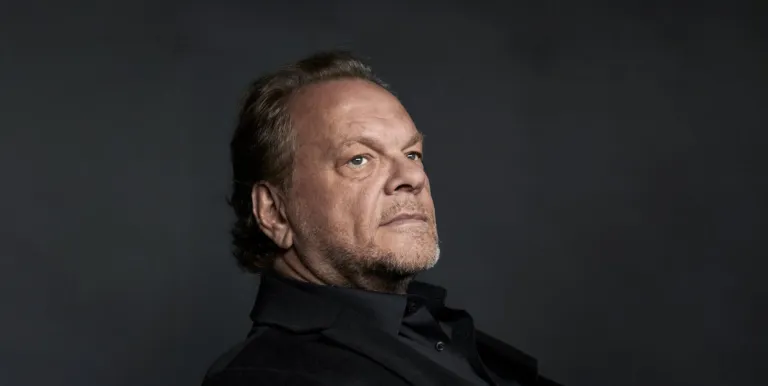


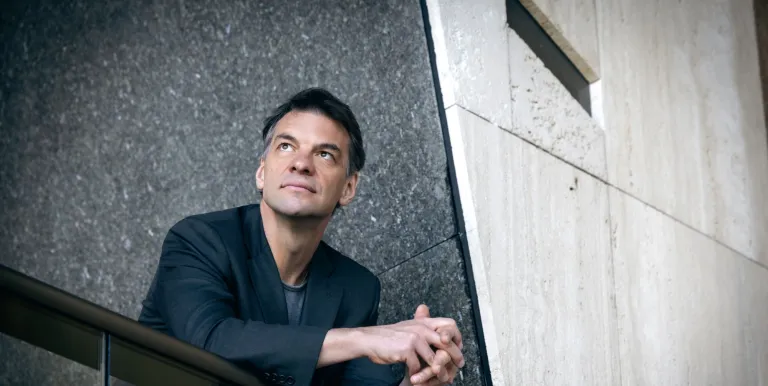
Creators:
Der fliegende Holländer was premiered in 1843 in Dresden. This was Wagner's first successful work, and one which remains a popular piece in the international opera repertoire today. The work is a continuation of the German national operatic tradition created by Weber, and its musical language is characteristic of the lyricism of German Romanticism. However, its structure is not built around closed numbers: the musical material is composed from beginning to end as a unified flow. Wagner knew the familiar 17th century legend of a sailor condemned to eternal wandering from the version by Heinrich Heine, which he recalled in conjunction the experience of a stormy sea voyage, thus inspiring him to write the opera. In the romantic tale of the hero in rebellion against the world and seeking redemption through a faithful woman, conductor Adam Fischer and director Balázs Kovalik reveal many of Wagner's personal traits and difficulties. Yet the tale also contains human issues so general that they are relevant to every era, including to people of today.
The director considers shedding light on the link between the great archetypes of old, such as Phaedra, Don Giovanni and the Dutchman, and the problems faced by modern people to be a particularly exciting aspect of contemporary theatre. In his reading, the Dutchman is the Artist – Wagner himself – who neither wishes nor is able to free himself from his own myth. This makes any relationship a hopeless one, including the future he longs for with Senta, the young woman who is fanatically obsessed with him and yearns for escape from small-town life. In the film, the creators and principals relate how their collaboration shaped the production, the most recent Wagner production to find a home as a semi-staged opera performance, in Müpa Budapest's Béla Bartók's National Concert Hall under the musical direction of Adam Fischer.
With English and Hungarian subtitles.
More information about the Wagner in Budapest Opera Festival here.
Presented by: Müpa Budapest
-
Parking is free of charge for visitors with tickets to any of our paid performances on the day of the performance. Upon entering the car park, you can either scan the barcode or QR code on your concert ticket, or take a parking ticket and validate it together with your concert ticket at one of the payment machines. Either option will enable you to exit through the gates operated by the number plate recognition system. We recommend that you plan to arrive at Müpa in good time, so that you can find the ideal parking spot quickly and without difficulty and arrive at your performance comfortably. The detailed parking policy of Müpa Budapest is available here.