-
Lan, princess from the Tang dynasty: Lucy Fitz Gibbon
Seikyo, Japanese prince, monk: Máté Herczeg
Prince from the Tang dynasty: Motoki Ishii
Emperor from the Tang dynasty: Apollo Wong
Shadow, ritualist, daughter of Tea Sage Lu Yu: Deng YingFeaturing:
Chenchu Rong, Boglárka Fábry, Jácint-Yuuka Hayashi-Kelemen – percussion
Hungarian National Male Choir (choirmaster: Richárd Riederauer)
Concerto BudapestConductor:
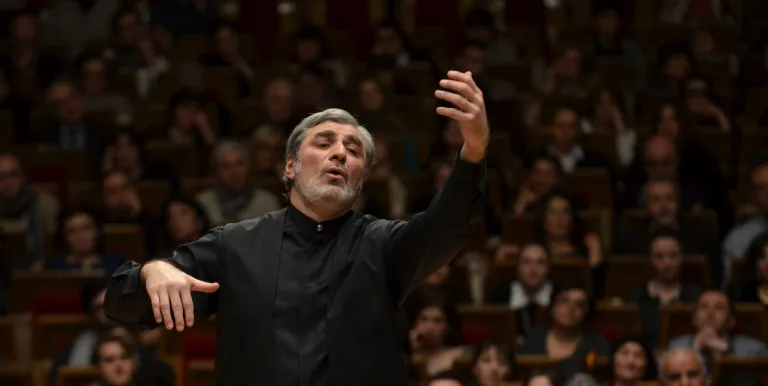
Tan Dun
Composer and librettist: Tan Dun
Co-author of the libretto: Xu Ying
Costumes: Xiaomin Mo
Animation: Dániel Besnyő
Artistic assistant: Katalin Daróczi
Artistic director: Sylvie Gábor
Director: Csaba KáelPresented under license from G. Schirmer, Inc., copyright owners.
-
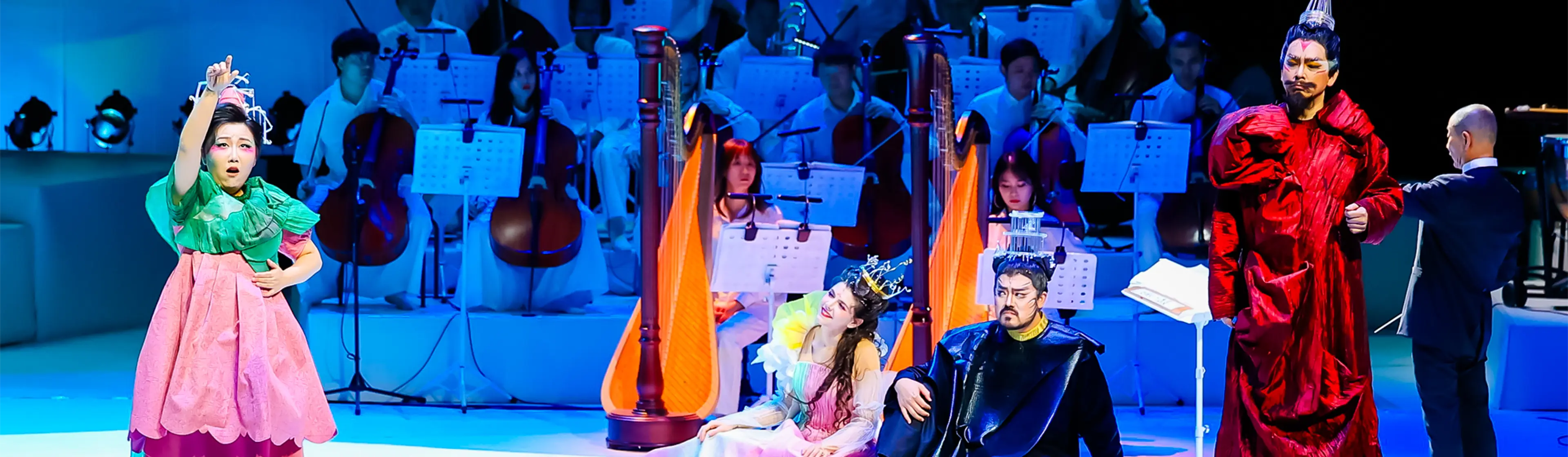
Tea: A Mirror of Soul, a three-act opera by Tan Dun, was commissioned by Tokyo’s Suntory Hall and premiered in 2002. Although the work has since been performed in traditional opera houses, its unique sonic world, atmosphere and visual concept as envisaged by the composer can be realised most naturally and authentically in a modern concert hall setting. The libretto was written by the composer himself together with the Chinese playwright Xu Ying, originally in Chinese. However, the opera is almost always performed in the English translation used at the premiere.
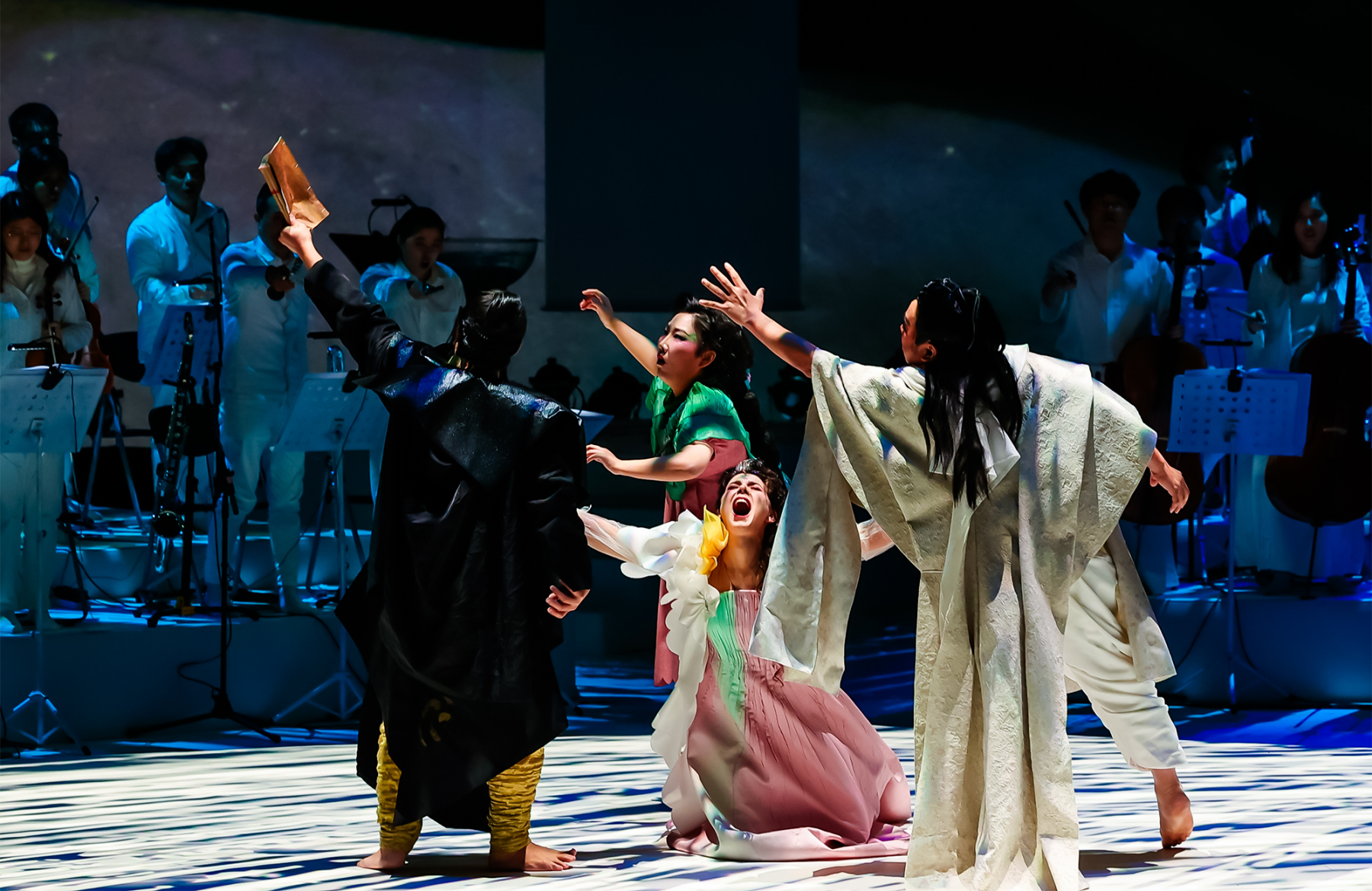
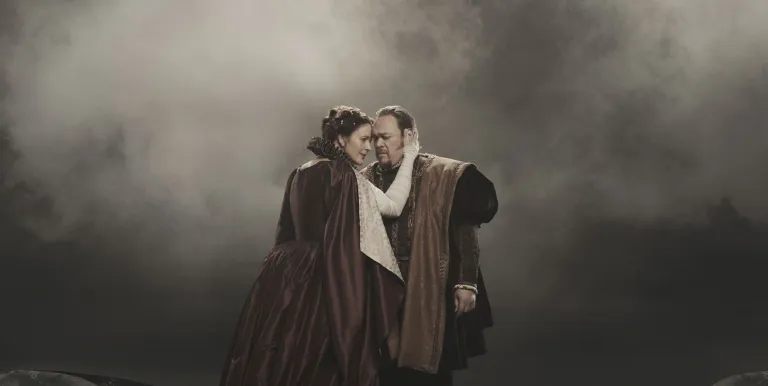
At the heart of the piece lies the tragic love story between Seikyo, who was born a Japanese prince, and the Chinese princess Lan, together with the profound philosophy and view of life embodied in the ritual of preparing and drinking tea, with its rich system of symbols. The shaping of the libretto and the entire spiritual world of the opera were profoundly influenced by what is considered the oldest known book on tea: Ch’a Ching (The Classic of Tea) by Lu Yu (733–804), written around 760. In ten chapters, the work discusses the origin of the tea plant, the myths associated with it, the practices of cultivation and harvesting, the preparation for brewing, the act of consumption itself, the differences between various regions, and much more. For example, the fourth chapter lists 28 utensils that are necessary for the preparation and subsequent consumption of the drink.
Lu Yu, Father of Chinese tea culture:
After the Tokyo premiere of Tea: A Mirror of Soul, a critic from the Tokyo Journal wrote: “What is initially striking is that in Tea the scenario, in which the composer took an active part, all the elements that surround mankind such as love, philosophy, art, the soul, feelings, tradition, religion and nature are blended into a whole with other elements such as the passage of time, abstraction and reality, directness and indirectness, universality and singularity, complexity and simplicity, difficulty and ease, symbol and metaphor... These elements are then combined with the simple but effective stage layout, the lighting, the costumes and above all Tan Dun's dynamic music to form great drama... Water, stone, earth and paper are used as musical instruments in this opera and are brought into surprising harmony with the orchestra, creating magical effects. Their sounds cross the borders of time and cultural difference and touch the essence of human life.”
-
Lan, princess from the Tang dynasty: Lucy Fitz Gibbon
Seikyo, Japanese prince, monk: Máté Herczeg
Prince from the Tang dynasty: Motoki Ishii
Emperor from the Tang dynasty: Apollo Wong
Shadow, ritualist, daughter of Tea Sage Lu Yu: Deng YingFeaturing:
Chenchu Rong, Boglárka Fábry, Jácint-Yuuka Hayashi-Kelemen – percussion
Hungarian National Male Choir (choirmaster: Richárd Riederauer)
Concerto BudapestConductor:
Tan Dun
Composer and librettist: Tan Dun
Co-author of the libretto: Xu Ying
Costumes: Xiaomin Mo
Animation: Dániel Besnyő
Artistic assistant: Katalin Daróczi
Artistic director: Sylvie Gábor
Director: Csaba KáelPresented under license from G. Schirmer, Inc., copyright owners.
-
Tea: A Mirror of Soul, a three-act opera by Tan Dun, was commissioned by Tokyo’s Suntory Hall and premiered in 2002. Although the work has since been performed in traditional opera houses, its unique sonic world, atmosphere and visual concept as envisaged by the composer can be realised most naturally and authentically in a modern concert hall setting. The libretto was written by the composer himself together with the Chinese playwright Xu Ying, originally in Chinese. However, the opera is almost always performed in the English translation used at the premiere.
At the heart of the piece lies the tragic love story between Seikyo, who was born a Japanese prince, and the Chinese princess Lan, together with the profound philosophy and view of life embodied in the ritual of preparing and drinking tea, with its rich system of symbols. The shaping of the libretto and the entire spiritual world of the opera were profoundly influenced by what is considered the oldest known book on tea: Ch’a Ching (The Classic of Tea) by Lu Yu (733–804), written around 760. In ten chapters, the work discusses the origin of the tea plant, the myths associated with it, the practices of cultivation and harvesting, the preparation for brewing, the act of consumption itself, the differences between various regions, and much more. For example, the fourth chapter lists 28 utensils that are necessary for the preparation and subsequent consumption of the drink.
Lu Yu, Father of Chinese tea culture:
After the Tokyo premiere of Tea: A Mirror of Soul, a critic from the Tokyo Journal wrote: “What is initially striking is that in Tea the scenario, in which the composer took an active part, all the elements that surround mankind such as love, philosophy, art, the soul, feelings, tradition, religion and nature are blended into a whole with other elements such as the passage of time, abstraction and reality, directness and indirectness, universality and singularity, complexity and simplicity, difficulty and ease, symbol and metaphor... These elements are then combined with the simple but effective stage layout, the lighting, the costumes and above all Tan Dun's dynamic music to form great drama... Water, stone, earth and paper are used as musical instruments in this opera and are brought into surprising harmony with the orchestra, creating magical effects. Their sounds cross the borders of time and cultural difference and touch the essence of human life.”