
Digital programme booklet
-
Girl: Miriam Munno
Boy: Lotár Vincze
Death: Tamás Juronics
Chieftain: Vencel Csetényi
Dancers: Gergely Czár, Róbert Kiss, Csongor Füzesi, Francesco Totaro, Gioele Marcante, Diletta Ranuzzi, Letizia Melchiorre, Adrienn Nyeste, Málna Csató, Hanna Dorsich, Alisa Kurilenkova, Boglárka Rudisch, Anna Dal MasoFeaturing:
Rita Rácz – soprano
Ninh Đức Hoàng Long – tenor
Zsolt Haja – baritone
Budapest Academic Choral Society (choirmaster: Ildikó Balassa)
Budafok Dohnanyi OrchestraConductor:
Gábor Hollerung
Creators:
Music: Carl Orff
Set and costume designer: Zsuzsa Molnár
Lighting designer: Ferenc Stadler
Lighting: Dániel Szabó
Choreographer, artistic director: Tamás Juronics
Ballet director: András Echéry-PatakiPresented by Müpa Budapest and Szeged Contemporary Dance Company
-
At 7.30 pm, a panel discussion will be held on Banner Square with András Echéry-Pataki, Director of the Szeged Contemporary Dance Company, Tamás Juronics, the company’s Artistic Director and choreographer of the performance, and Gábor Hollerung, Music Director of the Budafok Dohnanyi Orchestra and conductor for the evening.
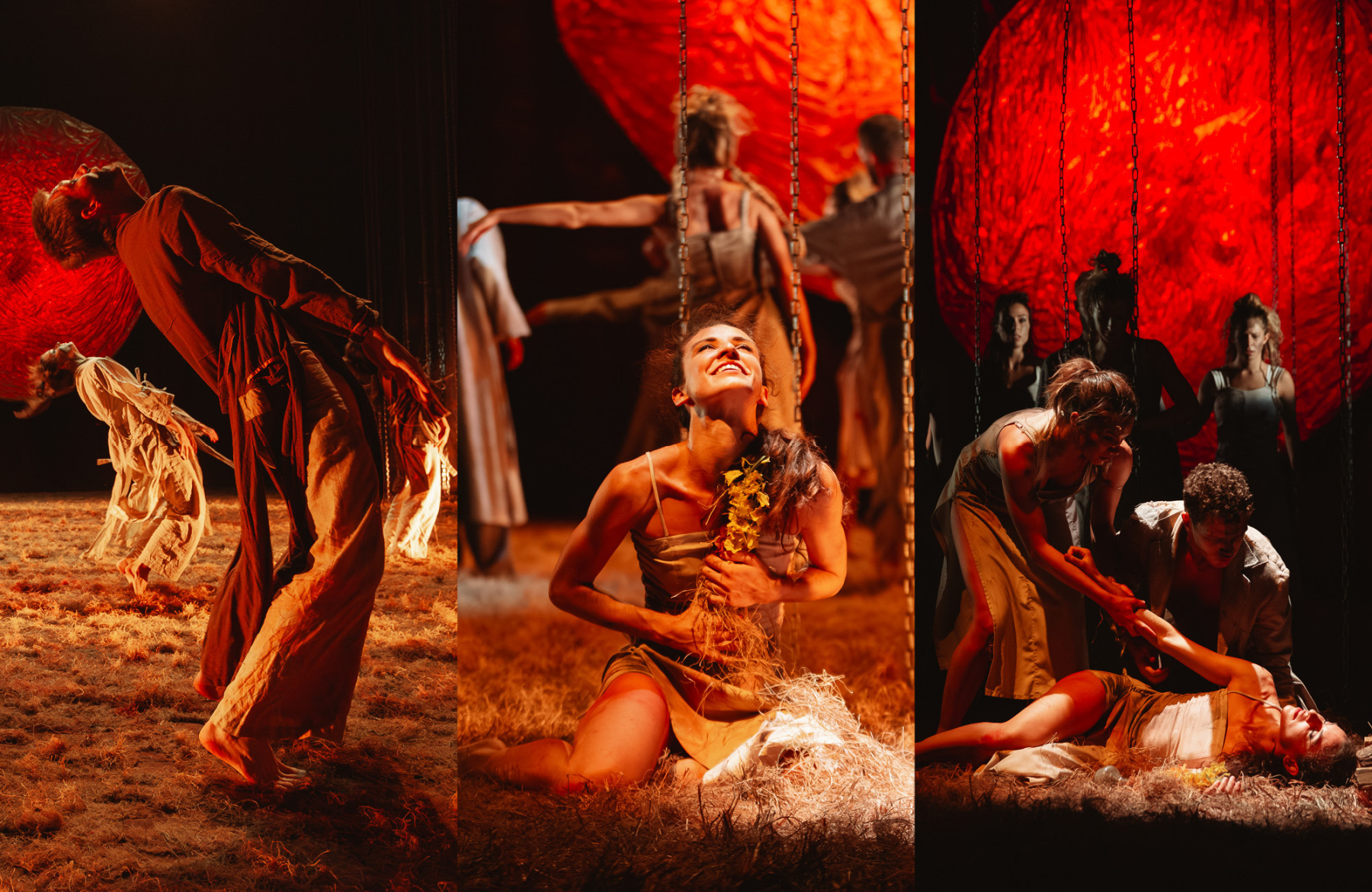
The panel discussion will be conducted in Hungarian, and moderated by journalist Anita Beslin.To mark its 25th anniversary, a digital exhibition featuring a selection of Zoltán Tarnavölgyi’s photographs will be on display in the Müpa Foyer on May 12. The photos do not merely document; they capture and suspend moments: the threshold of a movement, the weight of a gaze, the silence of a touch. Stage time condensed into images, in which movement lives on.
-
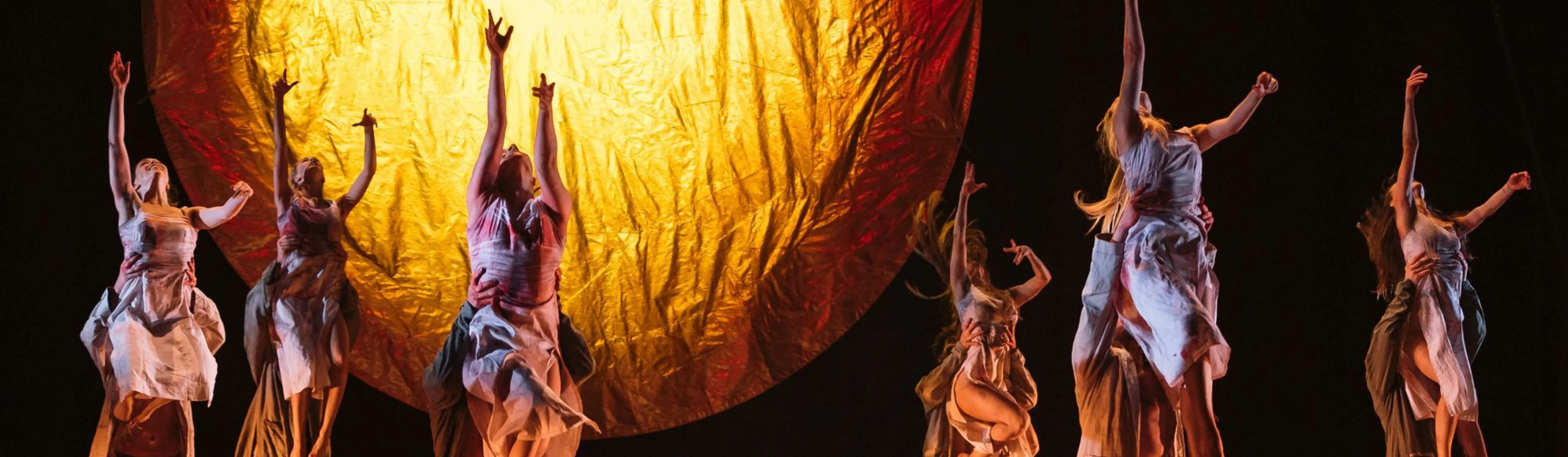
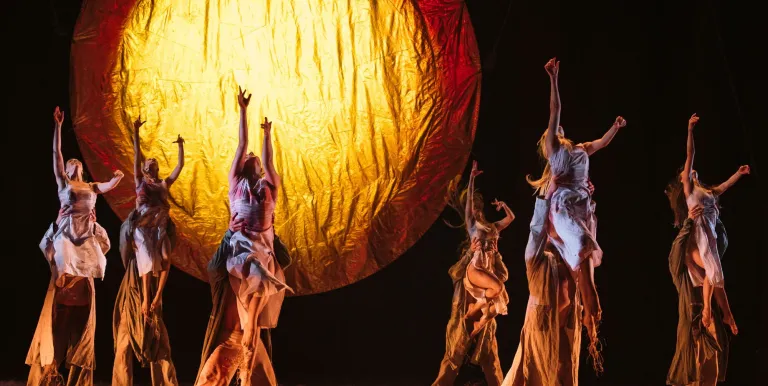
Carl Orff’s masterpiece Carmina Burana is one of the most famous pieces of classical music of the last century. Based on a collection of Latin, German and French poems, including texts dating from the 11th century that were discovered in the monastery of Benediktbeuern in Bavaria in 1803, the composer’s monumental work speaks in vivid and eloquent images of the vicissitudes of fortune and wealth, as well as of the glory of the blossoming spring, wine and love. This sweepingly powerful work quickly found its way to the stage, where – despite seeming tethered to the specific era of the material – it offers those interpreting it true creative freedom. The series of songs and poems can even be read as a coherent storyline without disrupting its etude-like structure at all.
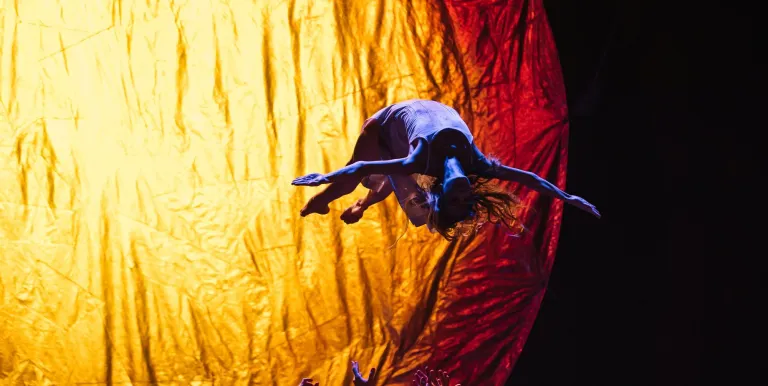
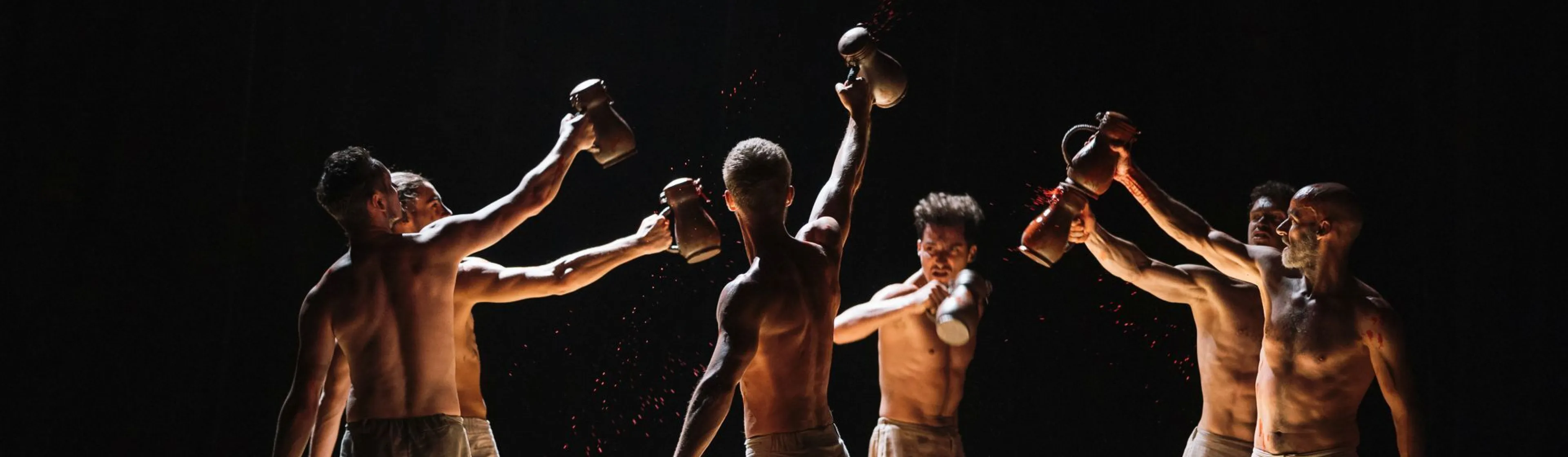
In his 2001 treatment of the work, choreographer Tamás Juronics sketched out the contours of a world driven by instinct and marching headlong towards collapse, or perhaps seeking to avert it. The lives of its inhabitants are defined by their constant terror of the supernatural: death lurks everywhere, even when they appear to forget about their daily concerns for a moment or two.

© Zoltán Tarnavölgyi
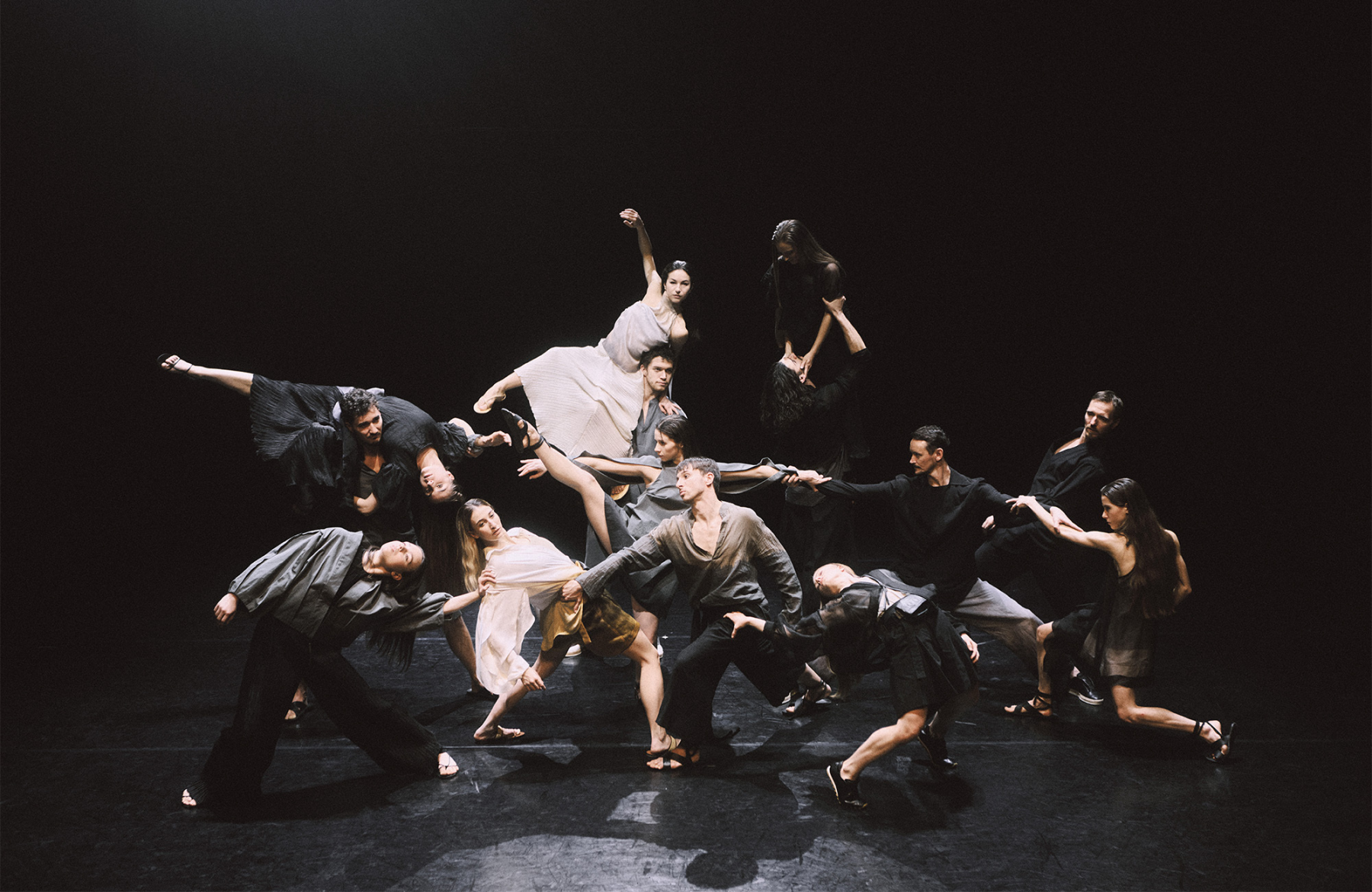
Juronics preserved Orff’s entire work intact, including the order of the songs. As one critic put it after the premiere, “He strung the images together in an epic thread that neither encumbered the music nor exploited it simply as a pretext. In his thinking and aesthetic decisions alike, he matched the atmosphere of the profane songs while at the same time creating a remarkably original and exciting visual world, allowing him to ‘say’ something both beautiful and authentic. (…) With philosophical profundity and in picturesque images, Juronics’s work depicts human destiny, the development of emotions, and the external and internal forces that govern human existence."
Recalling the premiere on the night of 19 April 2001 at the National Theatre of Szeged, Juronics himself said: “The most powerful and emotional event in my career in the theatre was the premiere of Carmina Burana. It was born at a difficult moment, because at that time we were only able to present a limited number of performances in Szeged, and we came up with a production that addressed the struggle of a team, of understanding the world, and of the power of community. The audience that evening was keen on showing their affection from the very start, and the performance itself only added to that: the nearly half-hour standing ovation that followed is a unique and unrepeatable event in the life of any theatrical artist. In the decades that have passed since then, hundreds of thousands of people have seen the production, which in many cases served as their first, but not last, encounter with this genre. That’s why I’m proud of it: although dance often has difficulty finding receptive audiences, this is a piece that is accessible and lovable, one with the potential to make an impact on audiences, making it essential to our shared mission.”
© Artúr Ekler
-
Girl: Miriam Munno
Boy: Lotár Vincze
Death: Tamás Juronics
Chieftain: Vencel Csetényi
Dancers: Gergely Czár, Róbert Kiss, Csongor Füzesi, Francesco Totaro, Gioele Marcante, Diletta Ranuzzi, Letizia Melchiorre, Adrienn Nyeste, Málna Csató, Hanna Dorsich, Alisa Kurilenkova, Boglárka Rudisch, Anna Dal MasoFeaturing:
Rita Rácz – soprano
Ninh Đức Hoàng Long – tenor
Zsolt Haja – baritone
Budapest Academic Choral Society (choirmaster: Ildikó Balassa)
Budafok Dohnanyi OrchestraConductor:
Gábor Hollerung
Creators:
Music: Carl Orff
Set and costume designer: Zsuzsa Molnár
Lighting designer: Ferenc Stadler
Lighting: Dániel Szabó
Choreographer, artistic director: Tamás Juronics
Ballet director: András Echéry-PatakiPresented by Müpa Budapest and Szeged Contemporary Dance Company
-
At 7.30 pm, a panel discussion will be held on Banner Square with András Echéry-Pataki, Director of the Szeged Contemporary Dance Company, Tamás Juronics, the company’s Artistic Director and choreographer of the performance, and Gábor Hollerung, Music Director of the Budafok Dohnanyi Orchestra and conductor for the evening.
The panel discussion will be conducted in Hungarian, and moderated by journalist Anita Beslin.To mark its 25th anniversary, a digital exhibition featuring a selection of Zoltán Tarnavölgyi’s photographs will be on display in the Müpa Foyer on May 12. The photos do not merely document; they capture and suspend moments: the threshold of a movement, the weight of a gaze, the silence of a touch. Stage time condensed into images, in which movement lives on.
-
Carl Orff’s masterpiece Carmina Burana is one of the most famous pieces of classical music of the last century. Based on a collection of Latin, German and French poems, including texts dating from the 11th century that were discovered in the monastery of Benediktbeuern in Bavaria in 1803, the composer’s monumental work speaks in vivid and eloquent images of the vicissitudes of fortune and wealth, as well as of the glory of the blossoming spring, wine and love. This sweepingly powerful work quickly found its way to the stage, where – despite seeming tethered to the specific era of the material – it offers those interpreting it true creative freedom. The series of songs and poems can even be read as a coherent storyline without disrupting its etude-like structure at all.
In his 2001 treatment of the work, choreographer Tamás Juronics sketched out the contours of a world driven by instinct and marching headlong towards collapse, or perhaps seeking to avert it. The lives of its inhabitants are defined by their constant terror of the supernatural: death lurks everywhere, even when they appear to forget about their daily concerns for a moment or two.
© Zoltán Tarnavölgyi
Juronics preserved Orff’s entire work intact, including the order of the songs. As one critic put it after the premiere, “He strung the images together in an epic thread that neither encumbered the music nor exploited it simply as a pretext. In his thinking and aesthetic decisions alike, he matched the atmosphere of the profane songs while at the same time creating a remarkably original and exciting visual world, allowing him to ‘say’ something both beautiful and authentic. (…) With philosophical profundity and in picturesque images, Juronics’s work depicts human destiny, the development of emotions, and the external and internal forces that govern human existence."
Recalling the premiere on the night of 19 April 2001 at the National Theatre of Szeged, Juronics himself said: “The most powerful and emotional event in my career in the theatre was the premiere of Carmina Burana. It was born at a difficult moment, because at that time we were only able to present a limited number of performances in Szeged, and we came up with a production that addressed the struggle of a team, of understanding the world, and of the power of community. The audience that evening was keen on showing their affection from the very start, and the performance itself only added to that: the nearly half-hour standing ovation that followed is a unique and unrepeatable event in the life of any theatrical artist. In the decades that have passed since then, hundreds of thousands of people have seen the production, which in many cases served as their first, but not last, encounter with this genre. That’s why I’m proud of it: although dance often has difficulty finding receptive audiences, this is a piece that is accessible and lovable, one with the potential to make an impact on audiences, making it essential to our shared mission.”
© Artúr Ekler