

one interval



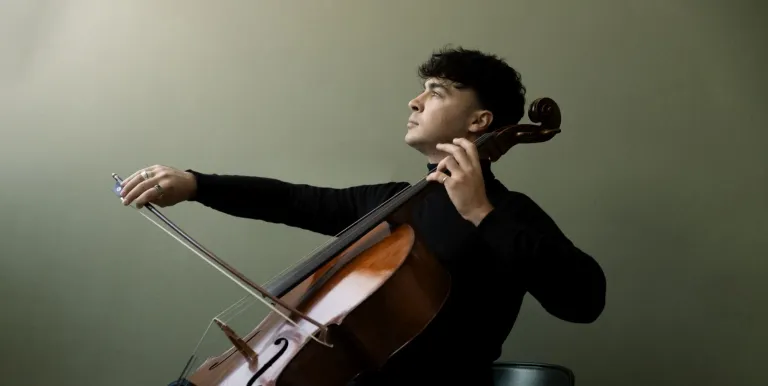

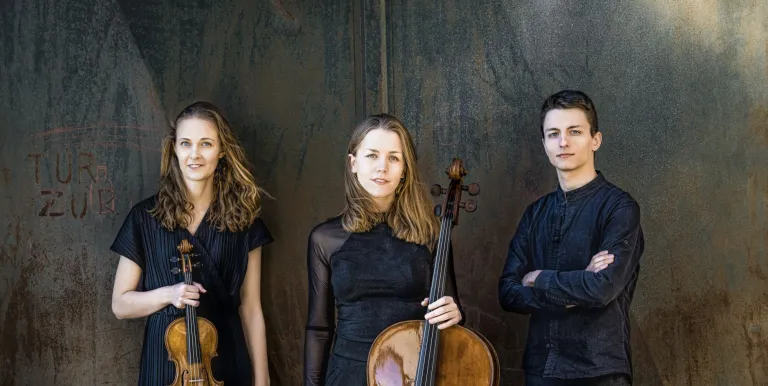
Conductor:
Featuring:
L. Boulanger
D'un matin de printemps
Sibelius
Violin Concerto, op. 47
Holst
The Planets, op. 32
First off, we will witness a spring morning through the music of a Parisian girl who did not live long enough to see her 25th birthday; this will be followed by the passionate music of Sibelius traversing regions of the soul both near and far. Finally, the ensemble will invite us on an interstellar journey through the work by Gustav Holst, visiting every known (at the time he wrote it) planet in the Solar System.
On this evening, the musicians of the Pannon Philharmonic are not simply selecting works by familiar composers: they are also evoking the music of the universe.
The audience will first get to encounter a young lass: Lili Boulanger lived in fin-de-siècle Paris and, at the dawn of the 20th century, undertook no less than to become part of music history as a female composer. Her extraordinary talent would have made all this possible for her, but she was carried off by tuberculosis at the age of 24. She depicts a buzzing spring morning, the awakening of the two great cycles of the earthly world, the day and the year, when everything flows and sparkles with life.
Following this will be another world: the universe of the soul. Jean Sibelius's dark-sounding and passionate Violin Concerto, whose second movement features a long and complex relationship between soloist and orchestra At the start of the movement, the violin melody that had previously gone unanswered by the orchestra imperceptibly materialises on its instruments in order to embrace the hitherto unaccompanied soloist.
But this universe would not be complete without a physical – in fact, interstellar – journey. With the aid of music, the audience will get to travel the Solar System, since Gustav Holst composed his music to the planets orbiting the sun and drew a great deal of its sound from the characters of the ancient Roman gods (from whom the planets had taken their names). Earth was not included among them – as this would have exceeded the bounds of even a symphony. Pluto, still undiscovered at the time, is also absent. The survey of the other seven planets, however, can be a fertile starting point for wondering what the other celestials bodies we know today might be like.
Presented by: Pannon Philharmonic
-
Parking is free of charge for visitors with tickets to any of our paid performances on the day of the performance. Upon entering the car park, you can either scan the barcode or QR code on your concert ticket, or take a parking ticket and validate it together with your concert ticket at one of the payment machines. Either option will enable you to exit through the gates operated by the number plate recognition system. We recommend that you plan to arrive at Müpa in good time, so that you can find the ideal parking spot quickly and without difficulty and arrive at your performance comfortably. The detailed parking policy of Müpa Budapest is available here.