
Digital programme booklet
-
Tchaikovsky
Piano Concerto No. 2 in G major, Op. 44
I. Allegro brillante e molto vivace
II. Andante non troppo
III. Allegro con fuocoSibelius
Symphony No. 2 in D major, Op. 43
I. Allegretto
II. Tempo andante, ma rubato
III. Vivacissimo
IV. Finale. Allegro moderato
Featuring:Alexandre Kantorow – piano
London Philharmonic OrchestraConductor:
Paavo Järvi
-
The music of the great Russian composer Pyotr Ilyich Tchaikovsky (1840–1893) is characterised by its pathos and emotive power. The scale and sound of his works are influenced by folk music and represent Slavic Romanticism, yet the sensitive proportioning of his formal structures constantly reminds us that his greatest admiration was reserved for the Viennese Classical master, Mozart. His Second Piano Concerto in G major has never quite emerged from the shadows of his boundlessly popular first work (in B flat minor) in the genre.
Tchaikovsky’s second piano concerto shines in its own right:
The Second – bursting with energy, in three movements, and giving significant roles to violin and cello in the central Andante non troppo – was dedicated, like the First, to the pianist Nikolai Rubinstein. Due to Rubinstein’s death, however, the world premiere was performed by the English pianist Madeline Schiller in New York in November 1881.
George Balanchine's choreography to Tchaikovsky's Piano Concerto No. 2.
Alongside the Norwegian Edvard Grieg, the Finnish composer Jean Sibelius (1865–1957) is one of the defining figures of late Northern Romanticism. His music was influenced by Tchaikovsky and Wagner, but he was also drawn to modern trends. The thematic world of his works was inspired by Finnish mythology, and many of his pieces illustrate stories from the Kalevala.
Bringing a figure of Finnish mythology to life - Kullervo
His opus Finlandia, completed in 1900, became a symbol of the Finnish independence movement. Not long after its revelatory premiere in 1901–02, he composed another extraordinarily successful work: his Second Symphony. Its passion, surging energy, and the triumphant march that concludes the finale led the enthusiastic audience at its highly successful premiere to interpret the symphony – much like Finlandia – as a patriotic declaration. The four-movement work is distinguished by its strong thematic unity.
Finlandia – a symbol of Finnish national independence:
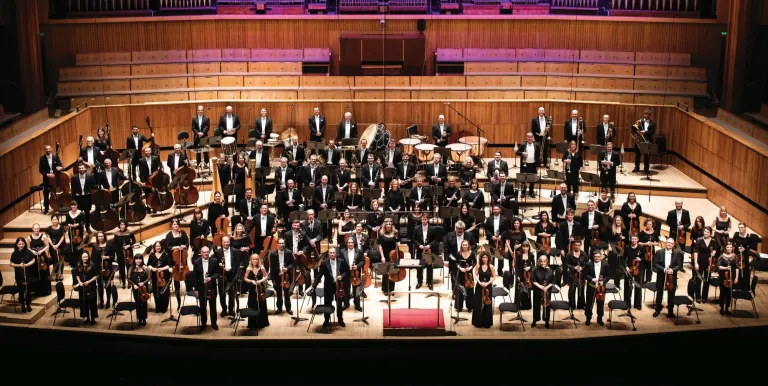
The London Philharmonic Orchestra was founded in 1932 by Sir Thomas Beecham. The world-renowned ensemble has worked with conductors including Adrian Boult, Bernard Haitink, Georg Solti, Klaus Tennstedt, and Kurt Masur. Edward Gardner has been its principal conductor since 2021.
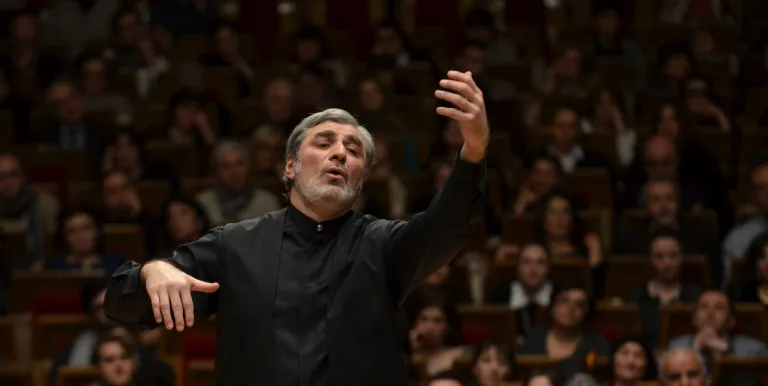
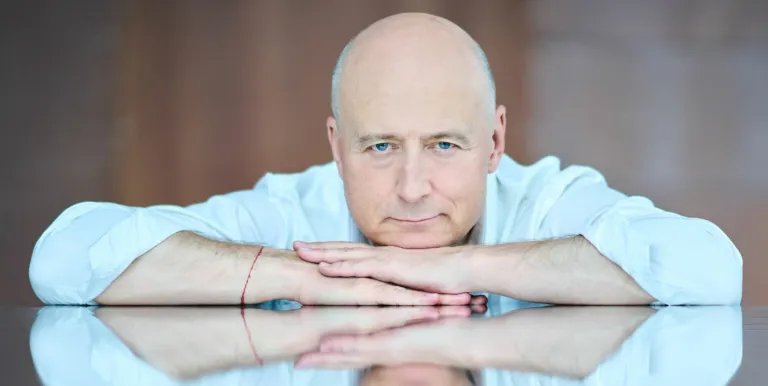
The concert’s Estonian-American conductor, Paavo Järvi (b. 1962), belongs to the world’s most famous conducting dynasty: his father is Neeme Järvi, his brother Kristjan Järvi. He completed his studies in the United States, where his teachers included Leonard Bernstein. Over the past three decades, he has conducted the world’s top symphony orchestras and is currently music director of the Tonhalle-Orchester Zürich.
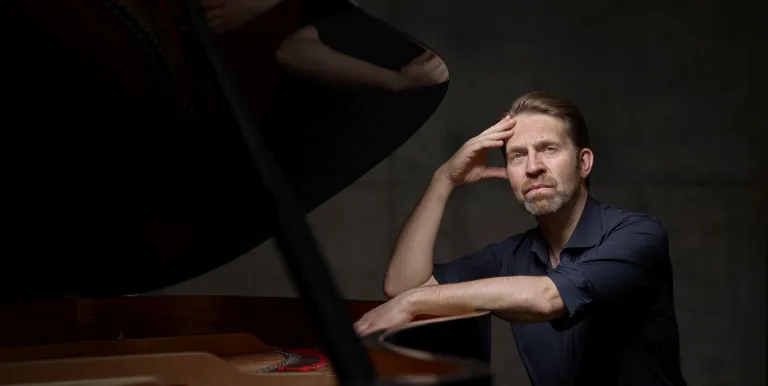
The concerto’s soloist is the internationally celebrated French pianist Alexandre Kantorow (b. 1997), who won the first prize, gold medal and Grand Prix of the XVI International Tchaikovsky Competition in Moscow in 2019.
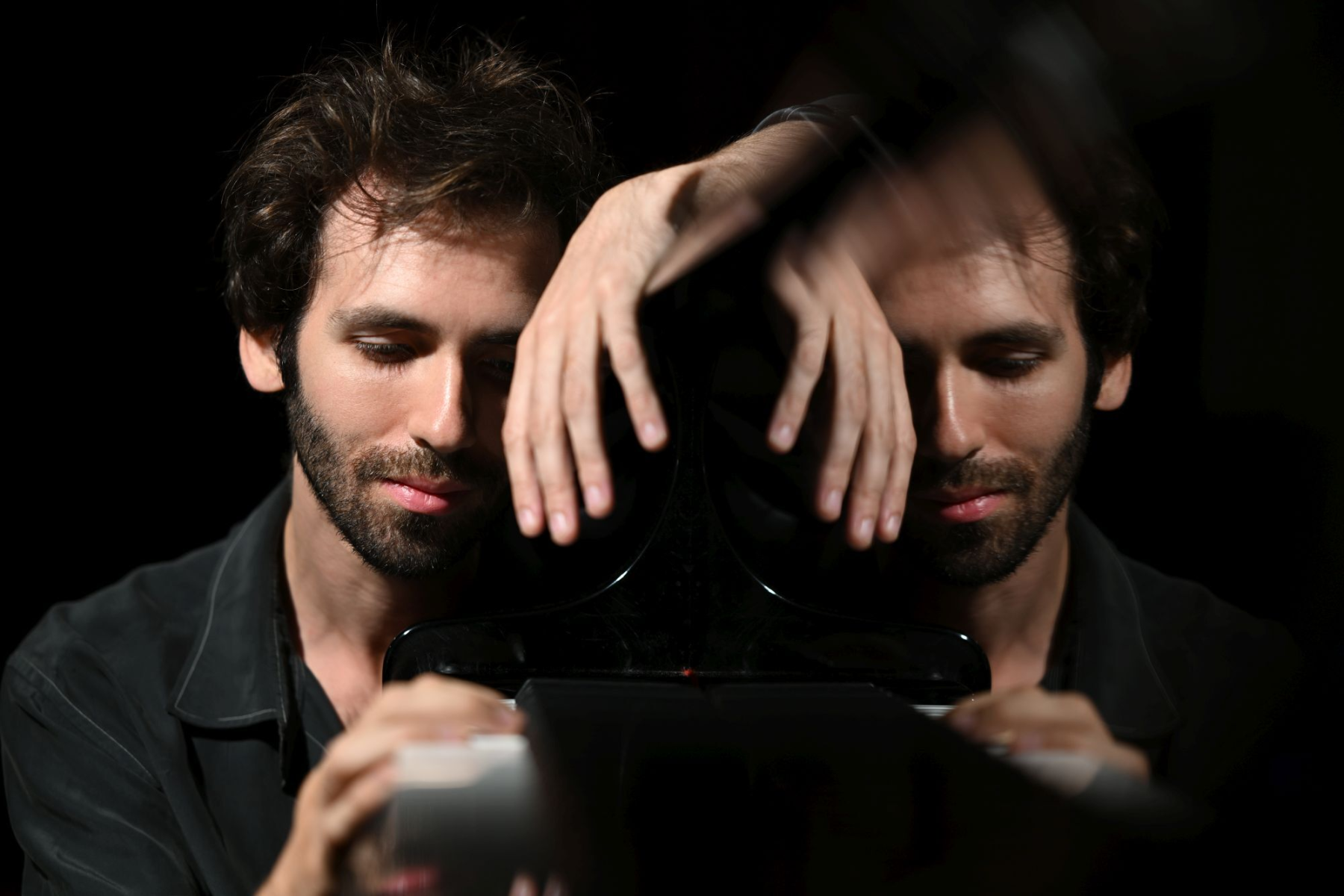
© Sasha Gusov
-
Tchaikovsky
Piano Concerto No. 2 in G major, Op. 44
I. Allegro brillante e molto vivace
II. Andante non troppo
III. Allegro con fuocoSibelius
Symphony No. 2 in D major, Op. 43
I. Allegretto
II. Tempo andante, ma rubato
III. Vivacissimo
IV. Finale. Allegro moderato
Featuring:Alexandre Kantorow – piano
London Philharmonic OrchestraConductor:
Paavo Järvi
-
The music of the great Russian composer Pyotr Ilyich Tchaikovsky (1840–1893) is characterised by its pathos and emotive power. The scale and sound of his works are influenced by folk music and represent Slavic Romanticism, yet the sensitive proportioning of his formal structures constantly reminds us that his greatest admiration was reserved for the Viennese Classical master, Mozart. His Second Piano Concerto in G major has never quite emerged from the shadows of his boundlessly popular first work (in B flat minor) in the genre.
Tchaikovsky’s second piano concerto shines in its own right:
The Second – bursting with energy, in three movements, and giving significant roles to violin and cello in the central Andante non troppo – was dedicated, like the First, to the pianist Nikolai Rubinstein. Due to Rubinstein’s death, however, the world premiere was performed by the English pianist Madeline Schiller in New York in November 1881.
George Balanchine's choreography to Tchaikovsky's Piano Concerto No. 2.
Alongside the Norwegian Edvard Grieg, the Finnish composer Jean Sibelius (1865–1957) is one of the defining figures of late Northern Romanticism. His music was influenced by Tchaikovsky and Wagner, but he was also drawn to modern trends. The thematic world of his works was inspired by Finnish mythology, and many of his pieces illustrate stories from the Kalevala.
Bringing a figure of Finnish mythology to life - Kullervo
His opus Finlandia, completed in 1900, became a symbol of the Finnish independence movement. Not long after its revelatory premiere in 1901–02, he composed another extraordinarily successful work: his Second Symphony. Its passion, surging energy, and the triumphant march that concludes the finale led the enthusiastic audience at its highly successful premiere to interpret the symphony – much like Finlandia – as a patriotic declaration. The four-movement work is distinguished by its strong thematic unity.
Finlandia – a symbol of Finnish national independence:
The London Philharmonic Orchestra was founded in 1932 by Sir Thomas Beecham. The world-renowned ensemble has worked with conductors including Adrian Boult, Bernard Haitink, Georg Solti, Klaus Tennstedt, and Kurt Masur. Edward Gardner has been its principal conductor since 2021.
The concert’s Estonian-American conductor, Paavo Järvi (b. 1962), belongs to the world’s most famous conducting dynasty: his father is Neeme Järvi, his brother Kristjan Järvi. He completed his studies in the United States, where his teachers included Leonard Bernstein. Over the past three decades, he has conducted the world’s top symphony orchestras and is currently music director of the Tonhalle-Orchester Zürich.
The concerto’s soloist is the internationally celebrated French pianist Alexandre Kantorow (b. 1997), who won the first prize, gold medal and Grand Prix of the XVI International Tchaikovsky Competition in Moscow in 2019.
© Sasha Gusov