one interval

Conductor:
Featuring:
Creator:
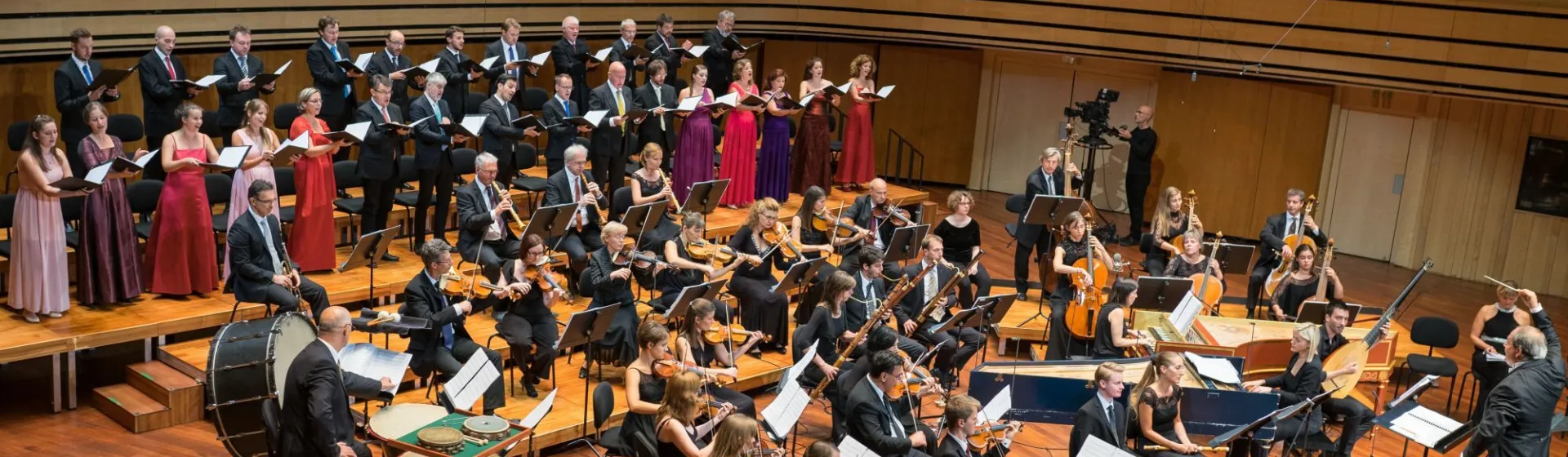
Together with his ensembles, the Purcell Choir and Orfeo Orchestra, György Vashegyi has presented countless 18th-century French operas. The work to be performed this time around – with top French soloists – is Jean-Baptiste Lemoyne's 'tragédie en musique' Phèdre. First premièred in 1786, the work is a superb example of the fashionable trend from the age of Louis XVI, which attempted to resurrect the artistic styles of the Grand Siècle – the reigns of Louis XIII and Louis XIV. Many aestheticians have opined that the arts became decadent in character after Rameau's death in 1764. This new direction, however, returns to the pure 'classical' sources of the era of the Sun King. François-Benoît Hoffman, a librarian who later wrote the libretto for Cherubini's brilliant 1797 opera Médée, was still a young poet when he radically restructured the original text by Jean Racine – preserving just a few surprise twists from the story.
The music composed for the powerfully revised drama was written in the innovative style shaped by Gluck in the 1770s. Lemoyne paid special attention to making sure that the recitatives served the appropriate aim: brief orchestral phrases, sudden modulations and sometimes even unexpected rests enhance the drama and emotional substance of the libretto. As a composer, he uses a diverse set of tools, all of it making his style immediately recognisable and unique: the orchestra's unisono playing before each of Phèdre's entrances, for example, creates an unsettled and mysterious atmosphere. Also strongly figuring into the score is the 'frenetic' style, an achievement of the Gluck school – thanks to the work of Berlioz, it is today considered an undisputable source of early musical romanticism.
Musical tragedy in three acts The first complete performance of the opera since the 18th century.
Collaborating partner: Palazzetto Bru Zane – Centre de musique romantique française.
Sponsored by: Municipality of the Buda Castle District, Ministry of Human Capacities, National Cultural Fund of Hungary, Palazzetto Bru Zane
Presented by: Sysart Kft. Orfeo Music Foundation
-
Parking is free of charge for visitors with tickets to any of our paid performances on the day of the performance. Upon entering the car park, you can either scan the barcode or QR code on your concert ticket, or take a parking ticket and validate it together with your concert ticket at one of the payment machines. Either option will enable you to exit through the gates operated by the number plate recognition system. We recommend that you plan to arrive at Müpa in good time, so that you can find the ideal parking spot quickly and without difficulty and arrive at your performance comfortably. The detailed parking policy of Müpa Budapest is available here.