

Schumann
The Bride of Messina
Schumann
Piano Concerto in A minor
Brahms
Symphony No. 3
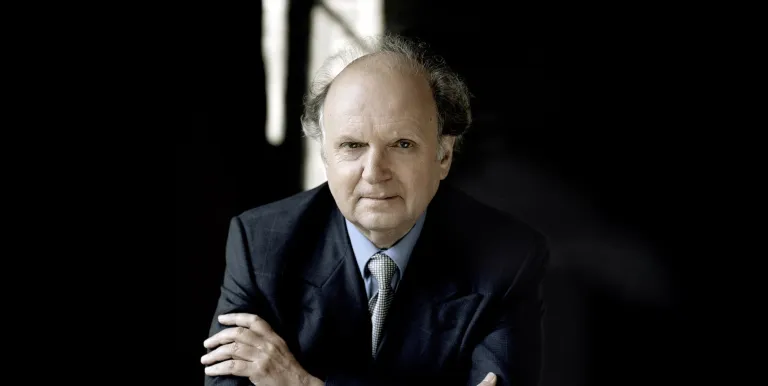
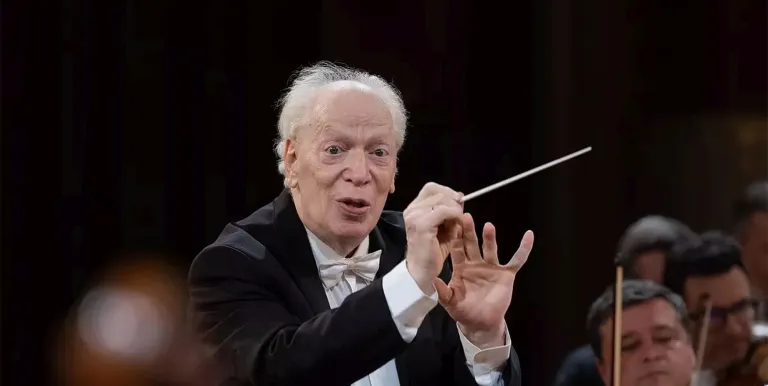
The outstanding French conductor Louis Langrée was music director of the Opéra National de Lyon in 1998-2000 and of the Orchestre Philharmonique de Liège from 2001 to 2006. Since 2002, he has been artistic director of the Mostly Mozart Festival in New York. A versatile artist, he also often works with early music ensembles. The American pianist Richard Goode has a long-standing partnership with the Budapest Festival Orchestra. Regarded as one of the greatest living pianists today, Goode recorded Beethoven’s five piano concertos with the orchestra under the leadership of Iván Fischer. Schumann was practically still a child when he first encountered Friedrich Schiller’s tragedy The Bride of Messina. He composed his overture to the work in the final stage of his career, a few weeks after the completion of his Symphony No. 3 (Rhenish). The first movement of the Piano Concerto in A minor (op. 54) was originally an independent work – the Fantasy for Piano and Orchestra, performed by the composer’s wife Clara at its première in 1841. Four years later, Schumann completed two further movements, thus giving the piece its final form. At the time of writing his first symphony Brahms was already 43 years old, having previously regarded any attempt to compose in this genre in the wake of Beethoven as tempting Providence. And yet the comparison to Beethoven was logical and unavoidable, no matter how much Brahms feared it. While Hans von Bülow described Brahms’ Symphony No. 1 as “Beethoven’s tenth,” the conductor at the première of his Symphony No. 3, Hans Richter, opined that in many respects the latter work resembles Beethoven’s own third symphony.
Presented by:




-
We wish to inform you that in the event that Müpa Budapest's underground garage and outdoor car park are operating at full capacity, it is advisable to plan for increased waiting times when you arrive. In order to avoid this, we recommend that you depart for our events in time, so that you you can find the ideal parking spot quickly and smoothly and arrive for our performance in comfort. The Müpa Budapest underground garage gates will be operated by an automatic number plate recognition system. Parking is free of charge for visitors with tickets to any of our paid performances on that given day. The detailed parking policy of Müpa Budapest is available here.