Brahms
Violin Concerto in D major, op. 77
R. Strauss
Sinfonia domestica, op. 53
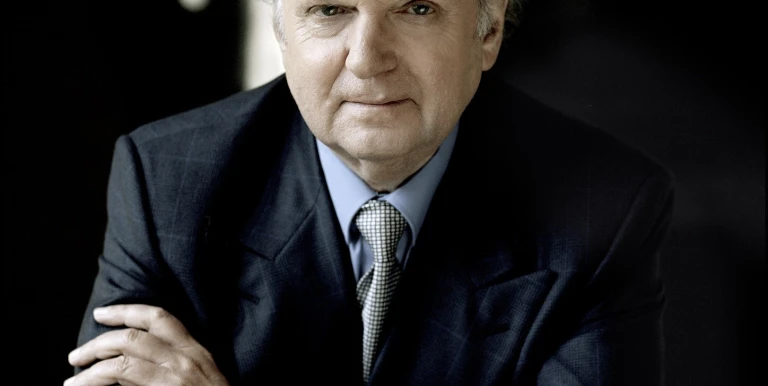
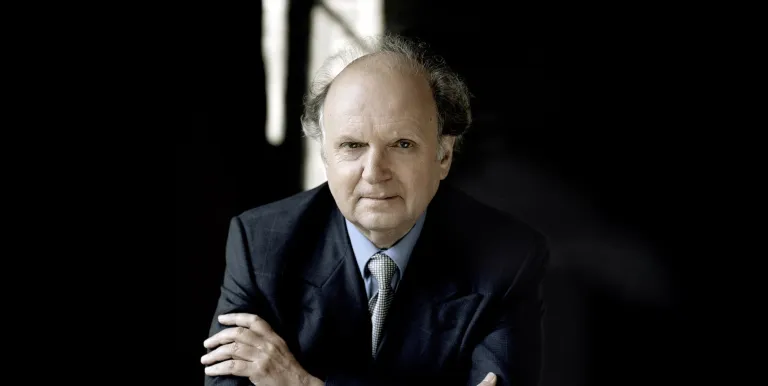
Having been born in Warsaw in 1939 and grown up in Germany, Marek Janowski spent time as an assistant conductor at several orchestras before taking up a post as musical director in Freiburg and then Dortmund. He earned his reputation in the 1980s and 1990s primarily as an opera conductor: From the Metropolitan Opera House to the Munich Opera to the Vienna State Opera, he took the stage at almost all of the world’s prestigious opera houses, before breaking with opera in the 1990s. From 1984 to 2000, he was music director of the Orchestre Philharmonique de Radio France, before filling the same post at the Monte-Carlo Philharmonic Orchestra from 2000 to 2005. Since 2002, he has been artistic director of the Berlin Radio Symphony Orchestra, and was music director of the Orchestre de la Suisse Romande from 2005 to 2011. This is the third occasion the world-renowned conductor has taken up the baton for the Budapest Festival Orchestra. “Her sound has passion, grit and electricity but also a disarming warmth and sweetness that can unveil the music’s hidden strains of lyricism,” wrote the New York Times of the German violinist Isabelle Faust, who surged to the international fore with victory in the 1993 Paganini Competition. Faust has worked with outstanding conductors such as Abbado, Bělohlávek, Jansons, Sakari Oramo and Daniel Harding, and has recently performed with the Berlin Philharmonic, the Philadelphia Orchestra, the Boston Symphony Orchestra and at the BBC Proms in London. Faust plays the “Sleeping Beauty” Stradivarius, made in 1704. Brahms was considered one of the pre-eminent pianists of his time, which perhaps explains why critics scornfully dismissed his Violin Concerto as a “piano piece played on the violin.” Performing the work presents an extraordinary challenge for the soloist. Although originally intended to comprise four movements, Brahms eventually placed only a lyrical middle movement between the expansive opening and closing movements, both of which challenge the violinist’s technical capabilities. The Violin Concerto was premièred by the Hungarian Joseph Joachim on 1 January 1879 in Leipzig, with the composer on the conductor's podium. The Hungarian première followed a week later in Budapest. Richard Strauss’s tone poem, dedicated to his wife and son, was finished on New Year’s Eve 1903. The composition, in a single continuous movement, relates a day in the composer’s family life, in a partly humorous manner, with a triple fugue bringing together themes that represent father, mother and infant. “The introduction presents three groups of themes. The husband’s themes are easy-going, dreamy and obstinate; the wife’s happy and graceful; the child’s peaceful. The second section takes a scherzo form, with the parents happily observing their child at play. This is followed by a slow section, where the music of work and thinking, love and tranquil night-time dreams intervenes. The finale portrays the hectic and happy gossip of awakening in the form of a double fugue.” (Marianne Pándi) Presented by: Budapest Festival Orchestra
Presented by:



-
We wish to inform you that in the event that Müpa Budapest's underground garage and outdoor car park are operating at full capacity, it is advisable to plan for increased waiting times when you arrive. In order to avoid this, we recommend that you depart for our events in time, so that you you can find the ideal parking spot quickly and smoothly and arrive for our performance in comfort. The Müpa Budapest underground garage gates will be operated by an automatic number plate recognition system. Parking is free of charge for visitors with tickets to any of our paid performances on that given day. The detailed parking policy of Müpa Budapest is available here.