one interval




Conductor:
Featuring:
Lully
Te Deum
Berlioz
Te Deum, op. 22
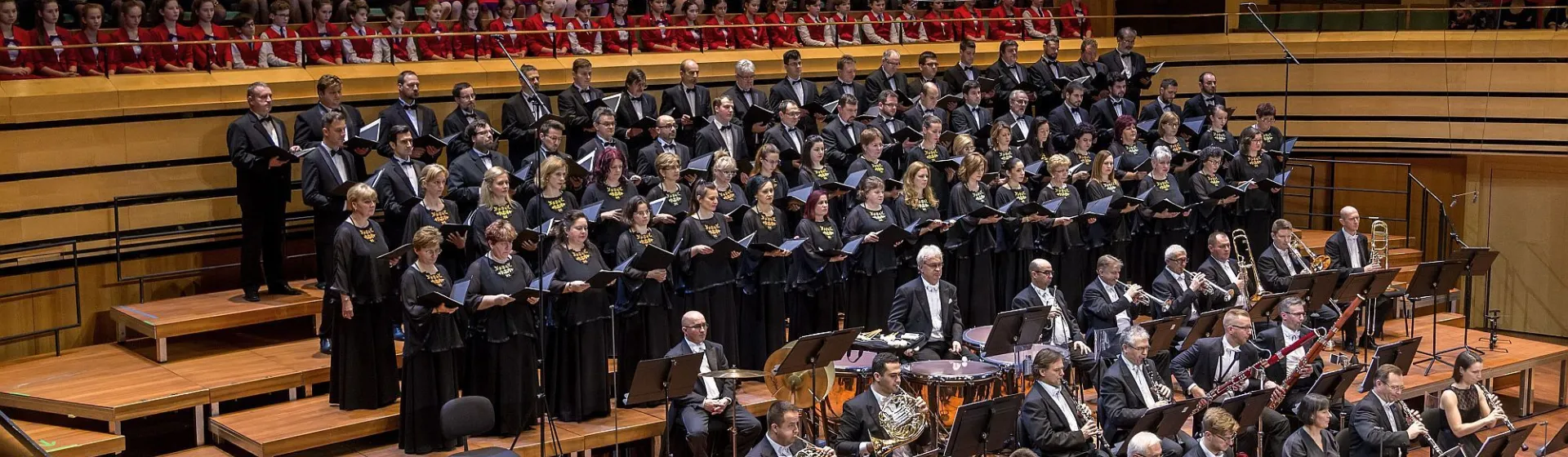
Lully and Berlioz were two revolutionary, era-defining masters of French music. And both wrote orchestral compositions using the text of one of the oldest Latin hymns, the Te Deum. The characteristic sound of Lully's composition, which was written nearly 350 years ago, perfectly encapsulates why this Italian-born composer was considered the father of the French Baroque style.
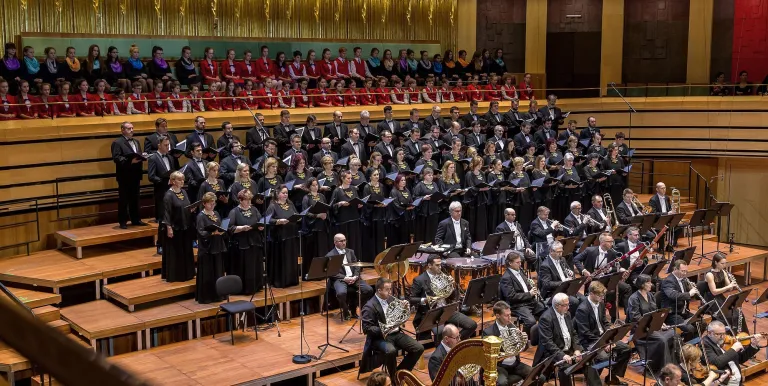
Even today, the fantastic dimensions and sumptuous instrumentation of Berlioz's piece make it a rare, indulgent delight. For church performances, the composer dictated that the organ and 170-person orchestra be placed as far away from each other as possible, that the choir should be in two sections, each with 100 singers, and that an enormous, 600-strong children's choir should stand some distance away. As if in an Italian cathedral, where the music washes over us from every corner. In the composition's finale, Berlioz departs from the atmosphere of reverent prayer to a vision of the last judgement. 'No composer has ever written a more awesome and monumental piece. If in his entire life Berlioz had only written this one movement, it would have been enough to ensure his name stays with us for perpetuity,' wrote György Kroó.
His Te Deum, however, is just as much spectacle as music. It is an oratorical fresco in the strictest sense of the term. In the orchestra we hear extraordinary and rarely used instruments, while the final movement features no less than 12 harps. When Berlioz conducted the piece himself in the Church of St Eustache in 1855, his brother wrote the following: 'I must tell you that this immense service, which won the acclaim of the vast audience, left me with the most wonderful impression. There was one enormously emotional moment when applause began ringing out in one corner of the church, though it was soon suppressed. It was colossal.'
Presented by: Hungarian Radio Music Ensembles
-
Parking is free of charge for visitors with tickets to any of our paid performances on the day of the performance. Upon entering the car park, you can either scan the barcode or QR code on your concert ticket, or take a parking ticket and validate it together with your concert ticket at one of the payment machines. Either option will enable you to exit through the gates operated by the number plate recognition system. We recommend that you plan to arrive at Müpa in good time, so that you can find the ideal parking spot quickly and without difficulty and arrive at your performance comfortably. The detailed parking policy of Müpa Budapest is available here.