

one interval



Conductor:
Featuring:
Beethoven
Egmont Overture, op. 84
R. Strauss
Oboe Concerto
R. Strauss
Ein Heldenleben, op. 40
In the history of music, each century has interpreted the concept of the Hero differently: older periods have depicted the chosen one emerging from the crowd in an ideal fashion, while the masters of later eras would take an ironic view of the warrior who previously had been portrayed with noble pathos. At this concert, the audience will get to encounter both artistic approaches.
Goethe's famous drama Egmont has become a symbol for the fights for the freedom of small nations – one of the reasons why Beethoven's Egmont Overture was played so frequently on Hungarian Radio during the days of the 1956 revolution. It is hardly a surprise that the Viennese Classical composer, who was keen on heroes, composed incidental music for the great poet's drama in 1810: for the author of Fidelio, liberty was a sacred concept. The energetic overture opening this concert by the Hungarian National Philharmonic is the most popular part of this incidental music.
The programme music of the other 'heroic' piece in the concert, Richard Strauss's 1898 symphonic poem Ein Heldenleben, places the composer himself at its centre: in addition to the inclusion of a multitude of self-references to his previous works, this involves – with appealing modesty – a good dose of self-deprecating humour coming through in the depiction as well. Dating from 1945, the Oboe Concerto being performed between the two symphonic works is an attractive example of the serenity of Strauss's late music.
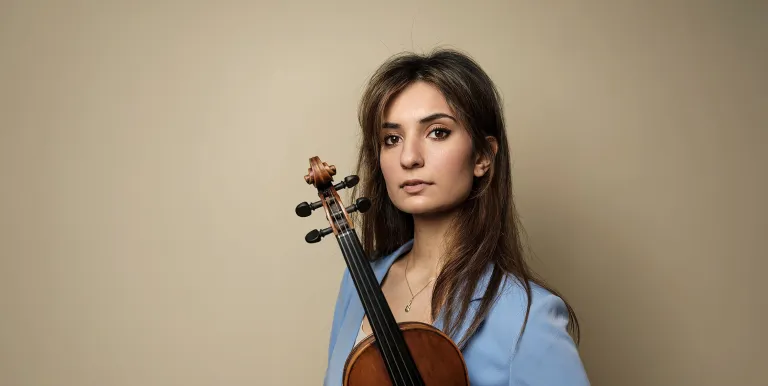
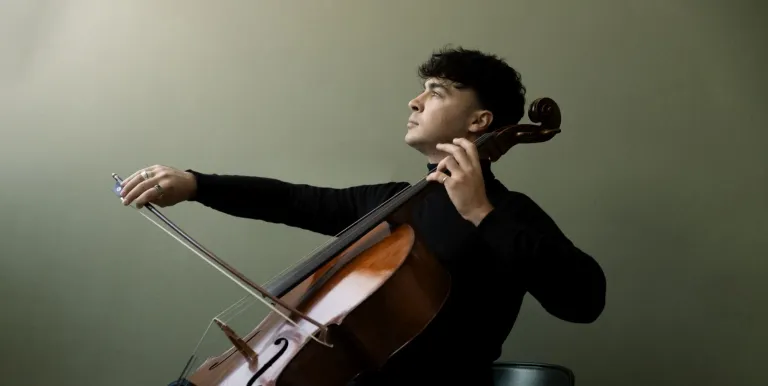
Oboist Juliana Koch is an internationally renowned virtuoso of her instrument. She has served as the London Symphony Orchestra's principal oboe since 2018, the same year that she also joined the faculty of the city's Royal College of Music. Son of the legendary Kurt Sanderling, Michael Sanderling is an old acquaintance of the Hungarian audience, having appeared here both as an outstanding cellist and as a highly cultured conductor.
Presented by: Hungarian National Philharmonic
-
Parking is free of charge for visitors with tickets to any of our paid performances on the day of the performance. Upon entering the car park, you can either scan the barcode or QR code on your concert ticket, or take a parking ticket and validate it together with your concert ticket at one of the payment machines. Either option will enable you to exit through the gates operated by the number plate recognition system. We recommend that you plan to arrive at Müpa in good time, so that you can find the ideal parking spot quickly and without difficulty and arrive at your performance comfortably. The detailed parking policy of Müpa Budapest is available here.