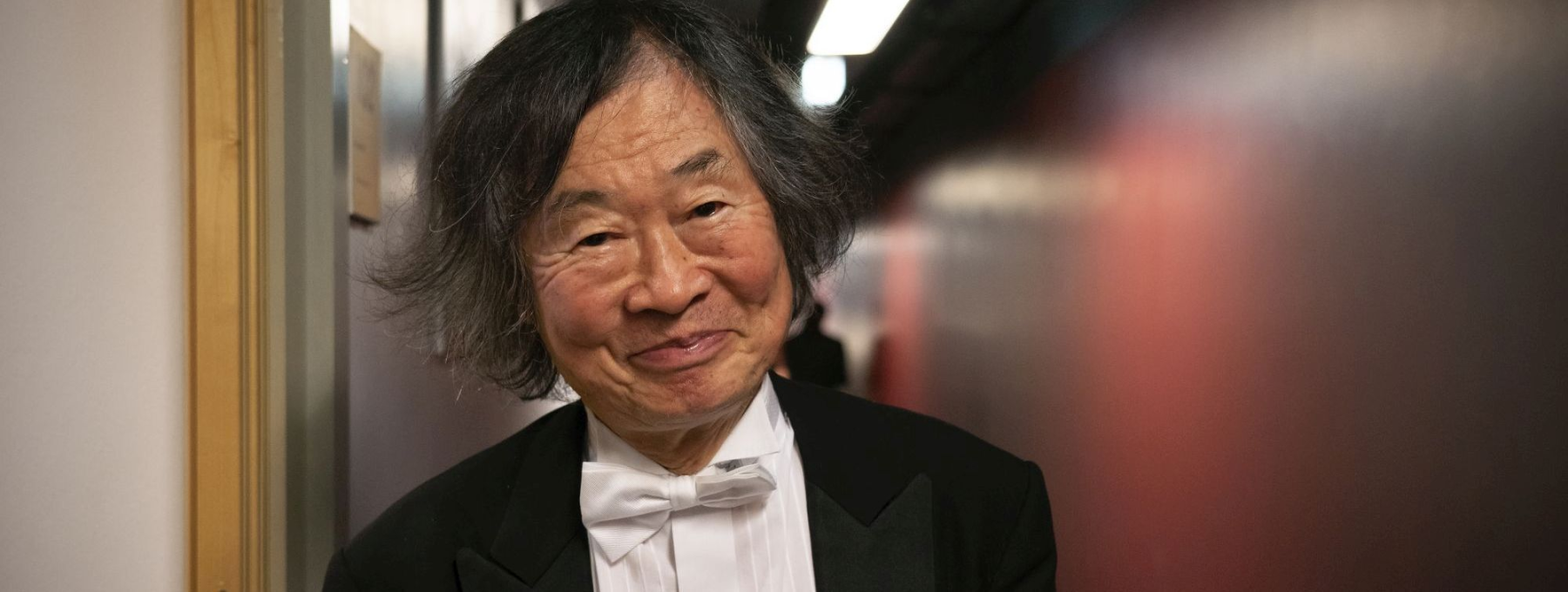
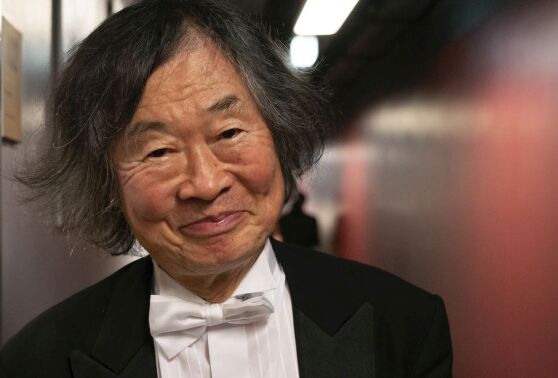
The Japanese conductor who has made Hungary his second home
Ken-Ichiro Kobayashi’s international career had almost fairytale beginnings. In 1974, he won the first International Conducting Competition, an event organised by Hungarian Television. As a complete unknown arriving from afar, he came, he saw, he conquered – but he did far more than that. With his captivating personality, he won over the Hungarian public to an unprecedented degree, and drew attention to this remarkable profession. It is no coincidence, therefore, that the soon-to-be 86-year-old maestro has been invited to serve as chief patron of the Solti International Conducting Competition, launched jointly by Müpa Budapest and MTVA (Hungarian public television). With this in mind, we have delved into his fascinating career.
“I knew at first sight and first hearing that he would be the winner (and was not alone in this. He was also the audience favourite.) […] In the semi-final, he proved to be not only an excellent foil for the orchestra but also enthralled everyone with his brilliant interpretation of new music,” the critic from Film Színház Muzsika wrote about Kobayashi’s performance. Then 34 years old, the conductor played a major role in turning the conducting competition, and with it classical music, into a matter of personal significance for millions of television viewers: 26,000 people phoned in to vote for the competitors. As György Hámos pointed out in Élet és Irodalom, one of Kobayashi’s most attractive qualities as a conductor is his ability to rediscover the beauty of the works he conducts time and again, yet it was the news of this “voluntary mass vote” that truly astonished him.
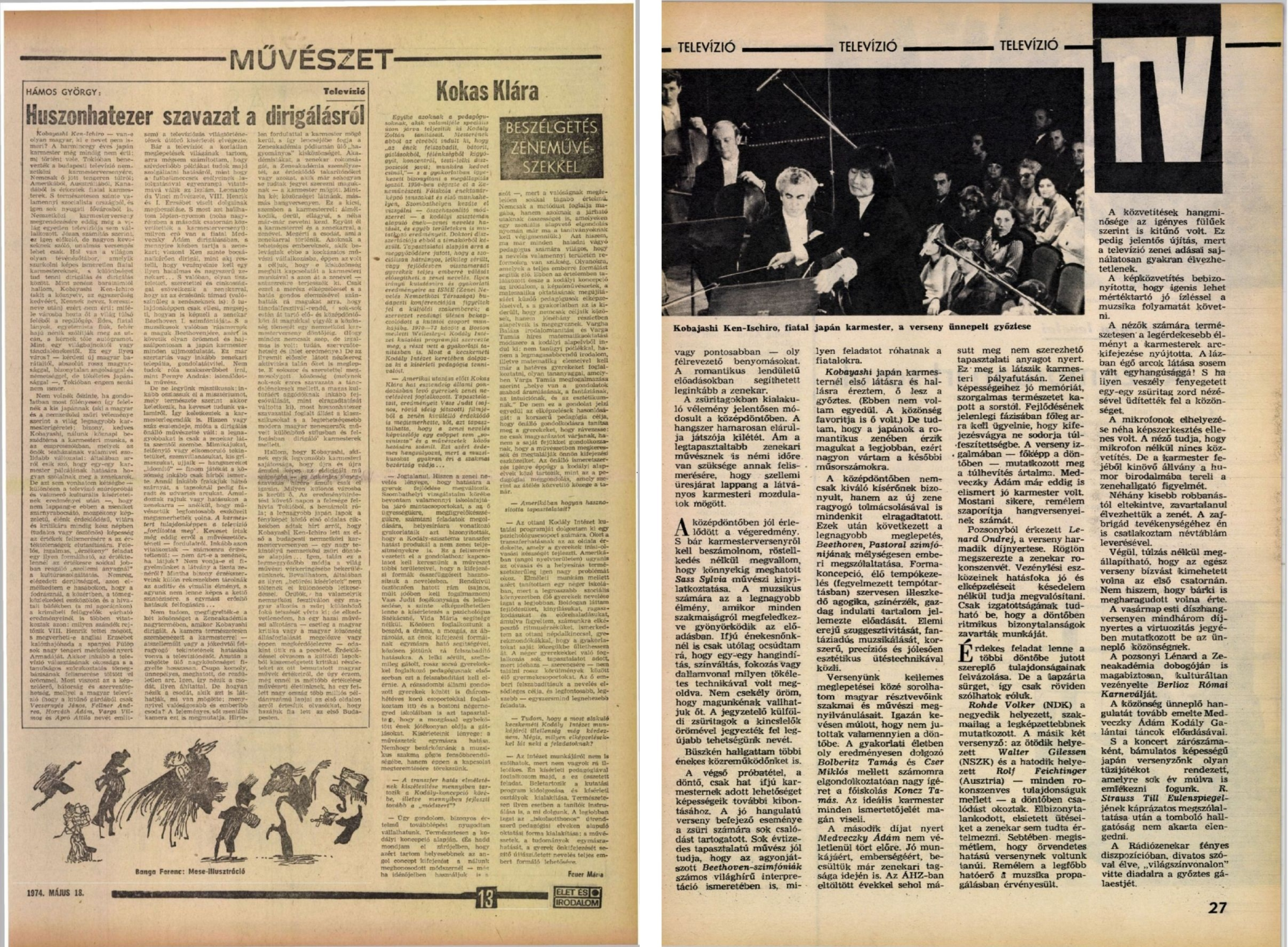
The articles on the 1974 conducting competition from Élet és Irodalom (l) and Film Színház Muzsika (r).
“One thing I simply cannot understand, but experience with joy every time is that, for some reason, the Hungarian audience has taken me completely to heart. I owe a great deal to the people of Hungary and feel enormous debt of gratitude towards them,” he said in an earlier interview. In another conversation he went even further, stating that had he not won in 1974, he would never have been able to master European music to such a high level or to develop to such an extent. “You might say that, in a musical sense, it is as if Hungary were my motherland,” he added.
The beginnings and Beethoven
Kobayashi grew up in Iwaki, Fukushima Prefecture, to teacher parents. At the age of just ten, he decided he wanted to become a composer after hearing Beethoven’s Ninth Symphony. A year later, he was already composing music. From 1960, he studied composition at the Tokyo University of the Arts, but eventually found his true calling in conducting. After winning a domestic conducting competition, he conducted the Tokyo Symphony Orchestra in 1972 and became the permanent conductor of the Tokyo Metropolitan Symphony Orchestra.
Beethoven has played a defining role in his life ever since. At the legendary Budapest competition, he conducted, among other works, the composer’s First and Sixth Symphonies. “The musicians truly recognise their own Beethoven in him, which is why they follow the Japanese conductor’s every finger movement with such joy and pinpoint precision. It has become ritual or, to a greater extent, orchestral telepathy, a transmission of thought,” wrote György Hámos of the exceptional rapport between Kobayashi and the orchestra.
The conductor, affectionately known as “Kobaken” by the Japanese, owes his charismatic stage presence largely to his dynamic and temperamental conducting technique. He never uses a score as he believes sheet music would distract him from the eye contact he makes with the musicians. His recordings mainly comprise Romantic and late-Romantic works, from Berlioz to Tchaikovsky, while his concerts tend to focus on popular classical pieces.
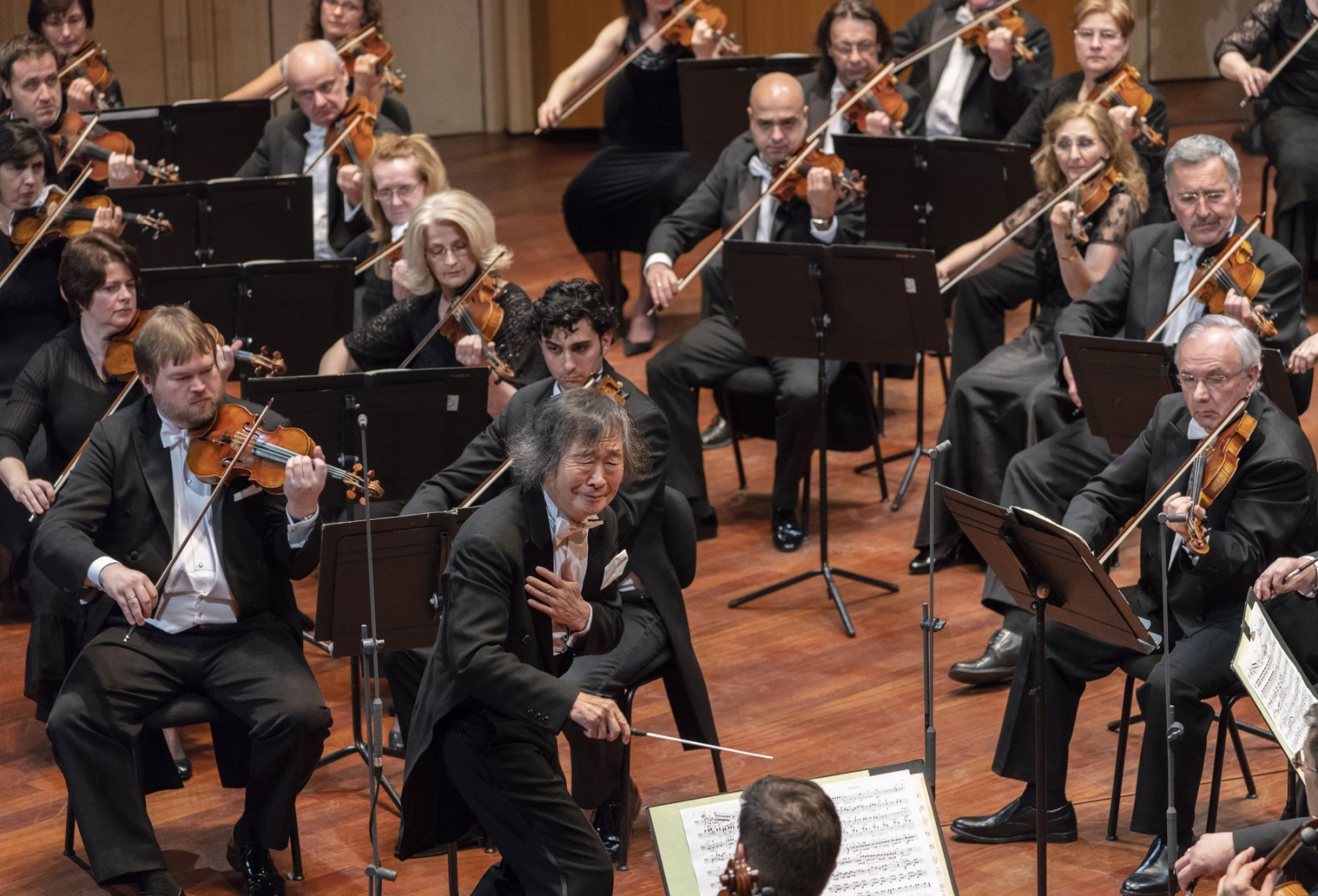
Ken-Ichiro Kobayashi and the Hungarian Radio Symphony Orchestra in 2018 © Gábor Kotschy, Müpa Budapest
The Hungarian connection
His victory in Budapest marked the beginning of a long and rich artistic relationship with the MÁV Symphony Orchestra, which he conducted in the final as the first non-Japanese ensemble he ever put through its paces. They have performed and toured together countless times since. Between 2010 and 2012, he served as the orchestra’s chief conductor and artistic director, and in 2014, on the 40th anniversary of his competition win, he was awarded the title of Honorary Guest Conductor. They have also delighted audiences at Müpa on several occasions: after appearances in 2013 and 2015, they returned in 2017 with a Beethoven evening, and in 2019 they enchanted listeners at a gala concert celebrating 150 years of diplomatic relations between Hungary and Japan.
Kobayashi has also worked extensively with the Hungarian State Symphony Orchestra (today’s Hungarian National Philharmonic Orchestra). After the competition, he served as assistant conductor to János Ferencsik and he led the ensemble for a decade from 1987 following the great maestro’s death. The orchestra later recognised him with the title of Honorary President-Conductor. He has returned regularly to Müpa with the Hungarian Radio Symphony Orchestra: in 2014 with Miklós Perényi and in 2018 with István Várdai. In addition, he has conducted virtually every major orchestra outside the capital, from the Győr Philharmonic to the Pannon Philharmonic. In 2026, he will serve as patron of the first Solti International Conducting Competition, which will take place between 1 and 10 October in Pécs and Budapest.
International career and honours
The rest of the world has also warmly embraced the charismatic conductor. His Budapest victory immediately proved to be a springboard to his international career, bringing with it invitations from Germany, Austria, the United Kingdom and the Netherlands. Between 1980 and 1990, he directed the Kyoto Symphony Orchestra. From 1988, he served as conductor before later becoming chief conductor and music director of the Japan Philharmonic Orchestra, and also taking on the role of principal music director of the Nagoya Philharmonic Orchestra. In 2002, he became the first Asian conductor to lead the opening concert of the Prague Spring Festival with the Czech Philharmonic, achieving enormous success with Bedřich Smetana’s Má Vlast (My Fatherland). In 2006, he was appointed principal conductor of the Arnhem Philharmonic Orchestra in the Netherlands.
Of course, he has received no shortage of honours: among others titles, he is the recipient of the Liszt Memorial Medal and the Award for Hungarian Culture, as well as the Middle Cross with Star of the Order of the Republic of Hungary and the Grand Cross of the Order of Merit of Hungary civil division.