-
Creators:
Music: Richárd Riederauer, Charles Gounod
Dramaturgs: György Böhm, Teodóra Uhrik
Costume designer: Julcsi Kiss
Set designer: Balázs Cziegler
Co-choreographer, assistant: Zsolt Molnár
Director-choreographer: Balázs VinczePerformed by:
Romeo: Dávid Matola
Juliet: Karin Iwata
Lady Capulet: Mónika Kócsy
Lady Montague: Katalin Ujvári
Mercutio: Zsolt Molnár
Benvolio: José Blasco Pastor
Friar Laurence: Péter Koncz
Tybalt: Márton Szabó
Paris: Máté Varga
Nurse: Ajna Ilona Kakucsas well as Réka Annamária Horváth, Rebeka Pintér, Csongor Balogh
and Frida Behán, Panna Várvölgyi – students of Pécs Secondary School of Arts -
Founded in 1960 at the Pécs National Theatre, the Ballet Pécs was Hungary’s first modern ballet company. In 2017, on the initiative of Balázs Vincze, who was then director of ballet, the Pécsi Balett Nonprofit Ltd. was established, which has allowed the company to continue with its cultural mission independently. The individual, distinctive language of dance that marks the productions of the Ballet Pécs draws on a very broad range of sources, bringing to the stage the finest traditions of dance theatre.
© László Mihály
A Harangozó-, Imre- and Seregi Award-winning Artist of Merit dancer and choreographer, Balázs Vincze made his first choreographies for operetta and musical productions in 2001. Since 2006, he has created numerous ballet productions for Ballet Pécs. He has a deft hand at adapting well-known and popular literary classics for the stage, showing a superb sense of proportion in rendering the plot through the language of dance. Special and spectacular, his contemporary dance style has classical foundations, and while technically advanced, it is accessible to a broad audience.
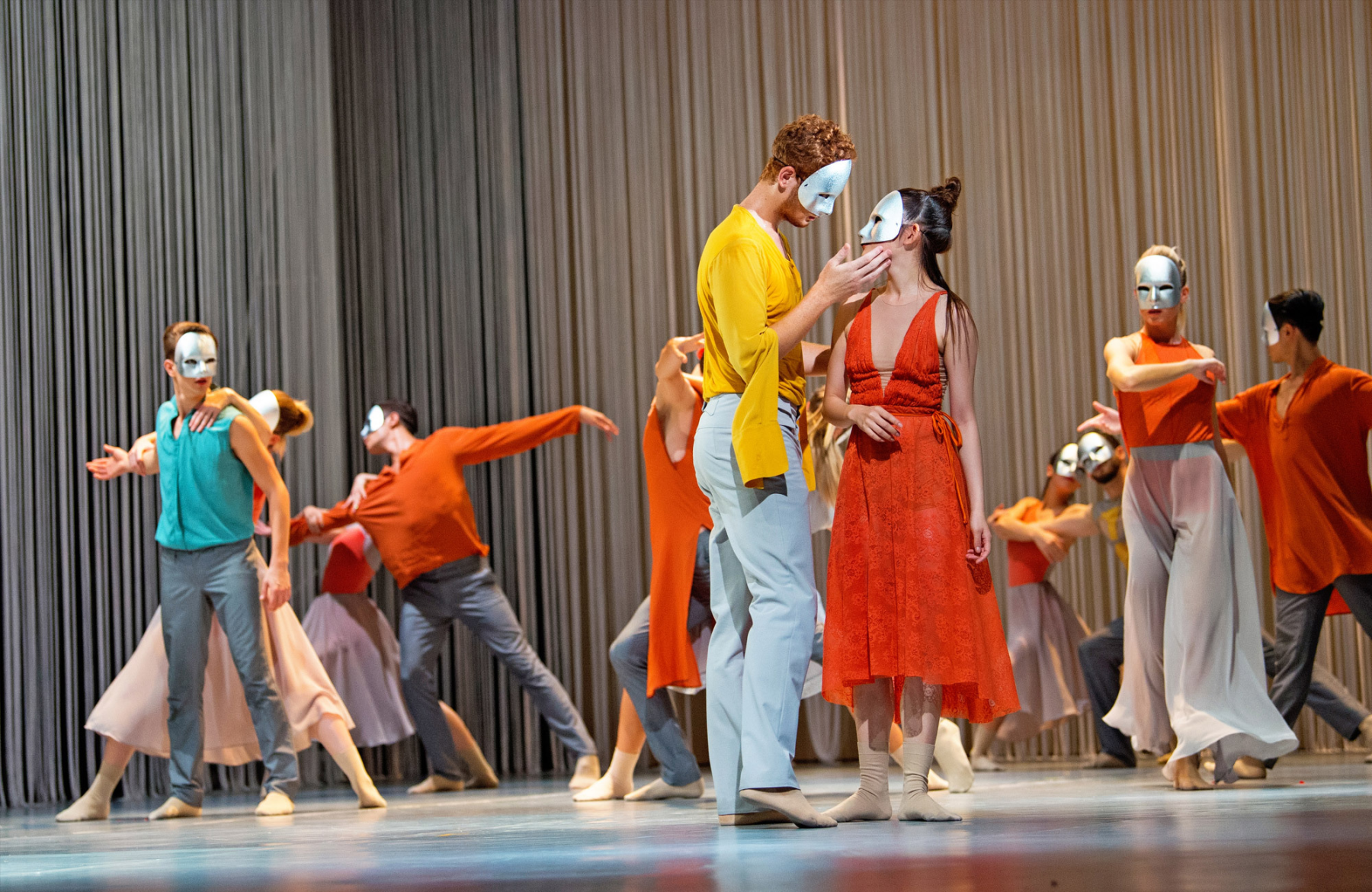
Balázs Vincze – in tandem with co-choreographer Zsolt Molnár – tells the classic story of Romeo and Juliet in keeping with the original drama, yet brings new and perhaps unusual perspectives into play through the language of movement. Of course, the 400-year-old performance tradition cannot and need not be circumvented, yet it is necessary to reflect on it and bring to light interpretations that remain further from the public consciousness. Balázs Vincze spoke of his intentions as follows: “To date, adaptations usually have presented a love affair between a man and a woman, but we are in reality talking about children and children love differently and think of love differently to adults. They experience everything differently. I tried to show this adolescent love in my Romeo and Juliet.” The story is made all the more tragic because the creators view the inexplicable feud between the two hostile families through the lens of two unsuspecting young people who desire nothing but happiness, physical contact and love.
Ballet Pécs’s grandiose Romeo and Juliet maintains tradition while doing away with it as it considers innovation – in harmony with a credo going back decades – to be part of its remit. To quote another enthusiastic review: “A consistently high-energy yet light-hearted, playful and inventive adaptation of the immortal lovers’ story has been born in Pécs. The tragedy of the victims of the ancient feud is subtly counterpointed by the performance’s mood and vitality: the character’s childlike play touches the audience’s hearts, makes them smile, and gives them food for thought.”
-
Creators:
Music: Richárd Riederauer, Charles Gounod
Dramaturgs: György Böhm, Teodóra Uhrik
Costume designer: Julcsi Kiss
Set designer: Balázs Cziegler
Co-choreographer, assistant: Zsolt Molnár
Director-choreographer: Balázs VinczePerformed by:
Romeo: Dávid Matola
Juliet: Karin Iwata
Lady Capulet: Mónika Kócsy
Lady Montague: Katalin Ujvári
Mercutio: Zsolt Molnár
Benvolio: José Blasco Pastor
Friar Laurence: Péter Koncz
Tybalt: Márton Szabó
Paris: Máté Varga
Nurse: Ajna Ilona Kakucsas well as Réka Annamária Horváth, Rebeka Pintér, Csongor Balogh
and Frida Behán, Panna Várvölgyi – students of Pécs Secondary School of Arts -
Founded in 1960 at the Pécs National Theatre, the Ballet Pécs was Hungary’s first modern ballet company. In 2017, on the initiative of Balázs Vincze, who was then director of ballet, the Pécsi Balett Nonprofit Ltd. was established, which has allowed the company to continue with its cultural mission independently. The individual, distinctive language of dance that marks the productions of the Ballet Pécs draws on a very broad range of sources, bringing to the stage the finest traditions of dance theatre.
© László Mihály
A Harangozó-, Imre- and Seregi Award-winning Artist of Merit dancer and choreographer, Balázs Vincze made his first choreographies for operetta and musical productions in 2001. Since 2006, he has created numerous ballet productions for Ballet Pécs. He has a deft hand at adapting well-known and popular literary classics for the stage, showing a superb sense of proportion in rendering the plot through the language of dance. Special and spectacular, his contemporary dance style has classical foundations, and while technically advanced, it is accessible to a broad audience.
Balázs Vincze – in tandem with co-choreographer Zsolt Molnár – tells the classic story of Romeo and Juliet in keeping with the original drama, yet brings new and perhaps unusual perspectives into play through the language of movement. Of course, the 400-year-old performance tradition cannot and need not be circumvented, yet it is necessary to reflect on it and bring to light interpretations that remain further from the public consciousness. Balázs Vincze spoke of his intentions as follows: “To date, adaptations usually have presented a love affair between a man and a woman, but we are in reality talking about children and children love differently and think of love differently to adults. They experience everything differently. I tried to show this adolescent love in my Romeo and Juliet.” The story is made all the more tragic because the creators view the inexplicable feud between the two hostile families through the lens of two unsuspecting young people who desire nothing but happiness, physical contact and love.
Ballet Pécs’s grandiose Romeo and Juliet maintains tradition while doing away with it as it considers innovation – in harmony with a credo going back decades – to be part of its remit. To quote another enthusiastic review: “A consistently high-energy yet light-hearted, playful and inventive adaptation of the immortal lovers’ story has been born in Pécs. The tragedy of the victims of the ancient feud is subtly counterpointed by the performance’s mood and vitality: the character’s childlike play touches the audience’s hearts, makes them smile, and gives them food for thought.”