Digital programme booklet
-
Peer Gynt: Luka Dimic
Aase: Adrienn Matuza
Stag bull: Zoltán Jekli
Solvejg: Eszter Adria Herkovics
Ingrid: Gerda Guti
Chief physician/ Dovre dad: Krisztián Horváth
Women in green: Eszter Kovács
Child of the women in green: Ádám BellovitsStag bulls: Nicolas Askonidis, Borna Cicak, Patrik Engelbrecht, Máté Gémesi, Thales Henrique, Luigi Iannone, Ábel Ónódy, Richard Szentiványi, Daichi Uematsu
Elf girls: Tetiana Baranovska, Margarida Filipe, Franciska Nagy, Tatiana Shipilova, Rebeka Szendrey
Village girls: Tetiana Baranovska, Melinda Berzéki, Gerda Guti, Lea Napsugár Joó, Franciska Nagy, Tatiana Shipilova, Rebeka Szendrey, Barbara Tüű
Village men: Nicolas Askonidis, Borna Cicak, Patrik Engelbrecht, Máté Gémesi, Thales Henrique, Luigi Iannone, Joāo Oliveira, Ábel Ónódy, Levente Puczkó-Smith, Richard Szentiványi, Daichi Uematsu
In more roles: Tetiana Baranovska, Melinda Berzéki, Margarida Filipe, Gerda Guti, Lea Napsugár Joó, Franciska Nagy, Park Chaewon, Tatiana Shipilova, Rebeka Szendrey, Barbara Tüű
Nicolas Askonidis, Borna Cicak, Patrik Engelbrecht, Máté Gémesi, Thales Henrique, Luigi Iannone, Joāo Oliveira, Ábel Ónódy, Levente Puczkó-Smith, Richard Szentiványi, Daichi UematsuFeaturing: Hanna Takács – vocal
Costumes: Rita Velich
Costume production: Gabi Győri
Set design: Mara Bozóki
Visual design: Lajos Katavics
Lighting: Ferenc Stadler
Music: montage
Original work by: Henrik Ibsen
Dramaturg: Alexandra Csepi
Assistant: Levente Bajári
Choreographer: László Velekei -
It was quite the extraordinary voyage that choreographer László Velekei, the director of the Ballet Company of Győr, embarked upon in deciding to bring Henrik Ibsen’s 19th-century drama of humanity about Peer Gynt and his lifelong search for happiness to the dance stage with his ensemble. “I believe in the power of intuition: I prefer to choose pieces based on my feelings. For a while, everything had pointed me in the direction of Peer Gynt. Many people were asking me, for example, why I only create productions in which the female protagonist is the one confronting society. A son’s relationship with his parents is always complex and somewhat elusive, so my own family stories and childhood memories also played a role in the decision,” says the choreographer.
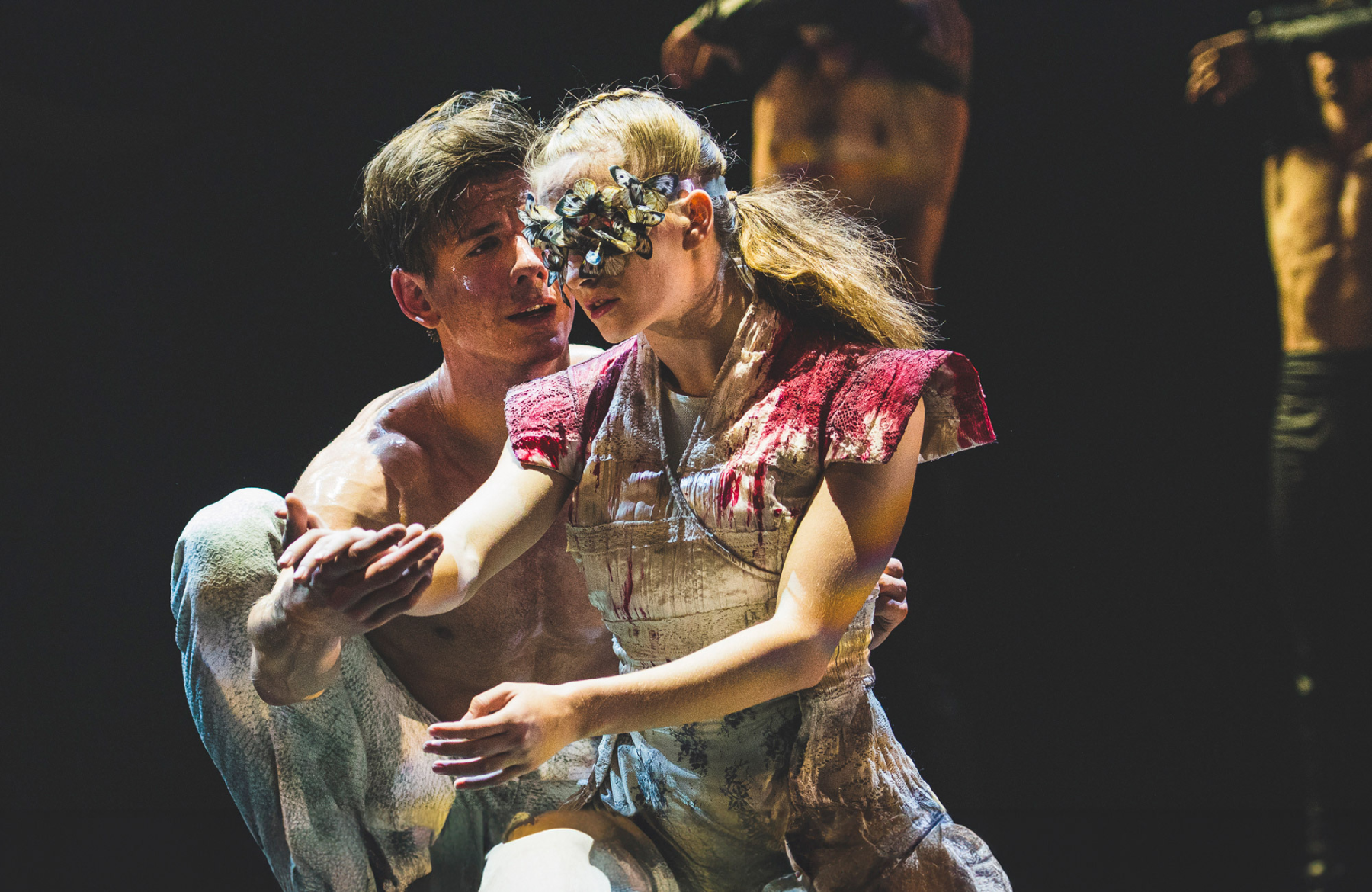
The play’s countless settings, vast array of characters and numerous and varied adventures challenge even those directors working in spoken word theatre. And although this may sound strange, it is precisely its pliable images, the way it lends itself to abstraction, and its associative thinking that make Ibsen’s monumental text ideal material for narrative dance theatre. “Together with dramaturg Alexandra Csepi,” the choreographer continues, “I focused on the figure of the son, and selected from the vast material the scenes in which Peer comes into contact with his – present in person – mother, and his invisible father. The balance between the tangible reality that surrounds him and the world that exists only in his imagination and is shaped by his thoughts and visions is the guiding concept behind the two-part show.”
Complex symbols, such as the majestic deer antlers dominating the stage, find their way into the open, black space, which is at once abstract and almost empty. The creators have left the interpretation of these objects up to the viewer. The visuals are clearly closer to our present day rather than Ibsen’s time, which also helps establish a direct connection with the story.
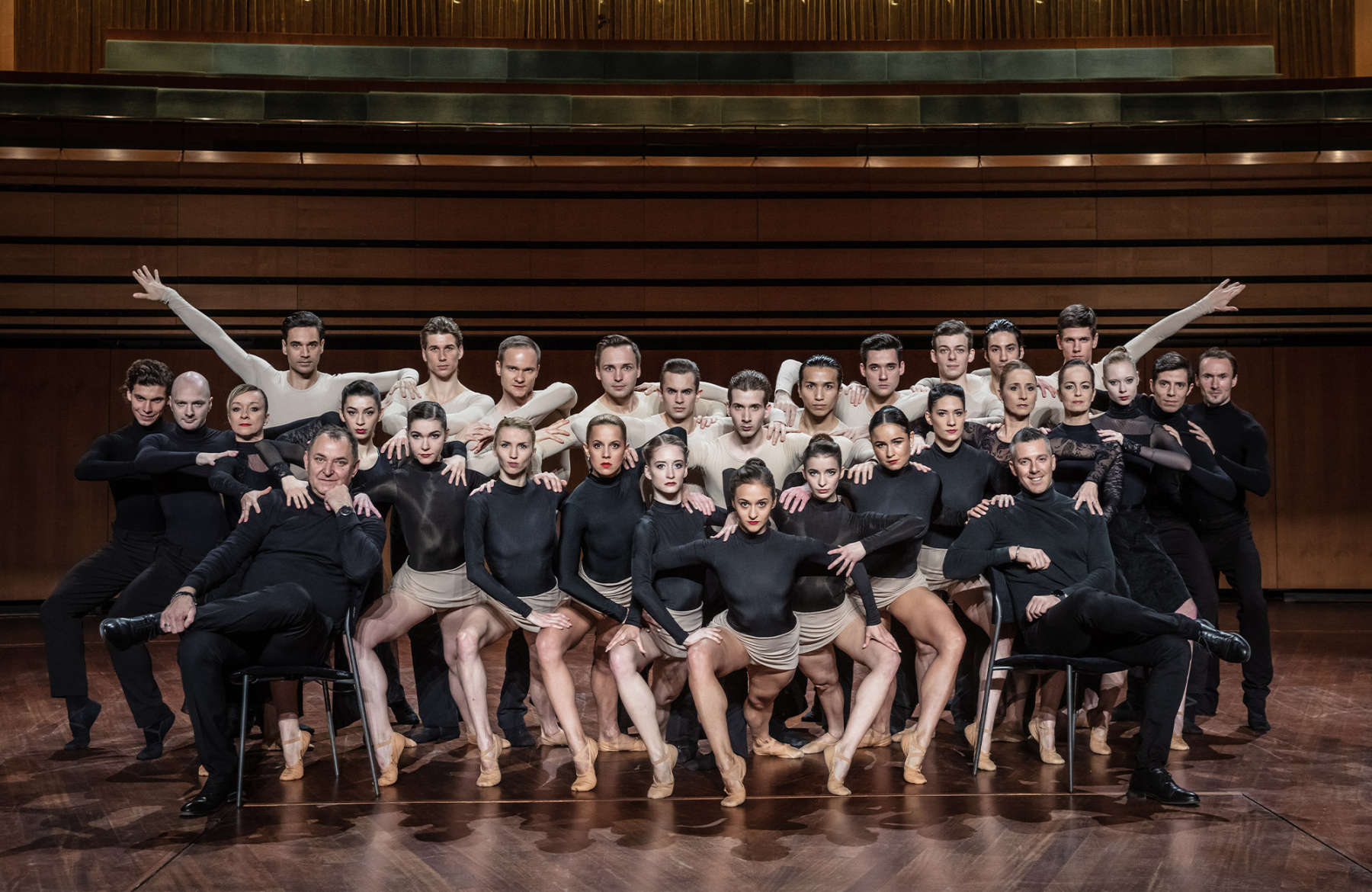
The Ballet Company of Győr’s Peer Gynt is a restless resident of a psychiatric ward who exists – and investigates the world – trapped between parallel realities. But where does reality end and dream begin? “The human mind is a wonderful device capable of fusing different planes together. For Peer, it was his mother who opened the gateway between the two realms, and it is somewhere along the borderline between them that he wanders. Sometimes, even the viewer can’t be sure where he is going,” says Velekei.
-
Peer Gynt: Luka Dimic
Aase: Adrienn Matuza
Stag bull: Zoltán Jekli
Solvejg: Eszter Adria Herkovics
Ingrid: Gerda Guti
Chief physician/ Dovre dad: Krisztián Horváth
Women in green: Eszter Kovács
Child of the women in green: Ádám BellovitsStag bulls: Nicolas Askonidis, Borna Cicak, Patrik Engelbrecht, Máté Gémesi, Thales Henrique, Luigi Iannone, Ábel Ónódy, Richard Szentiványi, Daichi Uematsu
Elf girls: Tetiana Baranovska, Margarida Filipe, Franciska Nagy, Tatiana Shipilova, Rebeka Szendrey
Village girls: Tetiana Baranovska, Melinda Berzéki, Gerda Guti, Lea Napsugár Joó, Franciska Nagy, Tatiana Shipilova, Rebeka Szendrey, Barbara Tüű
Village men: Nicolas Askonidis, Borna Cicak, Patrik Engelbrecht, Máté Gémesi, Thales Henrique, Luigi Iannone, Joāo Oliveira, Ábel Ónódy, Levente Puczkó-Smith, Richard Szentiványi, Daichi Uematsu
In more roles: Tetiana Baranovska, Melinda Berzéki, Margarida Filipe, Gerda Guti, Lea Napsugár Joó, Franciska Nagy, Park Chaewon, Tatiana Shipilova, Rebeka Szendrey, Barbara Tüű
Nicolas Askonidis, Borna Cicak, Patrik Engelbrecht, Máté Gémesi, Thales Henrique, Luigi Iannone, Joāo Oliveira, Ábel Ónódy, Levente Puczkó-Smith, Richard Szentiványi, Daichi UematsuFeaturing: Hanna Takács – vocal
Costumes: Rita Velich
Costume production: Gabi Győri
Set design: Mara Bozóki
Visual design: Lajos Katavics
Lighting: Ferenc Stadler
Music: montage
Original work by: Henrik Ibsen
Dramaturg: Alexandra Csepi
Assistant: Levente Bajári
Choreographer: László Velekei -
It was quite the extraordinary voyage that choreographer László Velekei, the director of the Ballet Company of Győr, embarked upon in deciding to bring Henrik Ibsen’s 19th-century drama of humanity about Peer Gynt and his lifelong search for happiness to the dance stage with his ensemble. “I believe in the power of intuition: I prefer to choose pieces based on my feelings. For a while, everything had pointed me in the direction of Peer Gynt. Many people were asking me, for example, why I only create productions in which the female protagonist is the one confronting society. A son’s relationship with his parents is always complex and somewhat elusive, so my own family stories and childhood memories also played a role in the decision,” says the choreographer.
The play’s countless settings, vast array of characters and numerous and varied adventures challenge even those directors working in spoken word theatre. And although this may sound strange, it is precisely its pliable images, the way it lends itself to abstraction, and its associative thinking that make Ibsen’s monumental text ideal material for narrative dance theatre. “Together with dramaturg Alexandra Csepi,” the choreographer continues, “I focused on the figure of the son, and selected from the vast material the scenes in which Peer comes into contact with his – present in person – mother, and his invisible father. The balance between the tangible reality that surrounds him and the world that exists only in his imagination and is shaped by his thoughts and visions is the guiding concept behind the two-part show.”
Complex symbols, such as the majestic deer antlers dominating the stage, find their way into the open, black space, which is at once abstract and almost empty. The creators have left the interpretation of these objects up to the viewer. The visuals are clearly closer to our present day rather than Ibsen’s time, which also helps establish a direct connection with the story.
The Ballet Company of Győr’s Peer Gynt is a restless resident of a psychiatric ward who exists – and investigates the world – trapped between parallel realities. But where does reality end and dream begin? “The human mind is a wonderful device capable of fusing different planes together. For Peer, it was his mother who opened the gateway between the two realms, and it is somewhere along the borderline between them that he wanders. Sometimes, even the viewer can’t be sure where he is going,” says Velekei.