Digital programme booklet
-
Corelli
Concerto Grosso in G minor (‘Christmas Concerto’), Op. 6, No. 8Vivaldi
Concerto in C minor for Cello, Strings and Basso Continuo, RV 401 – transcribed for flugelhornLocatelli
Concerto Grosso in C minor, Op. 1, No. 11Vivaldi
Concerto in C major for Two Flutes, Strings and Basso Continuo, RV 533 – transcribed in B-flat major for two trumpetsGeminiani
Concerto Grosso in D minor (‘La Follia’) – after Corelli, H. 143A. Marcello
Oboe Concerto in C minor – transcribed for trumpetVivaldi
Violin Concerto in D major (‘Il Grosso Mogul’), RV 208Vivaldi
Concerto in G minor for Two Cellos, Strings and Basso Continuo, RV 531 – transcribed for flugelhorn
Featuring:Gábor Boldoczki, Sergei Nakariakov – trumpet, flugelhorn
Andrés Gabetta – violin
Gabetta Consort
(artistic director and concertmaster: Andrés Gabetta)
-
On this special occasion, Gábor Boldoczki and Sergei Nakariakov visit Müpa Budapest together with the musicians of the Gabetta Consort, led by Andrés Gabetta, to demonstrate the amazing possibilities of the trumpet. While Boldoczki has earned himself a leading position in the international concert scene with his brilliant, crystal-clear sound and unique bel canto playing, Nakariakov’s stunning virtuosity, velvety sound and profound sensuality have led to him being declared the “Paganini” (or even “Caruso”) of the trumpet. Like the soloists, the Gabetta Consort, which specialises in the Italian and French Baroque repertoires, regularly appear in Europe’s top concert halls, having honed their performances through a common musical language and playing together with great sensitivity over the course of many years.
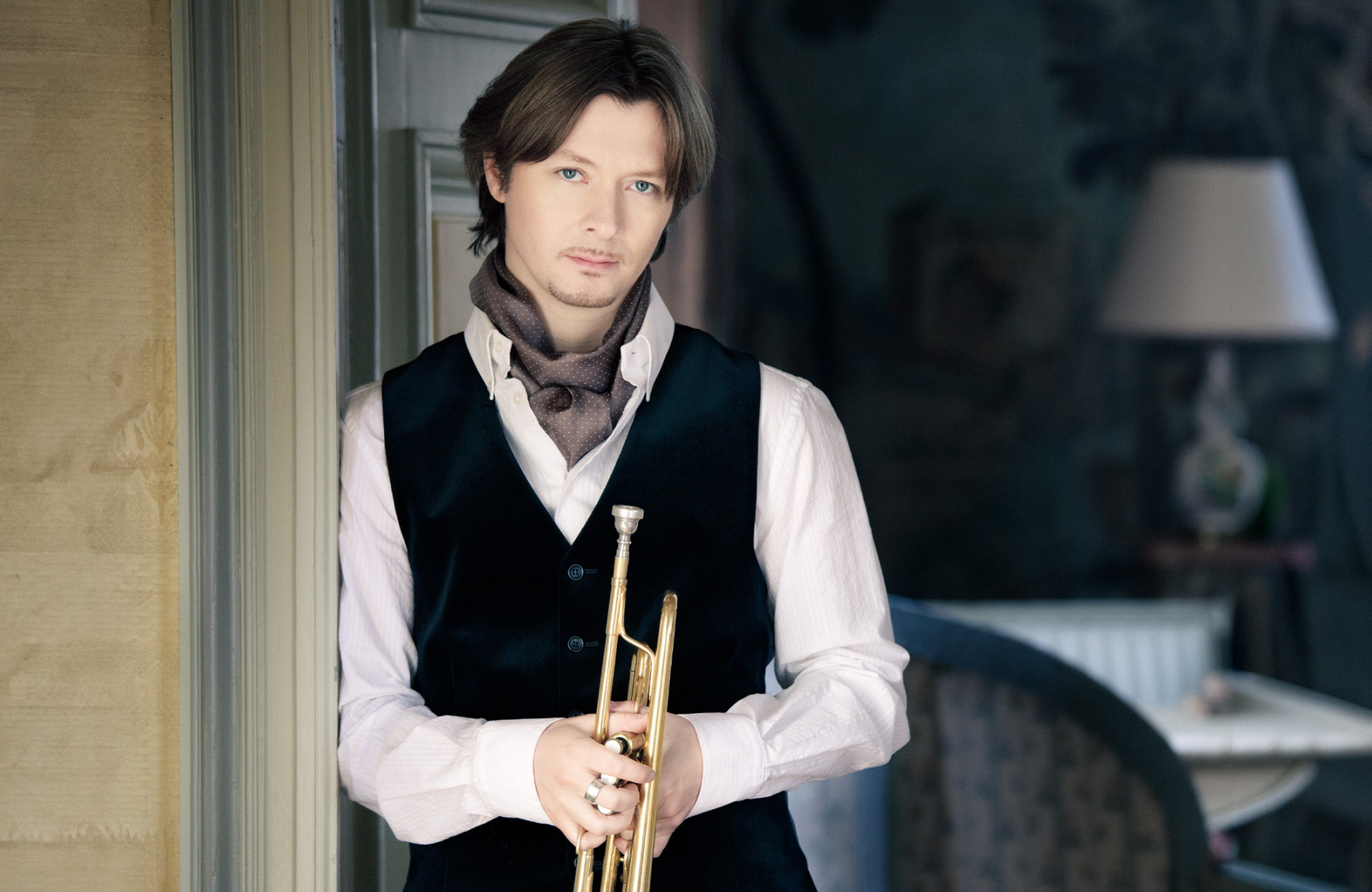
© Thierry Cohen
Expanding the playing field for the artists taking the stage tonight is the fact that a significant portion of the Italian Baroque concertos featured on their programme have been reborn as transcriptions, further highlighting the musicians’ creativity and imagination. The members of this team are already well acquainted with each other: in 2013 they released a joint album of arrangements of works by Antonio Vivaldi (1678–1741) entitled Tromba Veneziana. One compelling aspect of this ongoing collaboration is that Boldoczki and Nakariakov both play on modern trumpets, while Gabetta Consort employ period instruments.
The astonishingly rich musical world of the Italian Baroque is represented this evening by some of Vivaldi’s concertos, along with compositions by Arcangelo Corelli (1653–1713), Pietro Locatelli (1695–1764), Francesco Geminiani (1687–1762) and Alessandro Marcello (1673–1747). Serving as a particularly beautiful opening for this Advent-season concert is Corelli’s “Christmas” concerto, noted in the inscription as being explicitly “written for Christmas Eve”. Its final movement, Pastorale, ranks among the composer’s loveliest creations. Locatelli’s Concerto Grosso in C minor reveals the voice of a young composer full of ideas as he constantly keeps the audience under his spell with the twists and turns of his whimsical musical language. Corelli’s series of variations on the popular tune “La Follia” was arranged for strings by his student Geminiani, who instilled a unique sense of harmony between the different elements of the orchestra. Improvisation also plays a major role in the overall programme, notably in the transcription of Marcello’s Oboe concerto, whose slow movement in particular calls for sensitive and delicate embellishments.
-
Corelli
Concerto Grosso in G minor (‘Christmas Concerto’), Op. 6, No. 8Vivaldi
Concerto in C minor for Cello, Strings and Basso Continuo, RV 401 – transcribed for flugelhornLocatelli
Concerto Grosso in C minor, Op. 1, No. 11Vivaldi
Concerto in C major for Two Flutes, Strings and Basso Continuo, RV 533 – transcribed in B-flat major for two trumpetsGeminiani
Concerto Grosso in D minor (‘La Follia’) – after Corelli, H. 143A. Marcello
Oboe Concerto in C minor – transcribed for trumpetVivaldi
Violin Concerto in D major (‘Il Grosso Mogul’), RV 208Vivaldi
Concerto in G minor for Two Cellos, Strings and Basso Continuo, RV 531 – transcribed for flugelhorn
Featuring:Gábor Boldoczki, Sergei Nakariakov – trumpet, flugelhorn
Andrés Gabetta – violin
Gabetta Consort
(artistic director and concertmaster: Andrés Gabetta) -
On this special occasion, Gábor Boldoczki and Sergei Nakariakov visit Müpa Budapest together with the musicians of the Gabetta Consort, led by Andrés Gabetta, to demonstrate the amazing possibilities of the trumpet. While Boldoczki has earned himself a leading position in the international concert scene with his brilliant, crystal-clear sound and unique bel canto playing, Nakariakov’s stunning virtuosity, velvety sound and profound sensuality have led to him being declared the “Paganini” (or even “Caruso”) of the trumpet. Like the soloists, the Gabetta Consort, which specialises in the Italian and French Baroque repertoires, regularly appear in Europe’s top concert halls, having honed their performances through a common musical language and playing together with great sensitivity over the course of many years.
© Thierry Cohen
Expanding the playing field for the artists taking the stage tonight is the fact that a significant portion of the Italian Baroque concertos featured on their programme have been reborn as transcriptions, further highlighting the musicians’ creativity and imagination. The members of this team are already well acquainted with each other: in 2013 they released a joint album of arrangements of works by Antonio Vivaldi (1678–1741) entitled Tromba Veneziana. One compelling aspect of this ongoing collaboration is that Boldoczki and Nakariakov both play on modern trumpets, while Gabetta Consort employ period instruments.
The astonishingly rich musical world of the Italian Baroque is represented this evening by some of Vivaldi’s concertos, along with compositions by Arcangelo Corelli (1653–1713), Pietro Locatelli (1695–1764), Francesco Geminiani (1687–1762) and Alessandro Marcello (1673–1747). Serving as a particularly beautiful opening for this Advent-season concert is Corelli’s “Christmas” concerto, noted in the inscription as being explicitly “written for Christmas Eve”. Its final movement, Pastorale, ranks among the composer’s loveliest creations. Locatelli’s Concerto Grosso in C minor reveals the voice of a young composer full of ideas as he constantly keeps the audience under his spell with the twists and turns of his whimsical musical language. Corelli’s series of variations on the popular tune “La Follia” was arranged for strings by his student Geminiani, who instilled a unique sense of harmony between the different elements of the orchestra. Improvisation also plays a major role in the overall programme, notably in the transcription of Marcello’s Oboe concerto, whose slow movement in particular calls for sensitive and delicate embellishments.