one interval
Conductor:
Featuring:
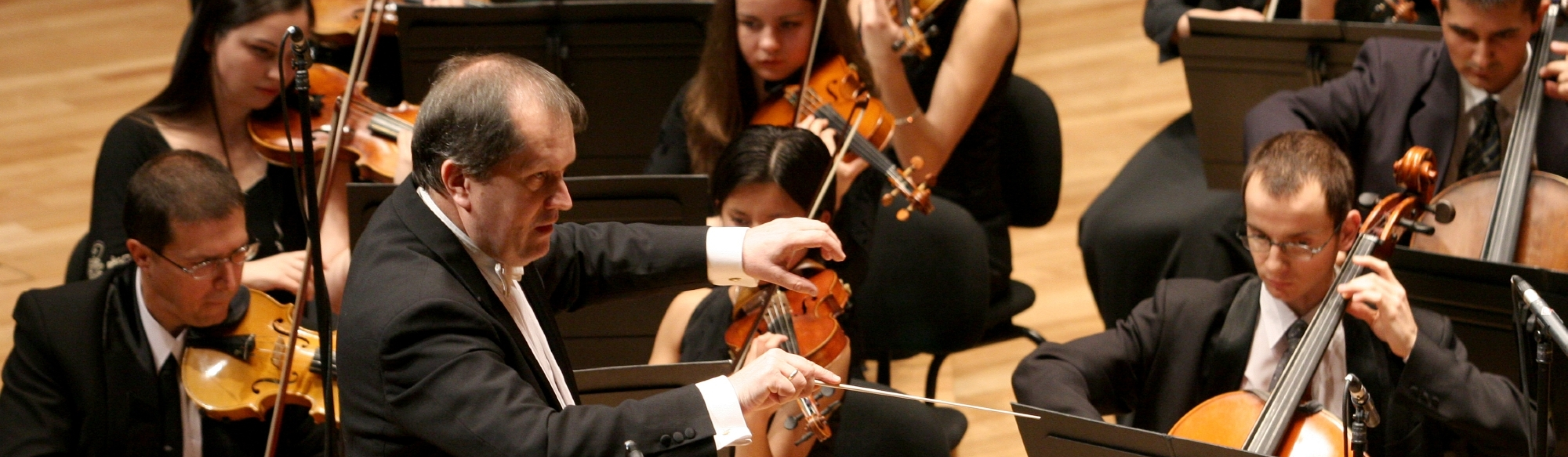
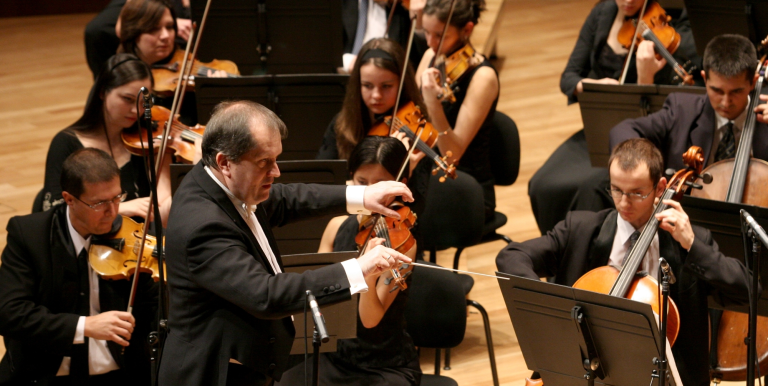
Who has never wondered how a symphony orchestra operates and how it gets ready for a concert, or how folk music ensembles practice and what happens at the rehearsals? In the first half of the two-part concerts, the audience get a glimpse, under the expert guidance of the moderator, into the everyday life of the rehearsal hall, as well as – from the instructions and explanations given and the repeated playing and practising of certain passags – into the musical processes. In the second part of the concert, the performers appear dressed for the stage, or in costume, and the audience will get the chance to see and hear the parts of the programme with which they have just developed a thorough acquaintance in the context of a staged performance.
The depiction of moving water, waves and their interplay with light have all long been a favourite musical theme among composers. It might well be Claude Debussy who surpassed all others in this regard with his work La Mer “The Sea”. Three symphonic sketches for orchestra: I) Mer belle aux îles Sanguinaires (Beautiful Sea at the Sanguinaire Islands); II) Jeux de vagues (The Play of the Waves); III) Le vent fait danser La Mer (The Wind Makes the Sea Dance). “I have been working on this from countless memories, and I'd like to finish it here (in Bichai),” wrote Debussy to his publisher in a letter informing him he had begun composing the work. The “countless memories” the composer mentions are partly his experience of the sea as a child and partly depictions of it in different disciplines of the arts (painting and literature). Just like the the painters of the day, he too was preoccupied by the sight of the endless and ceaselessly vibrating surface of water, its richness assaulting the senses every moment with new impressions. Debussy returned again and again to the problem of depicting water and the sea in music. Moving further and further with the Romantic masters from whom he had learned, he started to experiment with innovative techniques. At the centre of the concert stands Debussy's uniquely atmospheric symphonic work portraying the multifarious world of water with the tools of a painter.
Age: 10-14 year
Presented by: Müpa Budapest




-
We wish to inform you that in the event that Müpa Budapest's underground garage and outdoor car park are operating at full capacity, it is advisable to plan for increased waiting times when you arrive. In order to avoid this, we recommend that you depart for our events in time, so that you you can find the ideal parking spot quickly and smoothly and arrive for our performance in comfort. The Müpa Budapest underground garage gates will be operated by an automatic number plate recognition system. Parking is free of charge for visitors with tickets to any of our paid performances on that given day. The detailed parking policy of Müpa Budapest is available here.