Digital programme booklet
-
Cast:
Mozart: Gioele Marcante, Lotár Vincze
His father: Gergely Czár
His mother: Adrienn Nyeste
His sister: Málna Csató
Salieri: Francesco Totaro
Muses: Diletta Ranuzzi, Alisa Kurilenkova, Hanna Dorsich
Death: Csongor Füzesi
Aloysia: Letizia Melchiorre
Constanze: Miriam Munno
Archbishop: Róbert Kiss
People and angels: Málna Csató, Hanna Dorsich, Alisa Kurilenkova, Letizia Melchiorre, Miriam Munno, Adrienn Nyeste, Diletta Ranuzzi, Boglárka Rudisch, Gergely Czár, Csongor Füzesi, Róbert Kiss, Gioele Marcante, Francesco Totaro, Lotár VinczeFeaturing:
Szeged Symphony Orchestra
Viktor Vaszy ChoirConductor:
Sándor Gyüdi
Creators:Music: Wolfgang Amadeus Mozart
Costume designer: Bianca Imelda Jeremias
Set designer, scenery: Kázmér Tóth
Set construction: Scabello
Lighting designer: Dániel Szabó
Dramaturgy: Brigitta Szokolai
Co-choreographer: Gergely Czár and the Company
Choreographer-director, artistic director: Tamás Juronics
Ballet director: András PatakiInternational representative: BALLETS
The premiere was a co-production of Szeged Contemporary Dance Company and Müpa Budapest.
-
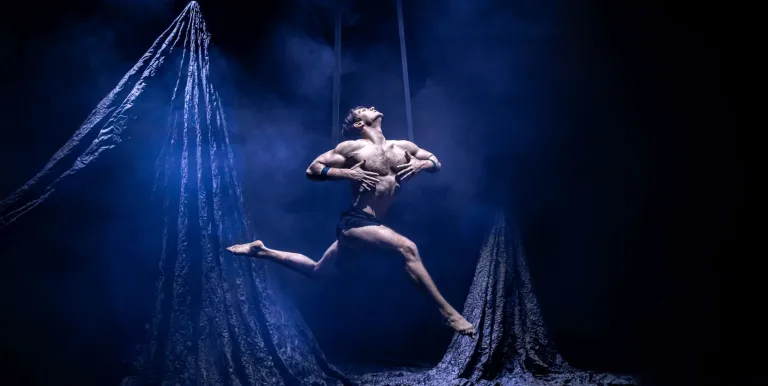
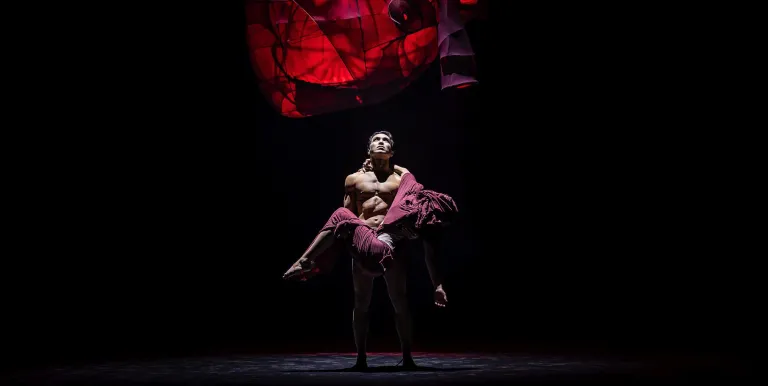
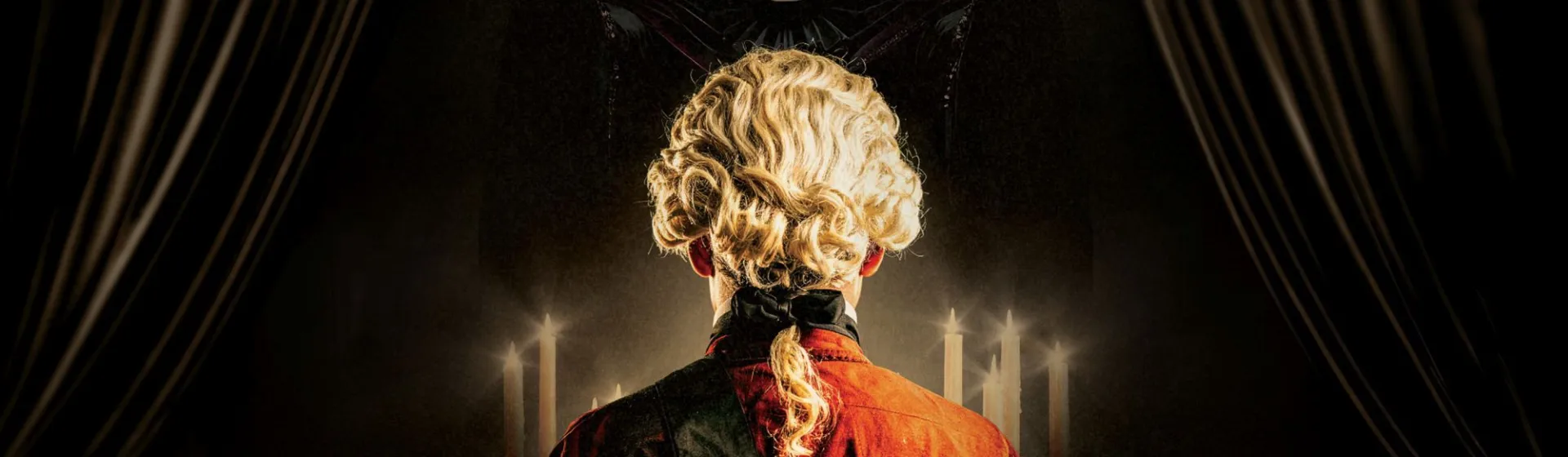
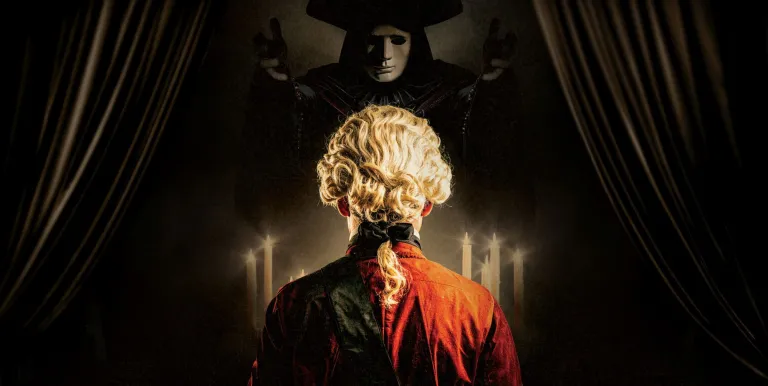
Although the genius born more than two and a half centuries ago lived only 35 years, few musicians in music history have exerted such a profound influence on their contemporaries, as well as both their immediate successors and those that followed centuries later. When it comes to the latest premiere by the Szeged Contemporary Dance Company, there can be no doubt: this Amadeus is not that Amadeus. Based on the title, many people will envisage a dance adaptation of Miloš Forman’s film, a winner of eight Oscars, but choreographer Tamás Juronics, co-choreographer Gergely Czár and the company had something very different in mind.
At the heart of Tamás Juronics’s vision – alongside the legend, personality and music of Mozart – lies the composer’s relationship to the transcendent and to the heavenly. On stage, the forces that motivated, influenced and elevated him will all come to life. Juronics is of the opinion that Mozart’s oeuvre can primarily be understood and explored from the perspectives of love and death. As the choreographer said in an interview: “Just as the earthly world is only one part of the universe, Mozart’s creations are mere fragments of his spirit. I believe his talent also illuminates the other side.”
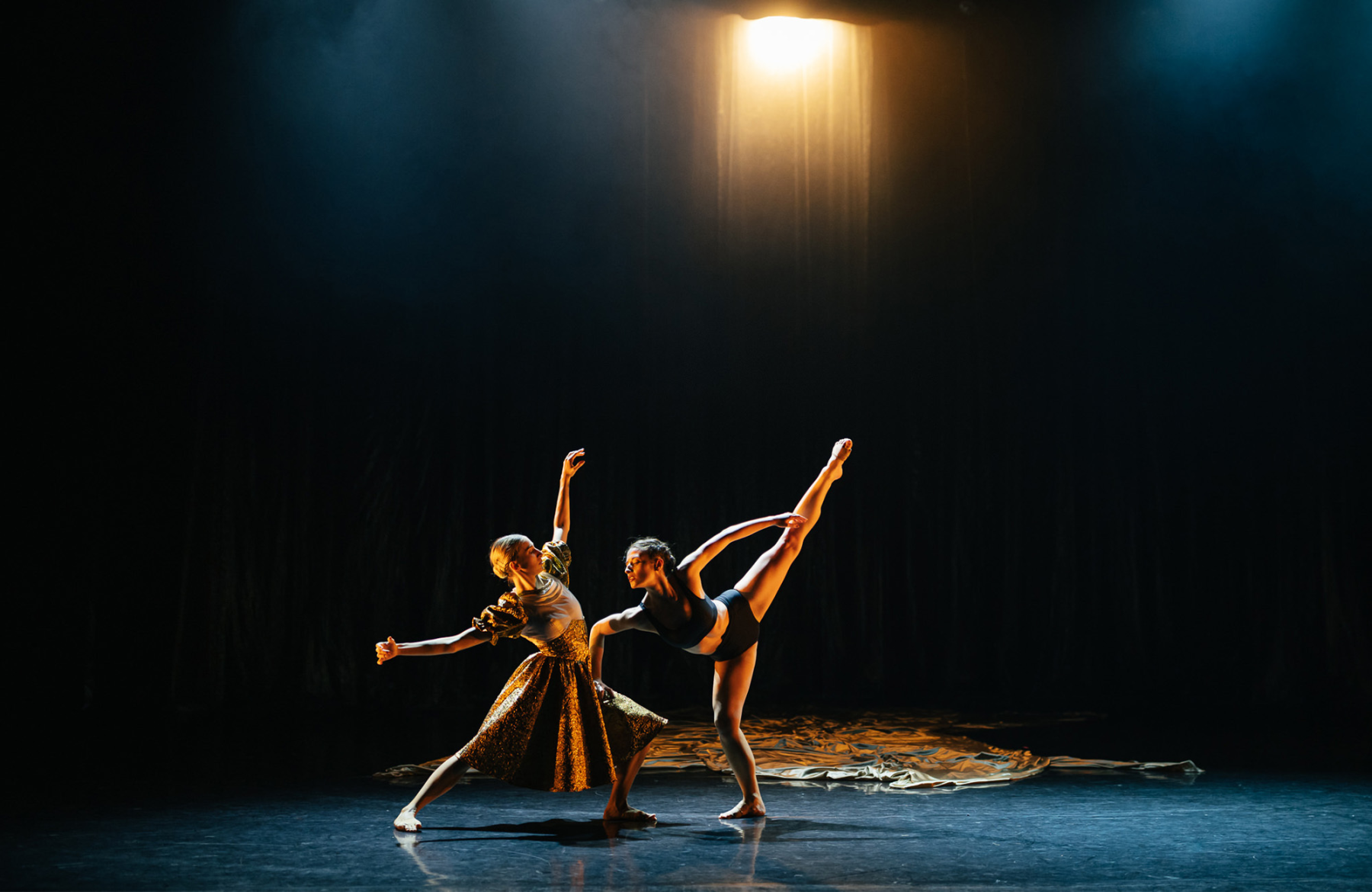
© Zoltán Tarnavölgyi
Alongside Mozart, who appears in multiple guises on stage, emerge his parents, sister, great rival Salieri and other symbolic figures – all characters who, in one way or another, had an influence on the composer’s life. By the time the performance reaches its finale, we also come to understand that death was not a terrifying, alien realm to Amadeus but a conclusion arising from a full life – or perhaps the overture to something else? Celestial messengers draw close to him, while the restless genius proudly embraces this new challenge, now beyond the spheres... “Earthly existence was not sufficient for Mozart’s creative unfolding and the scale of his talent. As such, I regard his death not as closure, but as rebirth,” Juronics formulated in an interview.
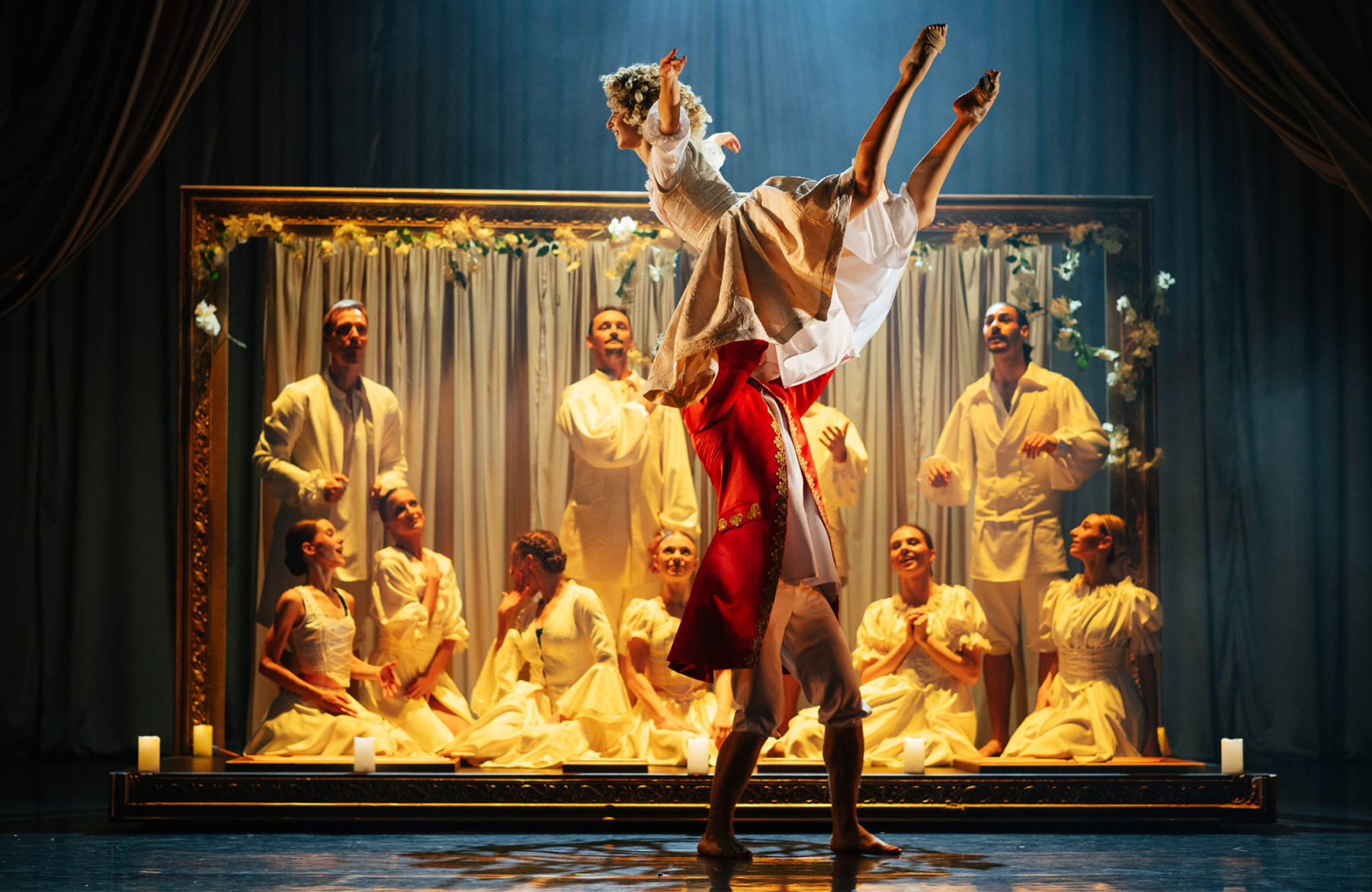
© Zoltán Tarnavölgyi
The grand scenography is the work of Tamás Juronics and his permanent collaborators: the striking set is by Kázmér Tóth, the dazzling costumes that remain faithful to the period are by Bianca Imelda Jeremias, and the lighting design that also tells its own story is by Dániel Szabó. The Szeged Symphony Orchestra and the Vaszy Viktor Choir are led by the production’s musical director, Sándor Gyüdi: the musical world of the first part is defined by excerpts from symphonies and opera overtures, while the second is shaped by the Requiem.
-
Cast:
Mozart: Gioele Marcante, Lotár Vincze
His father: Gergely Czár
His mother: Adrienn Nyeste
His sister: Málna Csató
Salieri: Francesco Totaro
Muses: Diletta Ranuzzi, Alisa Kurilenkova, Hanna Dorsich
Death: Csongor Füzesi
Aloysia: Letizia Melchiorre
Constanze: Miriam Munno
Archbishop: Róbert Kiss
People and angels: Málna Csató, Hanna Dorsich, Alisa Kurilenkova, Letizia Melchiorre, Miriam Munno, Adrienn Nyeste, Diletta Ranuzzi, Boglárka Rudisch, Gergely Czár, Csongor Füzesi, Róbert Kiss, Gioele Marcante, Francesco Totaro, Lotár VinczeFeaturing:
Szeged Symphony Orchestra
Viktor Vaszy ChoirConductor:
Sándor Gyüdi
Creators:Music: Wolfgang Amadeus Mozart
Costume designer: Bianca Imelda Jeremias
Set designer, scenery: Kázmér Tóth
Set construction: Scabello
Lighting designer: Dániel Szabó
Dramaturgy: Brigitta Szokolai
Co-choreographer: Gergely Czár and the Company
Choreographer-director, artistic director: Tamás Juronics
Ballet director: András PatakiInternational representative: BALLETS
The premiere was a co-production of Szeged Contemporary Dance Company and Müpa Budapest.
-
Although the genius born more than two and a half centuries ago lived only 35 years, few musicians in music history have exerted such a profound influence on their contemporaries, as well as both their immediate successors and those that followed centuries later. When it comes to the latest premiere by the Szeged Contemporary Dance Company, there can be no doubt: this Amadeus is not that Amadeus. Based on the title, many people will envisage a dance adaptation of Miloš Forman’s film, a winner of eight Oscars, but choreographer Tamás Juronics, co-choreographer Gergely Czár and the company had something very different in mind.
At the heart of Tamás Juronics’s vision – alongside the legend, personality and music of Mozart – lies the composer’s relationship to the transcendent and to the heavenly. On stage, the forces that motivated, influenced and elevated him will all come to life. Juronics is of the opinion that Mozart’s oeuvre can primarily be understood and explored from the perspectives of love and death. As the choreographer said in an interview: “Just as the earthly world is only one part of the universe, Mozart’s creations are mere fragments of his spirit. I believe his talent also illuminates the other side.”
© Zoltán Tarnavölgyi
Alongside Mozart, who appears in multiple guises on stage, emerge his parents, sister, great rival Salieri and other symbolic figures – all characters who, in one way or another, had an influence on the composer’s life. By the time the performance reaches its finale, we also come to understand that death was not a terrifying, alien realm to Amadeus but a conclusion arising from a full life – or perhaps the overture to something else? Celestial messengers draw close to him, while the restless genius proudly embraces this new challenge, now beyond the spheres... “Earthly existence was not sufficient for Mozart’s creative unfolding and the scale of his talent. As such, I regard his death not as closure, but as rebirth,” Juronics formulated in an interview.
© Zoltán Tarnavölgyi
The grand scenography is the work of Tamás Juronics and his permanent collaborators: the striking set is by Kázmér Tóth, the dazzling costumes that remain faithful to the period are by Bianca Imelda Jeremias, and the lighting design that also tells its own story is by Dániel Szabó. The Szeged Symphony Orchestra and the Vaszy Viktor Choir are led by the production’s musical director, Sándor Gyüdi: the musical world of the first part is defined by excerpts from symphonies and opera overtures, while the second is shaped by the Requiem.