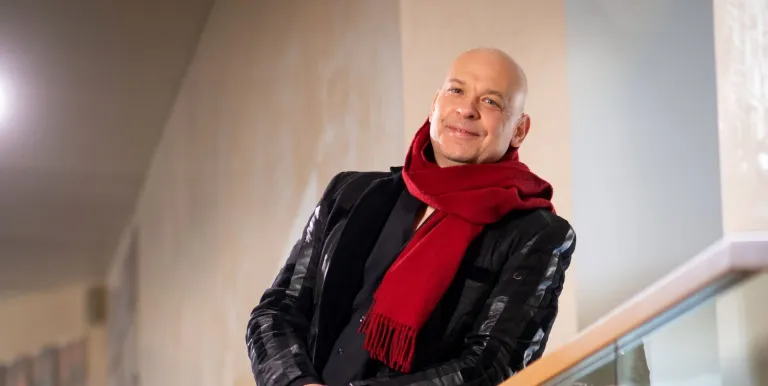
Conductor:
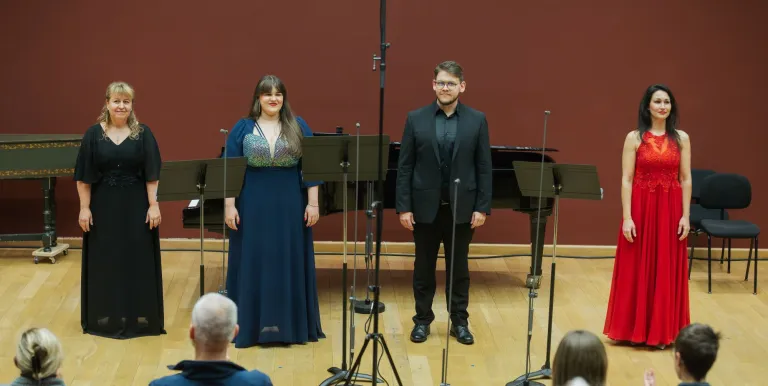
Featuring:
Stravinsky
Suite italienne (from Pulcinella)
Stravinsky
Concertino
Stravinsky
Septet
Stravinsky’s ballet, Pulcinella, not only marks a turning point in the composer’s oeuvre: music historians consider it a milestone in modern music too, claiming it marks the beginning of neo-classicism. It was Diaghilev who drew the already world-famous composer’s attention to the music of Pergolesi in 1919. Stravinsky began studying the works of the Italian musician, and produced a ballet from various works of his, evoking characters and situations from the old Neapolitan commedia dell’arte. In 1922, he composed a suite from Pulcinella, a staple piece in concert halls ever since. In Suite italienne he ‘recycles’ certain movements of the ballet. The first version of the Suite italienne was written for violin and piano in 1925; then, in 1932, Stravinsky produced the cello version for his world-famous compatriot Gregor Piatigorsky, while in 1933 he revised the suite once again (and for the last time) to please violinist Samuel Dushkin. The charm of Pergolesi’s music, combined with Stravinsky’s piquant and ironic style, makes Suite italienne, the only piece for cello and piano in Stravinsky’s oeuvre, extraordinarily enjoyable.
Three Pieces for String Quartet had its world premiere in the 1915–1916 season performed by the Flonzaley String Quartet. Afterwards, the leader of the quartet, Alfred Pochon, advised the composer to write further string quartets. Stravinsky spent the summer in Carantec, Brittany, with his first wife. From here he sent angry letters to his friend, Charles Ferdinand Ramuz (librettist of Histoire du soldat), because people had the nerve to sing loudly and drunkenly from the small hours on, just in front of his room, denying him sleep as well as making composition impossible. The fact that he was still able to compose is well demonstrated by the single-movement Concertino, the score of which Stravinsky managed to submit to the quartet in the autumn. He arranged the piece for a twelve-strong instrumental ensemble in 1952.
Scored for clarinet, French horn, bassoon, piano, violin, viola, and cello, Septet was written in 1953, and premiered in January 1954 in Dumbarton Oaks, conducted by the composer. By this date Stravinsky had already scrutinised and learned Webern’s composition procedures and, partly, the technique of serialism. In spite of its serialistic development, Septet remains a tonal work in A major.
- Tickets of each of the 50 minute concerts are 990 HUF, anyone purchasing three tickets is entitled to enter the fourth free of charge. So the cost of attending all 11 concerts is 8910 HUF instead of 10890 HUF.
Presented by: Budapest Festival Orchestra, Palace of Arts
-
Parking is free of charge for visitors with tickets to any of our paid performances on the day of the performance. Upon entering the car park, you can either scan the barcode or QR code on your concert ticket, or take a parking ticket and validate it together with your concert ticket at one of the payment machines. Either option will enable you to exit through the gates operated by the number plate recognition system. We recommend that you plan to arrive at Müpa in good time, so that you can find the ideal parking spot quickly and without difficulty and arrive at your performance comfortably. The detailed parking policy of Müpa Budapest is available here.