





Digital programme booklet
-
Armide: Marie-Andrée Bouchard-Lesieur
Renaud: Antonin Rondepierre
Glory, Phénice, Nymph: Judith van Wanroij
Wisdom, Sidonie: Floriane Hasler
Lucinde, Shepherdess, Choir Leader: Gwendoline Blondeel
Hatred, Aronte, Artémidore: David Witczak
Hidraot, Ubalde: Lysandre Châlon
Danish Knight: David TricouFeaturing:
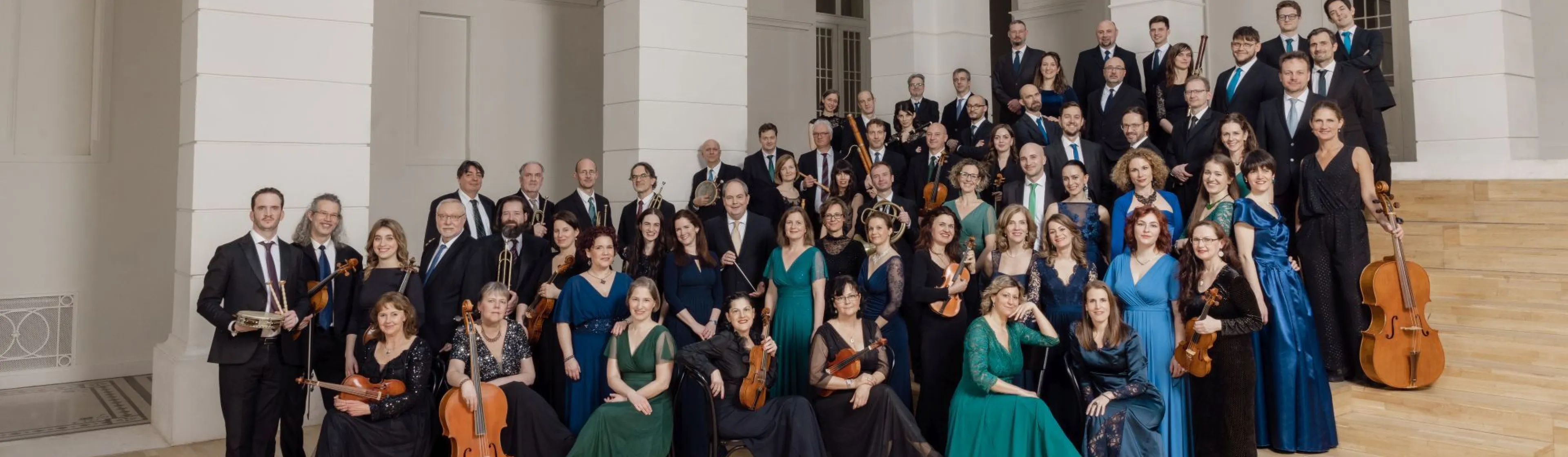
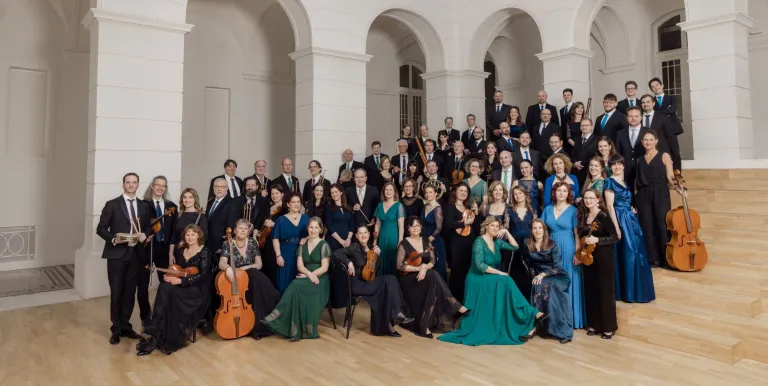
Orfeo Orchestra (on period instruments)
Purcell ChoirScore edited by:
Nicolas Sceaux
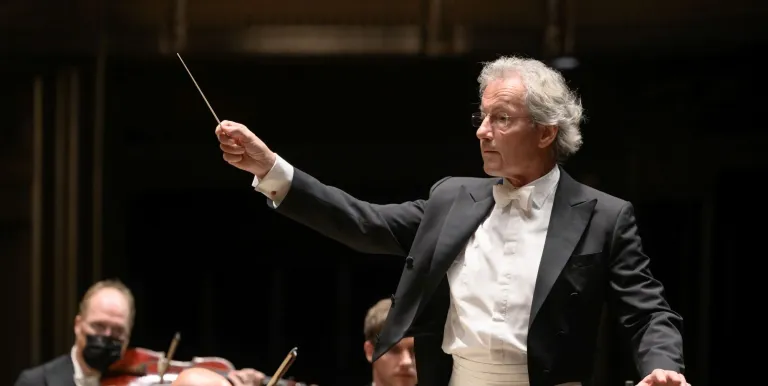
Conductor:
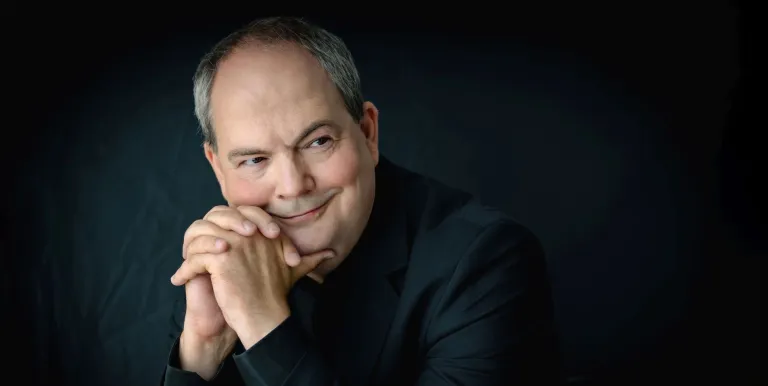
György Vashegyi
Collaborating partner: Haydneum – Hungarian Centre for Early Music
Haydneum is supported by the Prime Minister’s Office and the Bethlen Gábor Fund Management.

-
Winter 1685/86, Paris – Versailles. Times are increasingly sombre – both in politics and personal life. Louis XIV recently revoked the Edict of Nantes, issued by Henry IV in 1598: the Huguenots are once again being persecuted in France…
The Sun King’s favoured musician, Jean-Baptiste Lully, is tormented by serious illness, yet the “Superintendent of the King’s Music” has also seen his social standing tarnished: a scandal surrounds his relationship with one of the King’s pages, and his leading singers are on strike following an unfortunate decision to withdraw their pensions.
It is under these circumstances that the ripest fruit of the Quinault–Lully partnership is premiered: the tragédie en musique entitled Armide. Even 70 years later, Jean-Philippe Rameau still regarded Lully’s music in this work as a model of dramatic expressiveness, while Denis Diderot, 85 years on, described Philippe Quinault’s libretto as a delightful poem (“un poème délicieux”).
It was Louis XIV himself who selected the theme from three topics offered by Quinault – an absolutist monarch would never allow another to make such an important decision! The plot is drawn from Torquato Tasso’s epic poem Jerusalem Delivered (1581) and is set during the Crusades. Louis XIV now wishes to see himself not as a mythological hero, nor as Apollo, but as the Christian knight Rinaldo/Renaud, defender of the faith.
Yet the title role belongs to Armida/Armide, the Saracen sorceress who, in her frenzied passion for the enemy knight, casts the most enchanting – and musically dazzling – spells. (All she desires is for her love to be requited…)
The tragic realization of the inequality inherent in all love: “Hélas! que mon amour est différent du sien! – How different my love is from his!”
In the duel between Love and martial Glory, though, it is the latter that ultimately triumphs. Even so, the theme appears to have been overly erotic for Madame de Maintenon, the King’s devoutly Catholic (secret) wife. Might this explain why the opera was premiered not at Versailles, but in Paris, on 15 February 1686? We cannot know for certain.
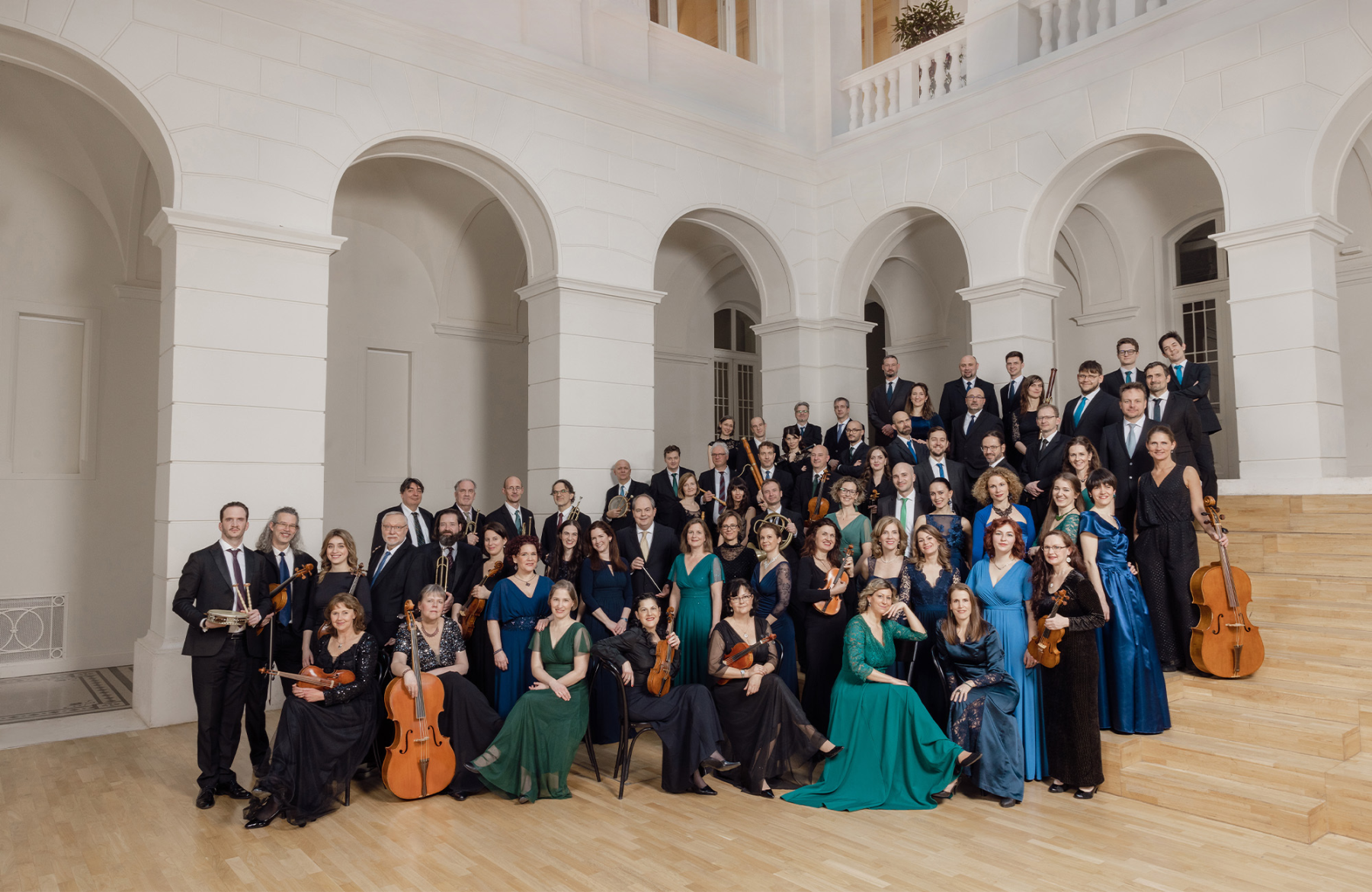
Armide was nevertheless staged in 1745/46 at the court of the Sun King’s great-grandson Louis XV in Versailles – albeit adapted in places to suit the changed tastes of the era, and spiced up by additional music by two composers popular at the time (and now being rediscovered): François Francoeur and François Rebel. We present this version here in concert thanks to years of fruitful collaboration with the Centre de Musique Baroque de Versailles (CMBV). György Vashegyi’s ensembles – Orfeo Orchestra and Purcell Choir – are joined by solo singers – Marie-Andrée Bouchard-Lesieur, Antonin Rondepierre, Judith van Wanroij, Floriane Hasler, Gwendoline Blondeel, David Witczak, Lysandre Châlon, David Tricou – with an intimate knowledge of the genre.
© Szilvia Csibi
-
Armide: Marie-Andrée Bouchard-Lesieur
Renaud: Antonin Rondepierre
Glory, Phénice, Nymph: Judith van Wanroij
Wisdom, Sidonie: Floriane Hasler
Lucinde, Shepherdess, Choir Leader: Gwendoline Blondeel
Hatred, Aronte, Artémidore: David Witczak
Hidraot, Ubalde: Lysandre Châlon
Danish Knight: David TricouFeaturing:
Orfeo Orchestra (on period instruments)
Purcell ChoirScore edited by:
Nicolas Sceaux
Conductor:
György Vashegyi
Collaborating partner: Haydneum – Hungarian Centre for Early Music
Haydneum is supported by the Prime Minister’s Office and the Bethlen Gábor Fund Management.
-
Winter 1685/86, Paris – Versailles. Times are increasingly sombre – both in politics and personal life. Louis XIV recently revoked the Edict of Nantes, issued by Henry IV in 1598: the Huguenots are once again being persecuted in France…
The Sun King’s favoured musician, Jean-Baptiste Lully, is tormented by serious illness, yet the “Superintendent of the King’s Music” has also seen his social standing tarnished: a scandal surrounds his relationship with one of the King’s pages, and his leading singers are on strike following an unfortunate decision to withdraw their pensions.
It is under these circumstances that the ripest fruit of the Quinault–Lully partnership is premiered: the tragédie en musique entitled Armide. Even 70 years later, Jean-Philippe Rameau still regarded Lully’s music in this work as a model of dramatic expressiveness, while Denis Diderot, 85 years on, described Philippe Quinault’s libretto as a delightful poem (“un poème délicieux”).
It was Louis XIV himself who selected the theme from three topics offered by Quinault – an absolutist monarch would never allow another to make such an important decision! The plot is drawn from Torquato Tasso’s epic poem Jerusalem Delivered (1581) and is set during the Crusades. Louis XIV now wishes to see himself not as a mythological hero, nor as Apollo, but as the Christian knight Rinaldo/Renaud, defender of the faith.
Yet the title role belongs to Armida/Armide, the Saracen sorceress who, in her frenzied passion for the enemy knight, casts the most enchanting – and musically dazzling – spells. (All she desires is for her love to be requited…)
The tragic realization of the inequality inherent in all love: “Hélas! que mon amour est différent du sien! – How different my love is from his!”
In the duel between Love and martial Glory, though, it is the latter that ultimately triumphs. Even so, the theme appears to have been overly erotic for Madame de Maintenon, the King’s devoutly Catholic (secret) wife. Might this explain why the opera was premiered not at Versailles, but in Paris, on 15 February 1686? We cannot know for certain.
Armide was nevertheless staged in 1745/46 at the court of the Sun King’s great-grandson Louis XV in Versailles – albeit adapted in places to suit the changed tastes of the era, and spiced up by additional music by two composers popular at the time (and now being rediscovered): François Francoeur and François Rebel. We present this version here in concert thanks to years of fruitful collaboration with the Centre de Musique Baroque de Versailles (CMBV). György Vashegyi’s ensembles – Orfeo Orchestra and Purcell Choir – are joined by solo singers – Marie-Andrée Bouchard-Lesieur, Antonin Rondepierre, Judith van Wanroij, Floriane Hasler, Gwendoline Blondeel, David Witczak, Lysandre Châlon, David Tricou – with an intimate knowledge of the genre.
© Szilvia Csibi