
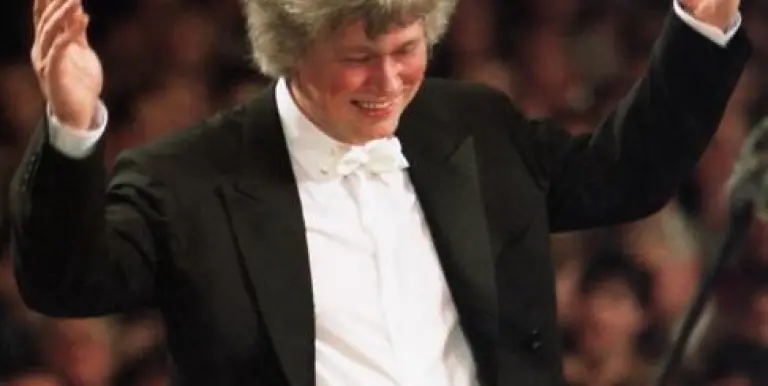
Conductor: Zoltán Kocsis Soloist: Dávid Báll – piano Liszt–Kocsis: Goethe-Festmarsch Liszt–Kocsis: Valse Oubliée No. 2 Liszt–Kocsis: Vallé d’Obermann Liszt–Kocsis: Valse Oubliée No. 3 Liszt–Kocsis: Mazurka brillante Liszt: Piano Concerto No. 2 in A major Kodály: Peacock Variations – variations on a Hungarian folksong Ravel: Bolero Zoltán Kocsis has compiled a veritable orchestral suite from Liszt’s piano works. He is emulating the spirit of Franz Liszt who made a great many arrangements of other composer’s work, frequently aiming to popularise little known pieces. In a similar vein, Kocsis has been exploring some of the less known works in Liszt’s oeuvre, looking for contrasts of theme and mood, from the festive introductory march to the quick dance finale. The earliest sketches for the Piano Concerto in A major date from 1839 but Liszt only finished it in 1849. He then revised it on several occasions and was not satisfied until 1861. The soloist this evening will be Dávid Báll who won the First International Béla Bartók Piano Competition in Szeged in 2004. In 1907, Hungarian poet Endre Ady published his verse The Peacock has Flown, which is itself “a variation on a Hungarian folk song”: a revolutionary extension of the folk text. Kodály set Ady’s poem to music in 1937 to create a famous piece for male choir. The orchestral work is a further development of the choral work. It was commissioned by Willem Mengelberg and the Amsterdam Concertgebouw Orchestra. Maurice Ravel wrote his best-known work in 1928 for the dancer Ida Rubinstein.
Presented by:



-
We wish to inform you that in the event that Müpa Budapest's underground garage and outdoor car park are operating at full capacity, it is advisable to plan for increased waiting times when you arrive. In order to avoid this, we recommend that you depart for our events in time, so that you you can find the ideal parking spot quickly and smoothly and arrive for our performance in comfort. The Müpa Budapest underground garage gates will be operated by an automatic number plate recognition system. Parking is free of charge for visitors with tickets to any of our paid performances on that given day. The detailed parking policy of Müpa Budapest is available here.