
Change
one interval
Change
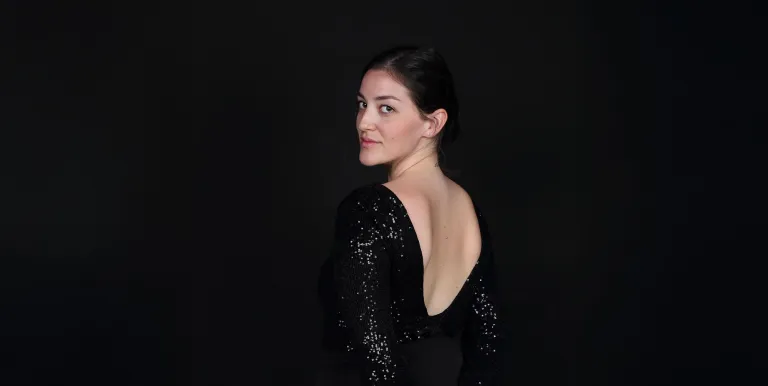
We regret to inform our esteemed audience that Réka Kristóf is replacing Sophie Karthäuser in the role of Sara.
Thank you for your understanding!
Related events
Conductor:
Performers:
Featuring:
When a composer has created a masterpiece in a given genre, their achievements immortalise their name and work, which we preserve in our memory and compare to everything else. What is even more interesting is to get to learn about their initial steps in the area in question and find out what their earliest attempts were like. This concert offers a chance to do this, with a performance of the rarely heard first oratorio by the creator of The Creation, which is performed at Müpa Budapest's New Year's concerts from year to year.
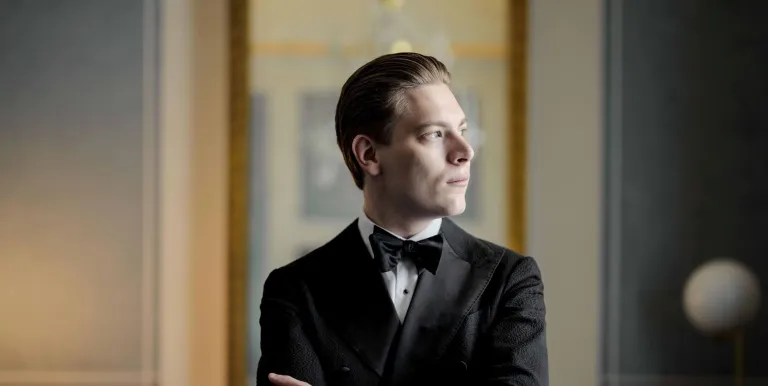
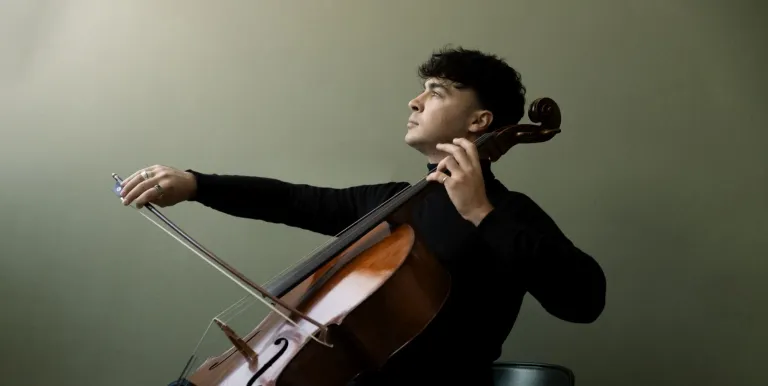
Haydn did not compose his first oratorio until 1775. Then, at the age of 43, he wrote his Italian-language oratorio Il ritorno di Tobia to a libretto by the brothers Giovanni Gastone Boccherini and Luigi Boccherini. The work – his most extensive and demanding piece thus far – was performed a total of three times during his lifetime, all three at concerts of Vienna's Tonkünstler-Societät. The first was during the year of its creation, with a large cast and orchestra and with great success. The second staging took place in 1784 – a notable evening in that in all likelihood it marked Haydn's first meeting with Mozart. The third and final time Il ritorno di Tobia was included at a concert of the Tonkünstler-Societät was on 22 December 1808. On this occasion, the work found a major rival, as this was also the evening of Beethoven's famous composer's concert, which featured the public premières of his fifth and sixth symphonies and his Piano Concerto No. 4 in G major. With leads being sung by Eszter Balogh, Anders Dahlin, Réka Kristóf and Nikolay Borchev, the work will be presented by early music specialists of international renown.The choral and instrumental ensembles performing this production conducted by György Vashegyi will be the two most important workshops of historically informed music performance in Hungary: the Orfeo Orchestra and the Purcell Choir.
Presented by: Müpa Budapest
-
Parking is free of charge for visitors with tickets to any of our paid performances on the day of the performance. Upon entering the car park, you can either scan the barcode or QR code on your concert ticket, or take a parking ticket and validate it together with your concert ticket at one of the payment machines. Either option will enable you to exit through the gates operated by the number plate recognition system. We recommend that you plan to arrive at Müpa in good time, so that you can find the ideal parking spot quickly and without difficulty and arrive at your performance comfortably. The detailed parking policy of Müpa Budapest is available here.