Featuring:
Merula
Ciaccona a tre (from the series Canzoni overo sonate concertate per chiesa e camera, Op. 12, 1637)
Monteverdi
Ecco di dolci raggi il sol armato (Scherzi Musicali, 1632)
Monteverdi
Si dolce è'l tormento (Quarto Scherzo delle ariose vaghezze, 1624)
M. Praetorius
Dances (Terpsichore, 1612)
Schütz
O Jesu nomen dulce
J. S. Bach
Leget euch dem Heiland unter (from the cantata Himmelskönig, sei willkommen, BWV 182)
J. S. Bach
Trio Sonata in C major, BWV 529
J. S. Bach
Mass in B minor – Agnus Dei, BWV 232
A tour of 17th- and 18th-century Europe, under the expert guidance of an outstanding early music ensemble founded a few years ago. How did the Italian masters interpret the aesthetic of Baroque music as opposed to how the musicians of German lands did it? What impact would a study tour of Italy have had on a German composer? In addition to showing the variability between personal styles, the concert also promises richness in terms of the diversity of genres, including a ciaccona, a madrigal, a religious motet, an excerpt from a cantata, a trio sonata, and even a movement from one of the most famous masses in the history of music.
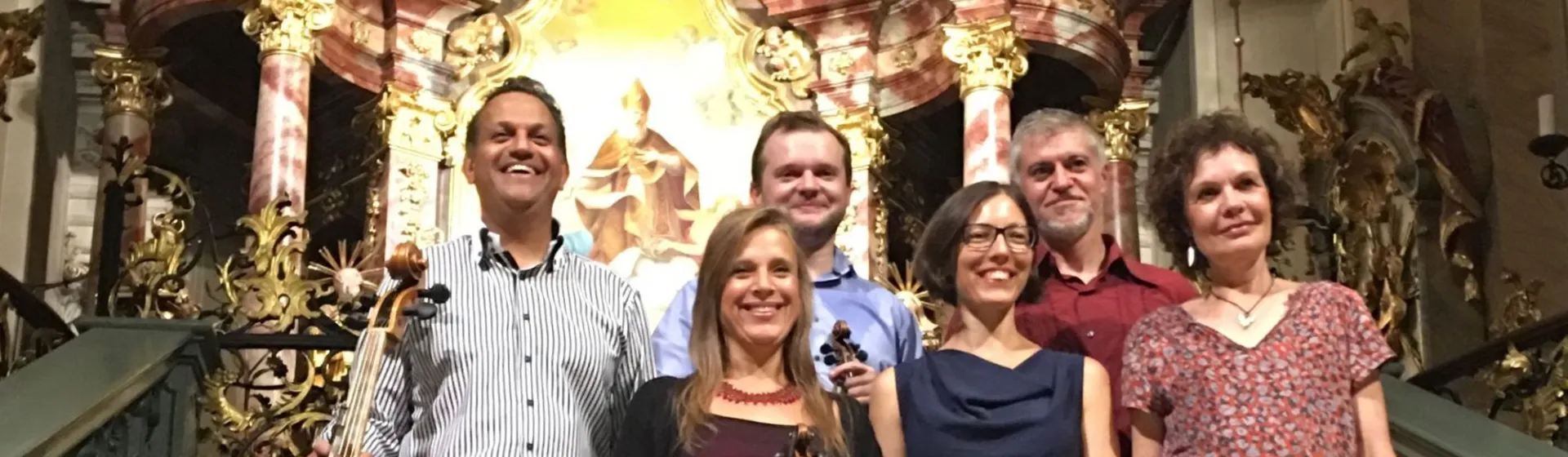
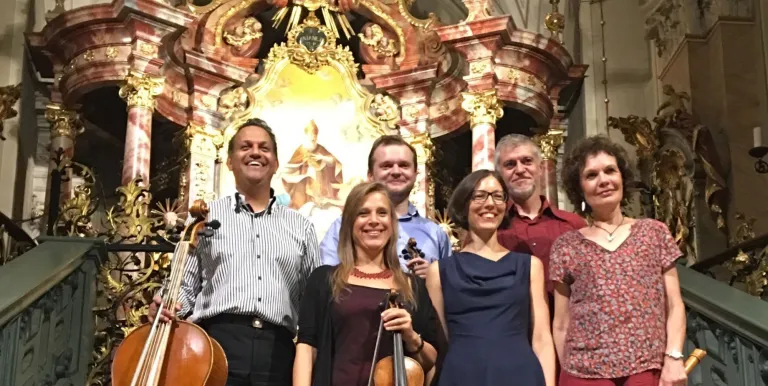
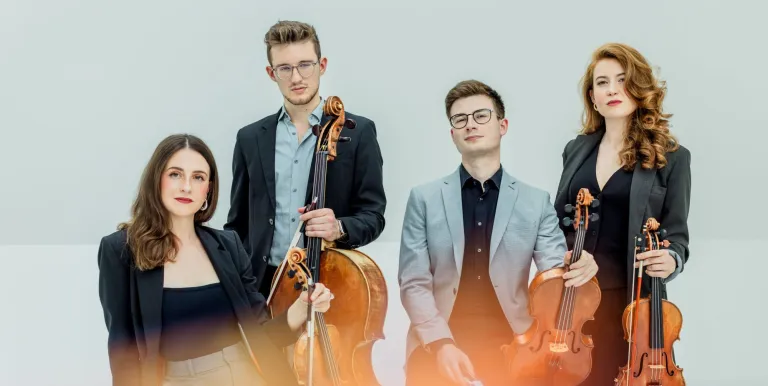
Ensemble Cantilene was formed in 2016, in part from members of the Budapest Festival Orchestra's early music ensemble and in part by independent musicians. They are led by the world-renowned Dutch recorder-player and teacher Anneke Boeke, who has taken part in countless productions in her career, appearing at festivals and recording albums in partnership with such figures as Nikolaus Harnoncourt, Gustav Leonhardt and Sir John Eliot Gardiner. She has taught at London's Guildhall School of Music and Drama and the Royal Academy of Music, where she received the title Honorary Associate of the Royal Academy. All of Ensemble Cantilene's performances, including this one, also feature a vocal soloist, thus emphasising the artists' principle that instrumental music and vocal music spring from the same source and serve identical purposes. The programme is structured around the works of three giants of the era: Monteverdi, Schütz and Bach, supplemented by other colourful and exciting figures, such as Merula and Praetorius.
Presented by: Müpa Budapest
-
Parking is free of charge for visitors with tickets to any of our paid performances on the day of the performance. Upon entering the car park, you can either scan the barcode or QR code on your concert ticket, or take a parking ticket and validate it together with your concert ticket at one of the payment machines. Either option will enable you to exit through the gates operated by the number plate recognition system. We recommend that you plan to arrive at Müpa in good time, so that you can find the ideal parking spot quickly and without difficulty and arrive at your performance comfortably. The detailed parking policy of Müpa Budapest is available here.