They step on stage as young conductors just starting out, yet this competition can catapult them to international success
The Solti International Conducting Competition, which is organised jointly by Müpa Budapest and Hungarian public media and takes place from 1 to 10 October 2026, offers promising youngsters a valuable opportunity to introduce themselves. Hungary has a rich tradition of conducting competitions that have launched the careers of many a young maestro. In this article, you will find out who they were and what has become of them since.
The first and most significant such event was the Hungarian Television International Conducting Competition, launched in 1974. Its winner was Ken-Ichiro Kobayashi, who went on to achieve enormous success and earn a flood of invitations from Europe, America and Asia. “The Budapest conducting competition marked a 180-degree turn in my career, suddenly bringing me widespread popularity,” the Japanese master once stated. Following the competition, Kobayashi became assistant conductor to János Ferencsik at the Hungarian State Concert Orchestra (now the Hungarian National Philharmonic), where he served as principal conductor for five years from 1987 and later received the title of honorary president-conductor for life.
The MÁV Symphony Orchestra also holds special significance for him as the ensemble he conducted in the final of the 1974 competition. Between 2010 and 2012, he was principle conductor and artistic director of the orchestra, and, on the 40th anniversary of his victory in 2014, he was awarded the title of honorary guest conductor. Kobayashi also has an important role to play in the Solti competition having accepted the position of chief patron.
The competition took them all the way to the Opera House
The Hungarian Television International Conducting Competition served as a springboard for several other emerging artists. Ádám Medveczky, who came second in 1974, also profited greatly: János Ferencsik subsequently appointed him conductor at the Hungarian State Opera House, and he also became a teacher at the Liszt Academy. Medveczky has often said he never liked competitions, yet he looks back on this one with gratitude, as it taught him how to realise his artistic vision even under the greatest of pressure.
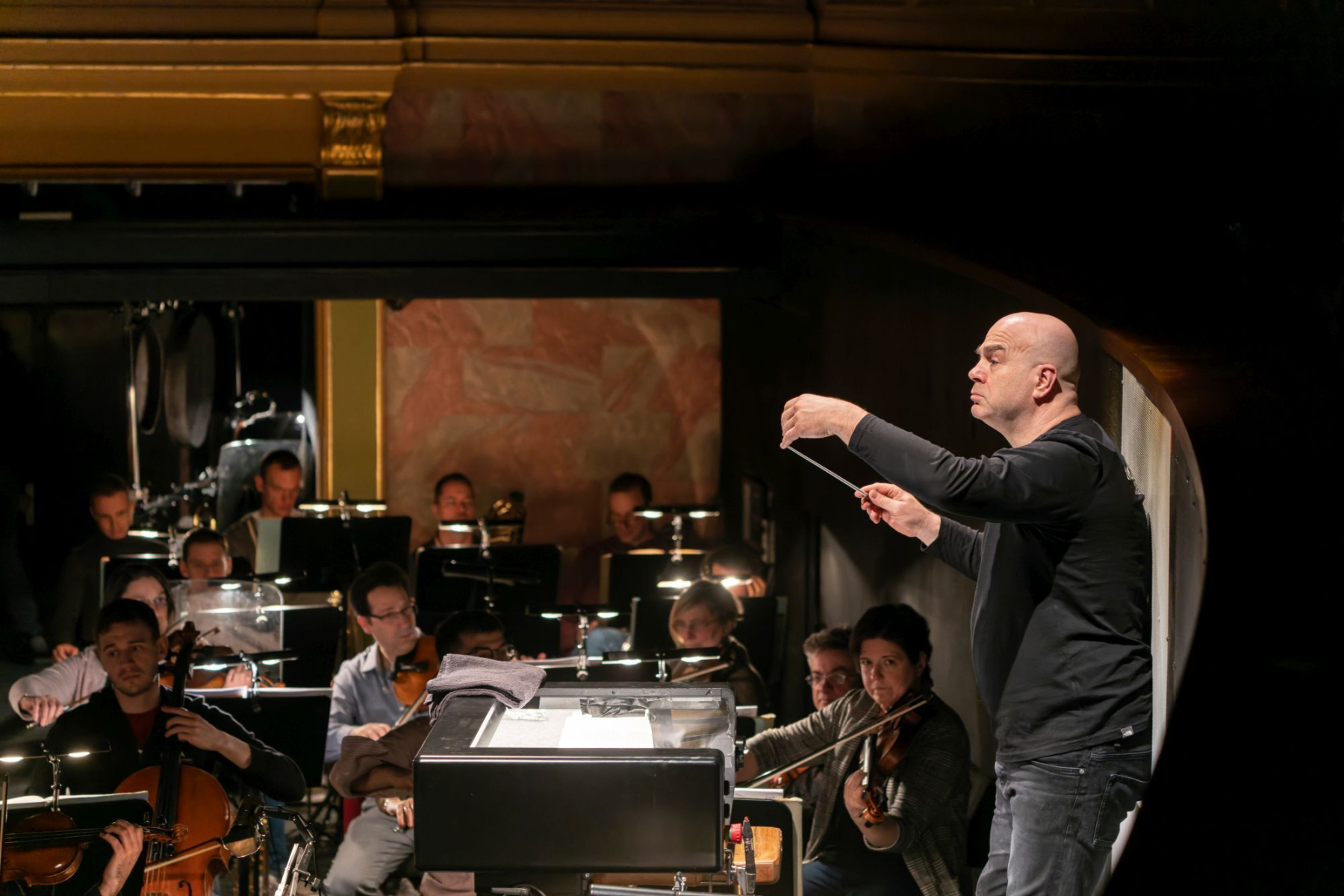
Balázs Kocsár during the rehearsals of Parsifal in 2022 © János Posztós, Müpa Budapest
The hugely popular televised competition was held on a total of ten occasions up until 1998. Balázs Kocsár was the first Hungarian conductor to win it, in 1992. This also paved the way for him to enter the Opera House, where he subsequently served as music director for six years. Gergely Kesselyák, who burst onto the scene when he earned third place in 1995, became music director of the Miskolc National Theatre in the years that followed, before becoming one of the founders of the Bartók Plus Opera Festival not long after: it was around this time that his relationship with the home of opera on Andrássy Avenue began.
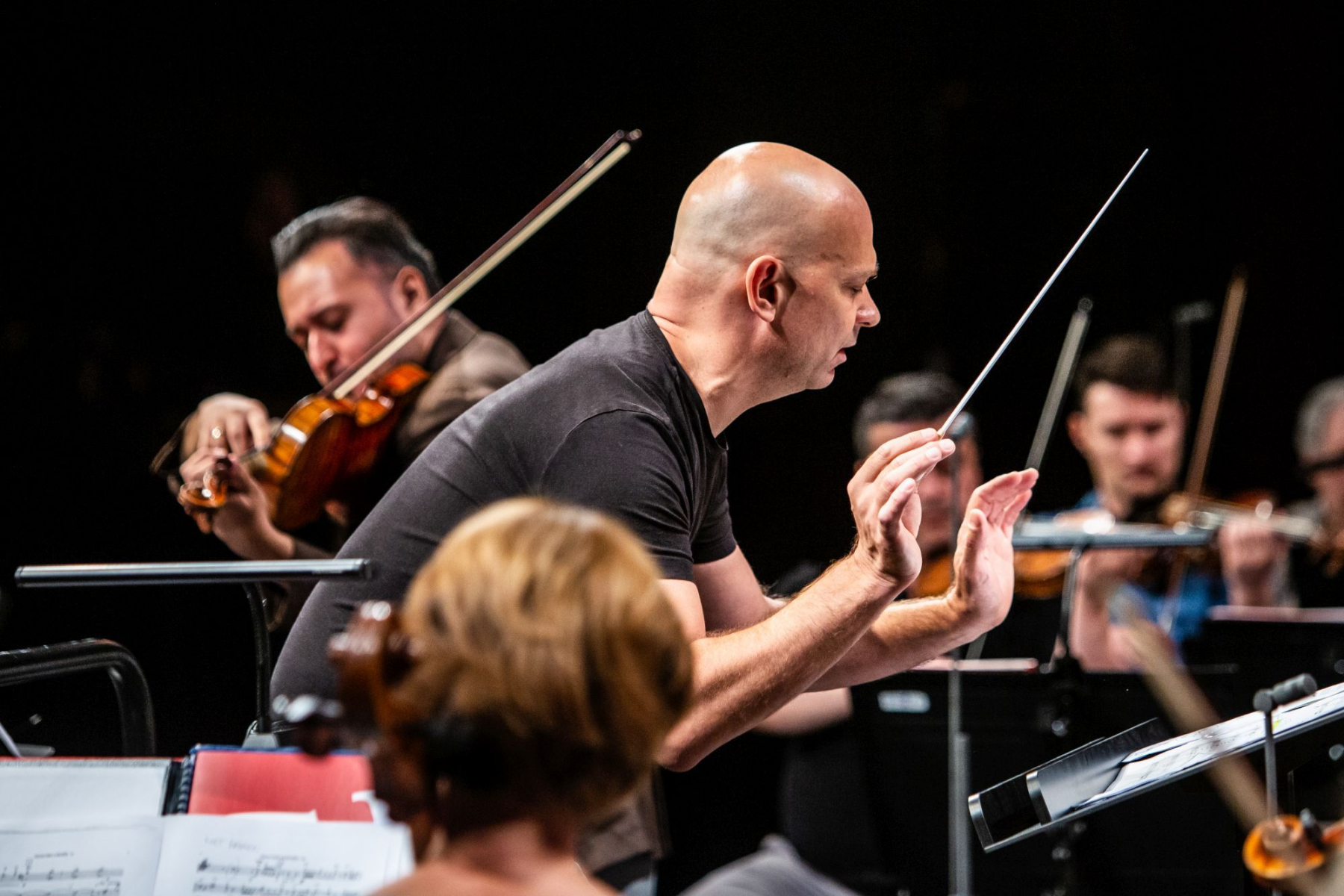
Gergely Kesselyák and the Hungarian National Philharmonic Orchestra rehearsing for their special drive-in cinema concert during the Covid-19 pandemic in 2020 © Zsófia Pályi, Müpa Budapest
The final winner of the televised series was Domonkos Héja, who not only won first prize but also the audience prize and the György Solti special award. Off the back of his victory, he received invitations from the Hungarian State Opera and his international career also took flight. He currently holds the position of music director at the Augsburg State Theatre and he has also served as music director of the Hungarian Radio Art Groups as of May 2025. His professional standing is further underlined by his invitation to serve on the international jury of the Solti competition alongside other renowned conductors such as Pinchas Steinberg (chairman), Roberto Abbado, Tibor Bogányi, Mei-Ann Chen, Mikko Franck, Roberto Paternostro, Anu Tali, and György Vashegyi.
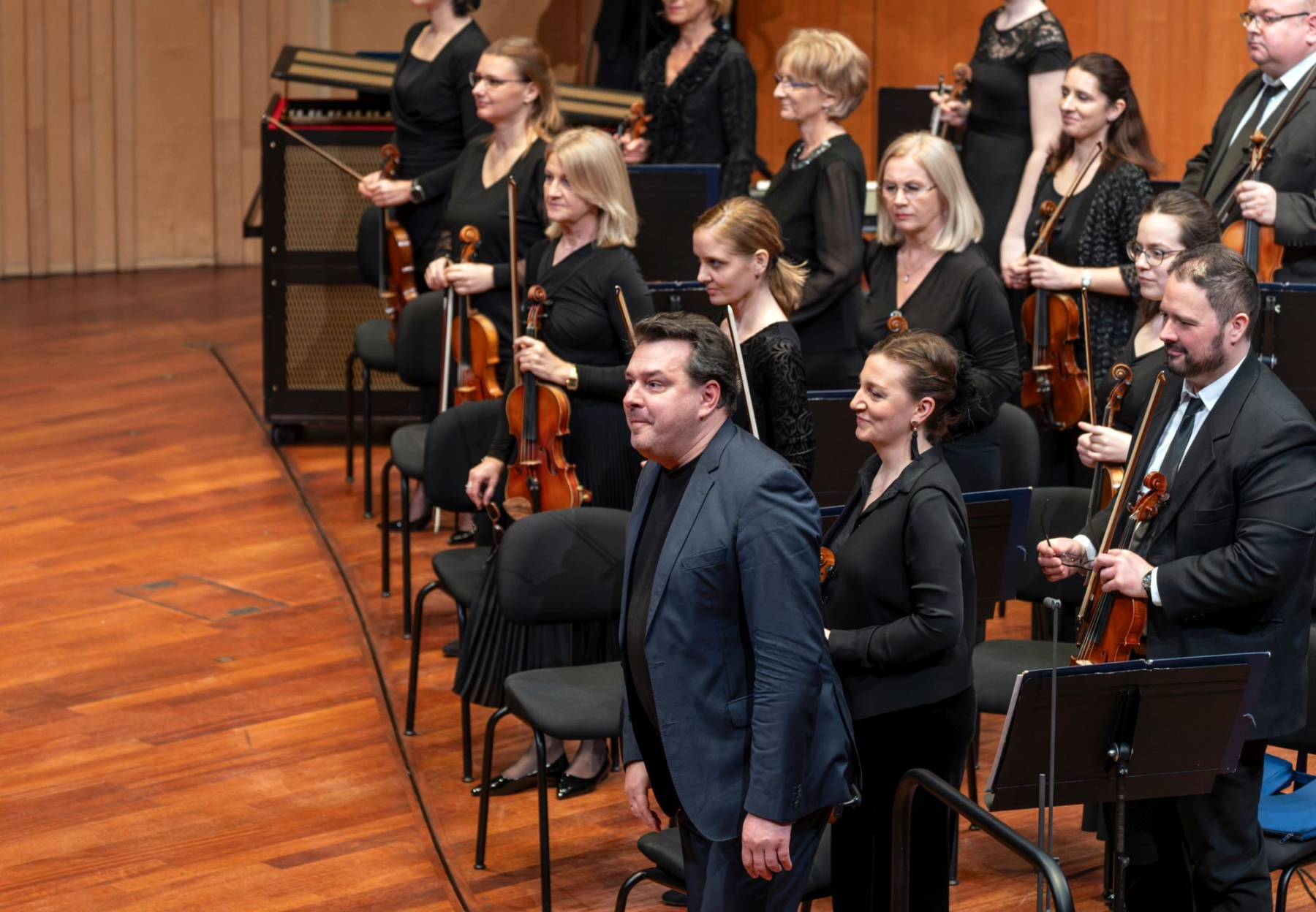
Domonkos Héja last conducted the Győr Philharmonic Orchestra for the English Marathon at Müpa © János Posztós, Müpa Budapest
He is not the only jury member whose breakthrough came courtesy of a competition: Tibor Bogányi took second place at the Jorma Panula International Conducting Competition in 2000, laying the foundations for his career in Finland. The Taiwanese-American Mei-Ann Chen made history in 2005 by becoming the first female winner of the Malko International Conducting Competition in Denmark.
New generation, new challenges
Returning to the history of competitions in Hungary, we can fortunately say that young conductors have continued to have opportunities to showcase their talent over the past decade. In 2017, they were able to take part in the one-off Maestro Solti International Conducting Competition. The Antal Doráti International Conducting Competition, which began in 2015 and has the MÁV Symphony Orchestra as its resident ensemble, is also renowned as a prestigious platform. The competition has been held four times to date, and, although no Hungarian winner has yet been crowned, Bernadett Vida performed outstandingly in 2025, making her the only Hungarian from nearly 400 competitors to reach the top six. It is also worth highlighting the Zoltán Kodály International Music Competition in Debrecen, which was announced for conductors in 2023, as well as the Ferenc Fricsay International Conducting Competition in Szeged.
Joining this list is the Solti International Conducting Competition, which primarily builds on the traditions of the long-established Hungarian Television contest. Applications are welcomed from all over the world, and the selected participants will be invited to take the podium in three of Hungary’s finest acoustic concert venues: the Kodály Centre in Pécs, the Grand Hall of the Liszt Academy, and the Béla Bartók National Concert Hall at Müpa Budapest. Each round can be followed worldwide on television and online, giving outstanding talents the chance to enjoy the spotlight and take advantage of a host of opportunities. International concert organisers, agencies and orchestra directors may also take notice as the series provides a level of coverage that is scarcely possible elsewhere. Moreover, personal meetings and new acquaintances made in the course of the competition can naturally have a major impact when it comes to the competitors’ future prospects. The stage is therefore set for the stars of tomorrow to demonstrate their exceptional skills to the world.