Digital programme booklet
-
Unknown composer
Angelus ad Virginem (traditional carol)
Unknown composer
Veni Veni Emmanuel (Advent hymn arranged by Philip Lawson)
László Fassang
Improvisation on the theme of “Veni Veni Emmanuel”
Schütz
Der Engel sprach zu den Hirten
Gibbons
This is the Record of John
Schütz
O bone Jesu, fili Mariae
J. S. Bach
Nun komm, der Heiden Heiland, BWV 659
J. S. Bach
Nun komm, der Heiden Heiland – cantata (ouverture), BWV 61
Rachmaninoff
Vespers, Op. 37 – Bogoroditse Devo
Britten
A Hymn to the Virgin
Unknown composer
Gabriel’s Message (folk carol arranged by Jim Clements)
intervalLászló Fassang
Variations on the theme of “Mennyből az angyal”
Unknown composer
Maria Durch ein Dornwald ging ( traditional carol)
Byrd
Vigilate
Poston
Jesus Christ the Apple Tree
Howard Skempton
Adam lay y-bounden
Tchaikovsky–László Fassang
The Nutcracker Suite, Op. 71a – Dance of the Reed Flutes
Tchaikovsky–László Fassang
The Nutcracker Suite, Op. 71a – Arabian Dance
Tchaikovsky–László Fassang
The Nutcracker Suite, Op. 71a – Dance of the Sugar Plum Fariy
Kodály
A Christmas Carol (Új esztendőt köszöntő – traditional Hungarian carol)
Reena Esmail
The Unexpected Early Hour
Praetorius
Joseph, Lieber Joseph mein – Magnificat Quinti Toni – In dulci jubilo
Mathias
Sir Christèmas
Featuring:
VOCES8organ László Fassang -
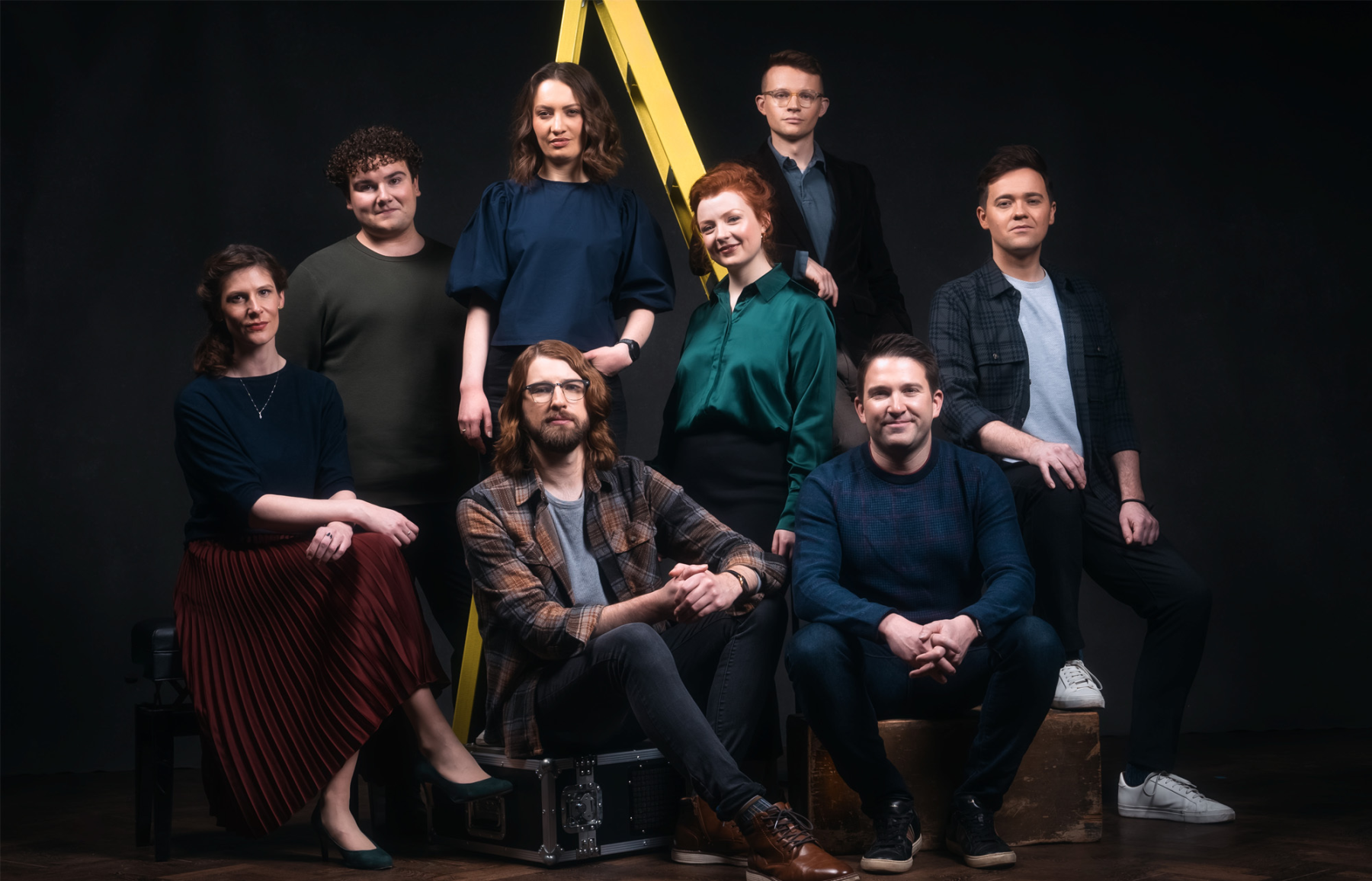
VOCES8, a Grammy-nominated vocal octet is marking its 20th anniversary with 100 concerts worldwide. Their Advent programme at Müpa Budapest will extend from Gregorian chants to modern pieces, and they have even slipped in a tribute to Kodály for the Hungarian audience. We spoke to Barnaby Smith, the ensemble’s artistic director.
In a professional ensemble, how is it possible to preserve the joy of singing and working together over such a long period?
I think you have to start by saying we all have a passion for what it is we do. Singing is a very enjoyable activity, so being able to do it every day of our lives is in itself a wonderful thing. I think there’s also a sort of special magic about singing with other people. For me, it’s a little bit like going to a dinner party every day, sitting down with seven other people who I really get along with, and the ninth member of the group is the audience. It is a very sociable and engaging experience. Of course, there are days when we are tired. So today we’re in New York. This is the end of a 22 day tour, we go home tomorrow. Everybody is not out skipping together in Central Park, but when we come to sing our concert, it is always great fun. It’s just a joy to collaborate, to create something together – that’s the beauty of it.
Do you ever sing just for your own enjoyment?
Yeah, I mean, honestly, always. When I have a concert, I never get the feeling I’m working. Tonight, for example, we are singing Beethoven and Brahms in New York with a wonderful pianist called Inon Barnatan. Even if I were on holiday, I would gladly choose this as an activity. I’m one of those people who’s always singing, so the others often play a trick on me. They will deliberately whistle or hum a famous tune in my earshot and wait to see how long it is until I start whistling or humming it myself. It’s our little game in which the joy of singing comes out.
-
Your repertoire is extremely diverse, as demonstrated by the album you released to celebrate your 20th anniversary. What inspires the group to keep exploring?
Perhaps it is that there are eight of us and everyone has different interests. So I studied Renaissance and Baroque music, while other members studied jazz vocals – that’s two opposites already. These wide-ranging interests are what makes it exciting to work together: We’re constantly exploring different uses of the voice, different forms of expression. The audience also appreciates the diversity; they don’t encounter just one style at our concerts and that’s engaging for them as well. Also, I think we’re curious people who are open to and interested in the places we go and the people we meet. We also like to stretch the boundaries of what our voices can do. It is this curiosity that takes us forward.
What makes this choral ensemble truly unique in your opinion?
Our group sits somewhere in the middle of solo singing and choral singing: So there’s that beauty of singing together, but you also get to meet all of the individuals. It is this duality that genuinely sets us apart. As a vocal group, we address the audience directly. With instrumental playing, the sound is partly created mechanically, while singing is entirely human. That is perhaps why the latter touches so many people.
You have also released two solo albums. But what makes singing together more rewarding than performing as a soloist?
Because we are creating something that’s greater than ourselves. When all of us sing together, all eight voices match, the overtones resonate as one and the result is more than eight voices together – the sound is multiplied. When you get it perfect, it is a transcendent experience. When I sing solo, I’m a vessel for the composer, but singing together is somehow even richer, it has several dimensions.
-
As you said, you are currently touring the United States. What are your thoughts on the openness and receptiveness to music of audiences in different countries?
While we mostly encountered the audience at concerts 10 to 15 years ago, now lots of people know us from YouTube and Spotify. In America, they sometimes cheer before we’ve even sung a note. I think people use our music for different purposes: older people for a sense of solace, while younger generations seek inspiration from it. Different cultures are also interesting: the German audience is very reserved and attentive, while the Americans – as I have already mentioned – are hugely enthusiastic from the word go. In Asia – Japan, for instance – the audience is very respectful to the extent that we are not sure they are liking what they are hearing until the end, when there is an explosion of emotion. Every experience is different and every one is valuable.
You have made a lot of recordings. Is working in a studio very different to performing in concert?
I would say hugely different. In the concert hall, we aim to fill the space with our voices, whereas the microphone is just a few centimetres away in the studio – it requires a different kind of concentration and different technique. In concert, the reaction of the audience also influences the performance, while we only pay attention to each other in the studio. The studio allows us to hear minute details and make corrections if necessary, but we have to be careful not to become too much of a “studio band”, you have to sing much more freely live.
Teaching is also important to you and 40,000 people participate in the group’s education programme each year. Why do you consider musical training to be of particular importance?
Because music is good for the brain, it helps your development no matter how old you are, but especially for young people. Studies have shown that children who participate in artistic activity also perform better in other subjects. The other thing is that singing is a form of self-expression. It teaches young people how to communicate and work together with others. This is of enormous value to society. Sadly, most places don’t provide enough support for the arts, so we consider ourselves very lucky to have received the training we did. We now want to give something back and pass on our knowledge to the next generation.
You launched online festivals and training courses after the pandemic. Why has this become so important?
The pandemic was a really difficult time, but it also encouraged us to digitise. The classical music industry was playing catch-up in this respect. We can reach as many people with a YouTube video in a week as we can in a year in person, or even more. Some 80 million people now listen to and watch our recordings online each year! Our digital presence not only reaches a wider audience but also provides new income streams, which is essential to keeping the genre alive.
-
How did you select the pieces for the Advent concert in Budapest?
We always set out to select music we like. If we are enjoying what we are singing, the audience feels it too. It is important to me that there is a broad range of music and that it should have a sense of narrative arc or story. I try not to tie us down too much into really specialist themes because that often cuts out a lot of good music. This time, too, I tried to put together a varied programme that includes some familiar and some new melodies – both to us and to the audience.
Which of these do you find particularly exciting?
Well, because we’re singing with an organ, there’s some stuff in there that we can’t normally do by ourselves. Bach is my favourite, for example, but, without accompaniment, we can only perform a few motets. Now, however, we will be able to sing other Bach works. The programme will also feature unusual English choral works, such as This is the Record of John by Gibbons, which can also only be performed with an organ. The programme extends from Gregorian chants to modern music, so it will also be a musical journey for the audience.
Zoltán Kodály’s New Year’s Greeting will also be heard. What makes Kodály’s music so inspiring?
To be honest, I don't know much of his music, but what we have sung by him – Missa Brevis, for instance – I have liked a lot. It is always uplifting to see how joyfully an audience reacts when they hear us perform music by their own composers. It is a kind of cultural gift that we very humbly offer in the hope it is accepted with joy by the Hungarian audience.
Will you be singing in Hungarian?
Yes, we are planning to. We will maybe need some help with the language, but we will try!
What are your plans for next season?
We won’t be stopping for a second, there are lots of tours waiting for us around the world – from Sydney to Los Angeles – and we are recording new albums. Now, for example, we’re working on a collaboration album with an amazing Swedish group called The Ringmasters, and we are about to start recording our next album. In other words, we have a lot of interesting projects to look forward to.
Interview conducted by Gerda Seres
-
“VOCES8’s gorgeous sound and impeccable ensemble are of the highest quality,” BBC Music Magazine wrote of the group. The Grammy-nominated British vocal ensemble is proud to inspire people with its music, and to share the joy of singing with them. The octet tours extensively worldwide and boasts a remarkably broad repertoire from Gregorian chants to modern, experimental works.
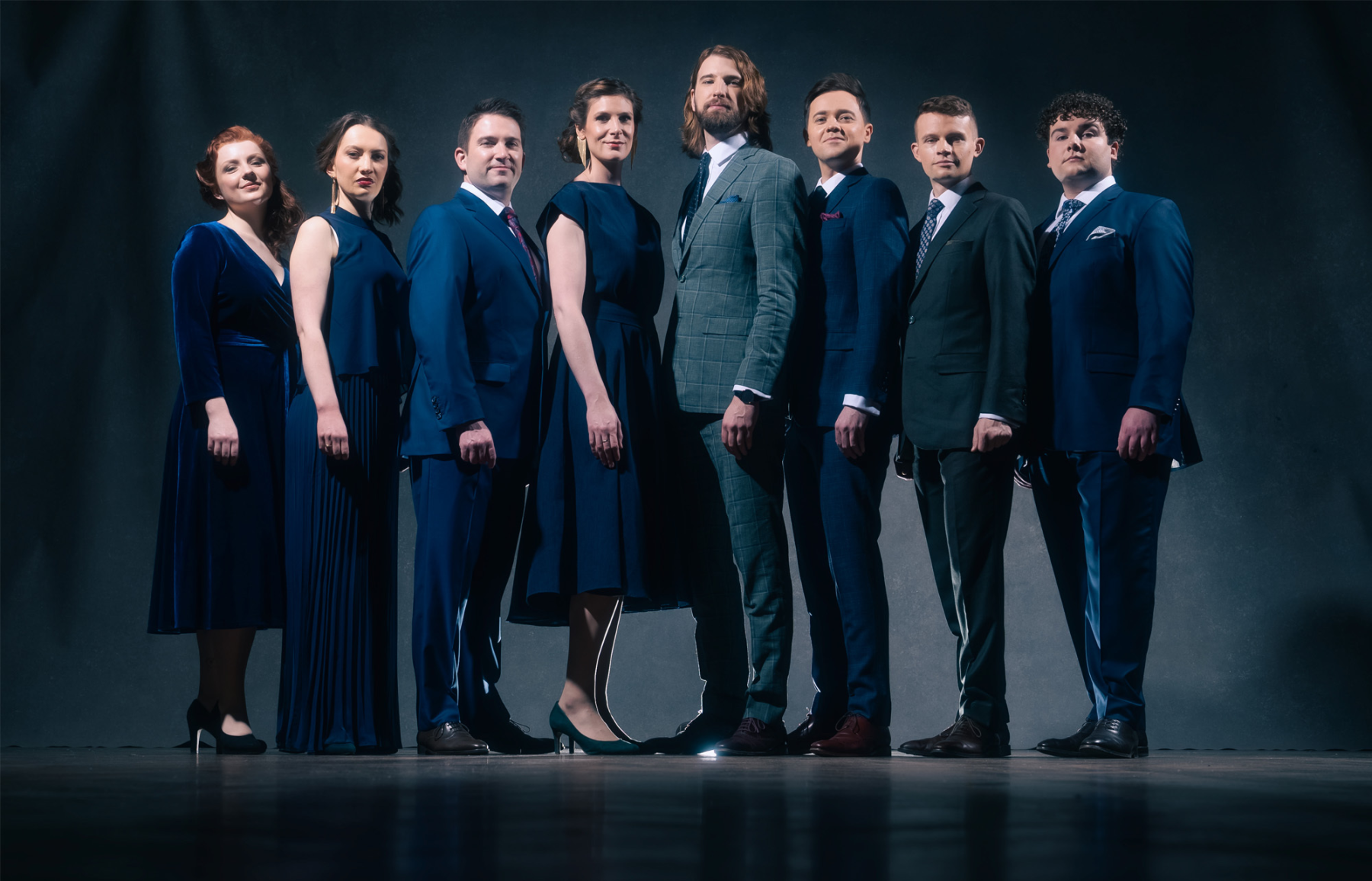
They regularly perform with the world’s leading orchestras and soloists. Since their formation in 2005, they have appeared at countless prestigious venues, including Wigmore Hall, the Elbphilharmonie in Hamburg, the Berlin Philharmonie, the Konzerthaus in Vienna, and the Sydney Opera House. Versatility and diversity of expression play a defining role in the ensemble’s performing and educational philosophy, which they share both online and in person.
-
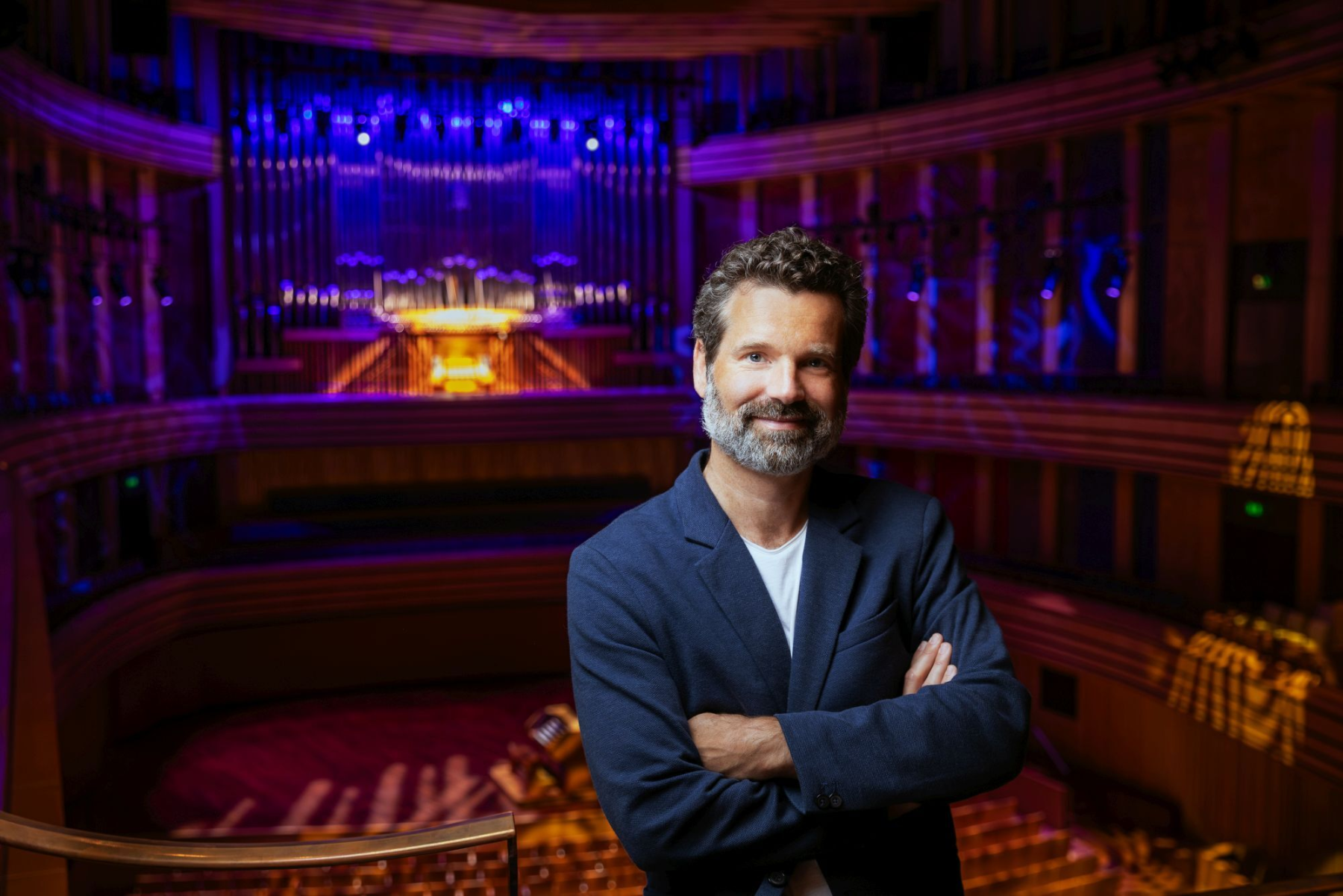
László Fassang is one of the most versatile organists of his generation. A musician of exceptional gifts, particularly when it comes to improvisation, his musical world embraces classical and experimental contemporary genres in equal measure, while he also performs on a wide range of keyboard instruments from the piano to the Hammond organ.
He earned his diplomas at the Liszt Academy in Budapest and at the Conservatoire de Paris. Of his competition successes, the improvisation grand prize of the Calgary International Organ Competition and the first prize and audience prize of the Grand Prix de Chartres stand out. From 2004 to 2024, he taught at the Musikene Higher School of Music in San Sebastián, before taking on a teaching role at the Liszt Academy. Since 2022, he has jointly led the “Zenélj szabadon” (Play Music Freely) movement, organising improvisation workshops and lectures together with Júlia Kepes. He is currently resident organist at Müpa Budapest and a professor at the Conservatoire de Paris. His work was recognised with the Liszt Prize and Prima Prize in 2006, the Gramofon Prize in 2013, and the title of Meritorious Artist of Hungary in 2016.
Change
We regret to inform you that Pétur Sakari has cancelled his performance due to illness. Our resident organist, László Fassang will replace him at the concert.
Thank you for your understanding.
-
Unknown composer
Angelus ad Virginem (traditional carol)
Unknown composer
Veni Veni Emmanuel (Advent hymn arranged by Philip Lawson)
László Fassang
Improvisation on the theme of “Veni Veni Emmanuel”
Schütz
Der Engel sprach zu den Hirten
Gibbons
This is the Record of John
Schütz
O bone Jesu, fili Mariae
J. S. Bach
Nun komm, der Heiden Heiland, BWV 659
J. S. Bach
Nun komm, der Heiden Heiland – cantata (ouverture), BWV 61
Rachmaninoff
Vespers, Op. 37 – Bogoroditse Devo
Britten
A Hymn to the Virgin
Unknown composer
Gabriel’s Message (folk carol arranged by Jim Clements)
intervalLászló Fassang
Variations on the theme of “Mennyből az angyal”
Unknown composer
Maria Durch ein Dornwald ging ( traditional carol)
Byrd
Vigilate
Poston
Jesus Christ the Apple Tree
Howard Skempton
Adam lay y-bounden
Tchaikovsky–László Fassang
The Nutcracker Suite, Op. 71a – Dance of the Reed Flutes
Tchaikovsky–László Fassang
The Nutcracker Suite, Op. 71a – Arabian Dance
Tchaikovsky–László Fassang
The Nutcracker Suite, Op. 71a – Dance of the Sugar Plum Fariy
Kodály
A Christmas Carol (Új esztendőt köszöntő – traditional Hungarian carol)
Reena Esmail
The Unexpected Early Hour
Praetorius
Joseph, Lieber Joseph mein – Magnificat Quinti Toni – In dulci jubilo
Mathias
Sir Christèmas
Featuring:
VOCES8organ László Fassang -
VOCES8, a Grammy-nominated vocal octet is marking its 20th anniversary with 100 concerts worldwide. Their Advent programme at Müpa Budapest will extend from Gregorian chants to modern pieces, and they have even slipped in a tribute to Kodály for the Hungarian audience. We spoke to Barnaby Smith, the ensemble’s artistic director.
In a professional ensemble, how is it possible to preserve the joy of singing and working together over such a long period?
I think you have to start by saying we all have a passion for what it is we do. Singing is a very enjoyable activity, so being able to do it every day of our lives is in itself a wonderful thing. I think there’s also a sort of special magic about singing with other people. For me, it’s a little bit like going to a dinner party every day, sitting down with seven other people who I really get along with, and the ninth member of the group is the audience. It is a very sociable and engaging experience. Of course, there are days when we are tired. So today we’re in New York. This is the end of a 22 day tour, we go home tomorrow. Everybody is not out skipping together in Central Park, but when we come to sing our concert, it is always great fun. It’s just a joy to collaborate, to create something together – that’s the beauty of it.
Do you ever sing just for your own enjoyment?
Yeah, I mean, honestly, always. When I have a concert, I never get the feeling I’m working. Tonight, for example, we are singing Beethoven and Brahms in New York with a wonderful pianist called Inon Barnatan. Even if I were on holiday, I would gladly choose this as an activity. I’m one of those people who’s always singing, so the others often play a trick on me. They will deliberately whistle or hum a famous tune in my earshot and wait to see how long it is until I start whistling or humming it myself. It’s our little game in which the joy of singing comes out.
-
Your repertoire is extremely diverse, as demonstrated by the album you released to celebrate your 20th anniversary. What inspires the group to keep exploring?
Perhaps it is that there are eight of us and everyone has different interests. So I studied Renaissance and Baroque music, while other members studied jazz vocals – that’s two opposites already. These wide-ranging interests are what makes it exciting to work together: We’re constantly exploring different uses of the voice, different forms of expression. The audience also appreciates the diversity; they don’t encounter just one style at our concerts and that’s engaging for them as well. Also, I think we’re curious people who are open to and interested in the places we go and the people we meet. We also like to stretch the boundaries of what our voices can do. It is this curiosity that takes us forward.
What makes this choral ensemble truly unique in your opinion?
Our group sits somewhere in the middle of solo singing and choral singing: So there’s that beauty of singing together, but you also get to meet all of the individuals. It is this duality that genuinely sets us apart. As a vocal group, we address the audience directly. With instrumental playing, the sound is partly created mechanically, while singing is entirely human. That is perhaps why the latter touches so many people.
You have also released two solo albums. But what makes singing together more rewarding than performing as a soloist?
Because we are creating something that’s greater than ourselves. When all of us sing together, all eight voices match, the overtones resonate as one and the result is more than eight voices together – the sound is multiplied. When you get it perfect, it is a transcendent experience. When I sing solo, I’m a vessel for the composer, but singing together is somehow even richer, it has several dimensions.
-
As you said, you are currently touring the United States. What are your thoughts on the openness and receptiveness to music of audiences in different countries?
While we mostly encountered the audience at concerts 10 to 15 years ago, now lots of people know us from YouTube and Spotify. In America, they sometimes cheer before we’ve even sung a note. I think people use our music for different purposes: older people for a sense of solace, while younger generations seek inspiration from it. Different cultures are also interesting: the German audience is very reserved and attentive, while the Americans – as I have already mentioned – are hugely enthusiastic from the word go. In Asia – Japan, for instance – the audience is very respectful to the extent that we are not sure they are liking what they are hearing until the end, when there is an explosion of emotion. Every experience is different and every one is valuable.
You have made a lot of recordings. Is working in a studio very different to performing in concert?
I would say hugely different. In the concert hall, we aim to fill the space with our voices, whereas the microphone is just a few centimetres away in the studio – it requires a different kind of concentration and different technique. In concert, the reaction of the audience also influences the performance, while we only pay attention to each other in the studio. The studio allows us to hear minute details and make corrections if necessary, but we have to be careful not to become too much of a “studio band”, you have to sing much more freely live.
Teaching is also important to you and 40,000 people participate in the group’s education programme each year. Why do you consider musical training to be of particular importance?
Because music is good for the brain, it helps your development no matter how old you are, but especially for young people. Studies have shown that children who participate in artistic activity also perform better in other subjects. The other thing is that singing is a form of self-expression. It teaches young people how to communicate and work together with others. This is of enormous value to society. Sadly, most places don’t provide enough support for the arts, so we consider ourselves very lucky to have received the training we did. We now want to give something back and pass on our knowledge to the next generation.
You launched online festivals and training courses after the pandemic. Why has this become so important?
The pandemic was a really difficult time, but it also encouraged us to digitise. The classical music industry was playing catch-up in this respect. We can reach as many people with a YouTube video in a week as we can in a year in person, or even more. Some 80 million people now listen to and watch our recordings online each year! Our digital presence not only reaches a wider audience but also provides new income streams, which is essential to keeping the genre alive.
-
How did you select the pieces for the Advent concert in Budapest?
We always set out to select music we like. If we are enjoying what we are singing, the audience feels it too. It is important to me that there is a broad range of music and that it should have a sense of narrative arc or story. I try not to tie us down too much into really specialist themes because that often cuts out a lot of good music. This time, too, I tried to put together a varied programme that includes some familiar and some new melodies – both to us and to the audience.
Which of these do you find particularly exciting?
Well, because we’re singing with an organ, there’s some stuff in there that we can’t normally do by ourselves. Bach is my favourite, for example, but, without accompaniment, we can only perform a few motets. Now, however, we will be able to sing other Bach works. The programme will also feature unusual English choral works, such as This is the Record of John by Gibbons, which can also only be performed with an organ. The programme extends from Gregorian chants to modern music, so it will also be a musical journey for the audience.
Zoltán Kodály’s New Year’s Greeting will also be heard. What makes Kodály’s music so inspiring?
To be honest, I don't know much of his music, but what we have sung by him – Missa Brevis, for instance – I have liked a lot. It is always uplifting to see how joyfully an audience reacts when they hear us perform music by their own composers. It is a kind of cultural gift that we very humbly offer in the hope it is accepted with joy by the Hungarian audience.
Will you be singing in Hungarian?
Yes, we are planning to. We will maybe need some help with the language, but we will try!
What are your plans for next season?
We won’t be stopping for a second, there are lots of tours waiting for us around the world – from Sydney to Los Angeles – and we are recording new albums. Now, for example, we’re working on a collaboration album with an amazing Swedish group called The Ringmasters, and we are about to start recording our next album. In other words, we have a lot of interesting projects to look forward to.
Interview conducted by Gerda Seres
-
“VOCES8’s gorgeous sound and impeccable ensemble are of the highest quality,” BBC Music Magazine wrote of the group. The Grammy-nominated British vocal ensemble is proud to inspire people with its music, and to share the joy of singing with them. The octet tours extensively worldwide and boasts a remarkably broad repertoire from Gregorian chants to modern, experimental works.
They regularly perform with the world’s leading orchestras and soloists. Since their formation in 2005, they have appeared at countless prestigious venues, including Wigmore Hall, the Elbphilharmonie in Hamburg, the Berlin Philharmonie, the Konzerthaus in Vienna, and the Sydney Opera House. Versatility and diversity of expression play a defining role in the ensemble’s performing and educational philosophy, which they share both online and in person.
-
László Fassang is one of the most versatile organists of his generation. A musician of exceptional gifts, particularly when it comes to improvisation, his musical world embraces classical and experimental contemporary genres in equal measure, while he also performs on a wide range of keyboard instruments from the piano to the Hammond organ.
He earned his diplomas at the Liszt Academy in Budapest and at the Conservatoire de Paris. Of his competition successes, the improvisation grand prize of the Calgary International Organ Competition and the first prize and audience prize of the Grand Prix de Chartres stand out. From 2004 to 2024, he taught at the Musikene Higher School of Music in San Sebastián, before taking on a teaching role at the Liszt Academy. Since 2022, he has jointly led the “Zenélj szabadon” (Play Music Freely) movement, organising improvisation workshops and lectures together with Júlia Kepes. He is currently resident organist at Müpa Budapest and a professor at the Conservatoire de Paris. His work was recognised with the Liszt Prize and Prima Prize in 2006, the Gramofon Prize in 2013, and the title of Meritorious Artist of Hungary in 2016.