
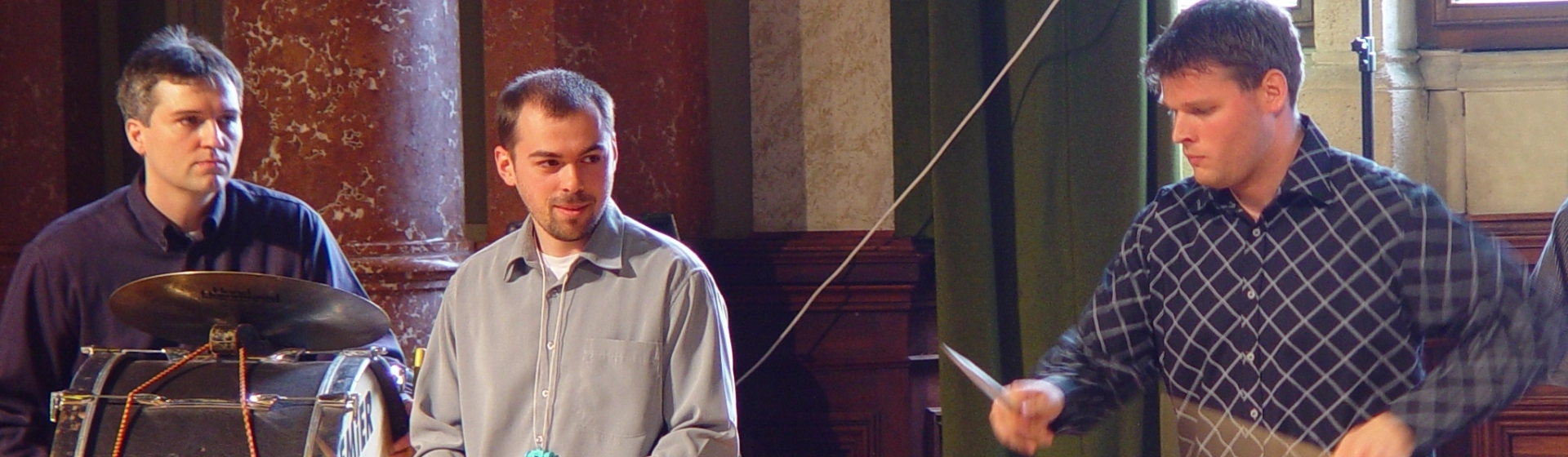
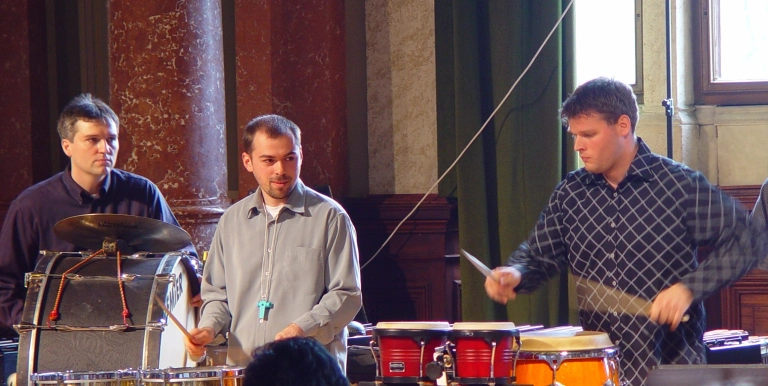
Excerpts from works by Marcello, Mozart, Haydn, Ferenc Farkas and Scott Joplin
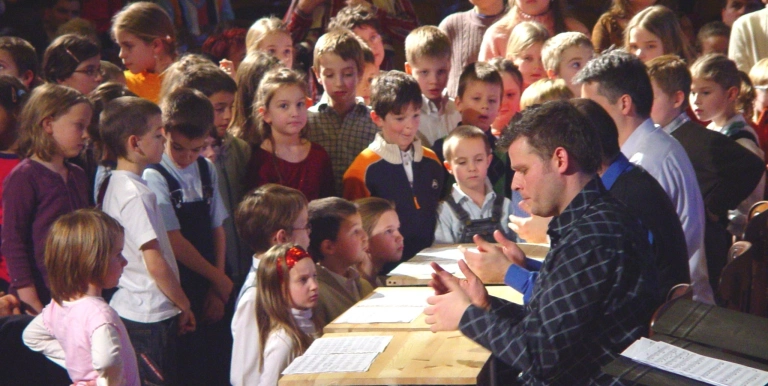
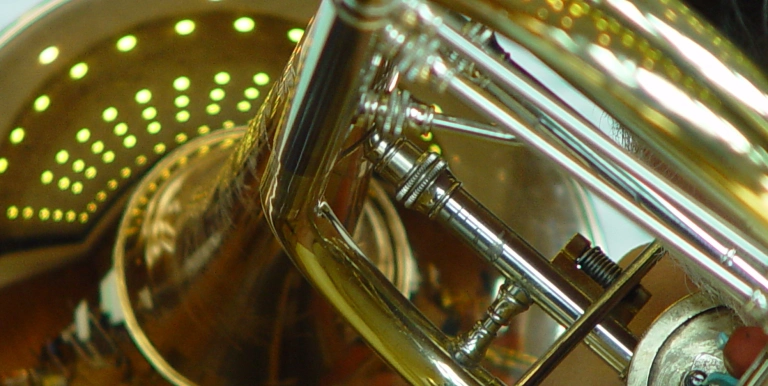
An instrument only comes to life when it is played; wind instruments do so when we blow into them, breathing soul into them. Sound is produced as an extension of human breath, while the instrument itself operates according to very simple natural laws. By blowing skilfully on a blade of grass held between our hands, putting our hands together and imitating an owl’s hoot, or simply blowing into a bottle, we too can create a wind instrument. Of course, the wind instruments in a symphony orchestra are considerably more complex than this, having gained their present form over several centuries, and each has several variants.
The flute has deeper and higher-pitched versions, the E-flat clarinet fits into a small rucksack, and the oboe (from a French word originally meaning “high-pitched wood”) has a deeper-pitched relative with a pear-shaped bell known as the cor anglais. The bassoon’s big brother is the contrabassoon, capable of producing sounds that are so deep that we almost hear the air itself vibrate. And these are only the woodwinds. The brass instruments can produce even more powerful sounds, and so can clearly be heard outdoors and from afar: the trumpet was used in battle to sound an alarm or a retreat, the postman would announce the arrival of a letter with a blow on his post-horn, and game would be driven from cover on forest hunts using blasts of the huntsman’s horn. On church processions the religious songs of the faithful would be accompanied by clarion calls, while in sports stadiums brass bands strike up team songs and national anthems. This presentation affords us the chance to meet the members of a vast extended family, and to enjoy a wide variety of beautiful music.
Presented by: Hungarian National Philharmonic

-
We wish to inform you that in the event that Müpa Budapest's underground garage and outdoor car park are operating at full capacity, it is advisable to plan for increased waiting times when you arrive. In order to avoid this, we recommend that you depart for our events in time, so that you you can find the ideal parking spot quickly and smoothly and arrive for our performance in comfort. The Müpa Budapest underground garage gates will be operated by an automatic number plate recognition system. Parking is free of charge for visitors with tickets to any of our paid performances on that given day. The detailed parking policy of Müpa Budapest is available here.