-
Featuring:
dance Péter Holoda
Gergő Cserháti
Balázs Buda
Emma Lőrincz
Zsolt Szlavoszky
Eoin Mac Donncha
Latasha Pugh
Léna Árvay-Vasscello Endre KertészCreators:
music Norman Levylighting Máté Vajdaset design Dániel Lakos, Tervhivatal/Planbureauchoreography and concept FrenÁkcostume designer Victoria Frenakalpine technology György Zoltaiaudio technician András Horváthconsultant Dr. Nóra Horváth -
Born in Budapest, Pál Frenák’s childhood was marked by the fact that his parents were deaf and hard of hearing, so the first means of expression he learned was sign language, which made him especially sensitive to facial expressions and gestures. In the mid-1980s he moved to Paris, where he worked with several leading figures in classical ballet and studied the dance technique of Cunningham and Limón. Among the sister arts, he was greatly influenced by the films of Pier Paolo Pasolini, the paintings of Francis Bacon and the writings of French philosopher Gilles Deleuze. In 1998, he spent more than six months in Japan – an experience that had a profound impact on his art. In 1999, enrolling young Hungarian dancers, he transformed the by then ten-year-old Compagnie Pal Frenak into a Hungarian-French company, which was based in Paris and Budapest and instigated a unique dance idiom. The important features of the latter are the integrated use of facial expressions, sign language and body movement, and the incorporation of the sister arts (circus, theatre, fashion show, contemporary music).
This is not the first time that Pál Frenák has employed a new cast and introduced new experiences to revisit an earlier work of his. And this is exactly what is happening now, as he re-launches his emblematic piece Birdie exactly ten years after its premiere. Check out the official trailer of the performance here:
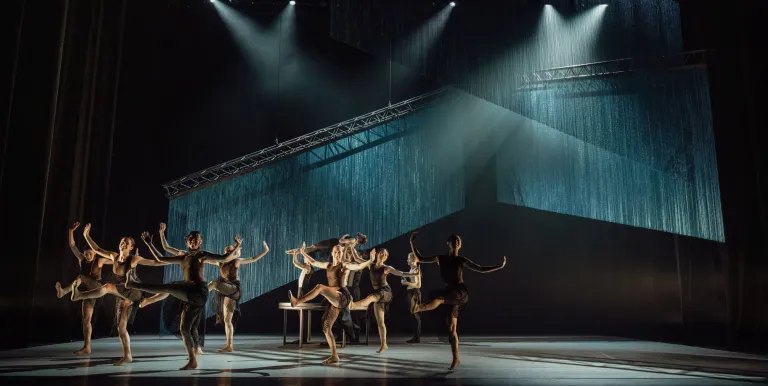
The concept of borders is one of the most essential – if not the most essential – themes in FrenÁk’s diverse creative universe. In Birdie, the artist once again reflects on the fluid boundaries where confinement and isolation meet freedom and endlessness, with the walls that rise within and around us, as well as the possibilities for overcoming them, also featuring into the production. This choreography developed for seven FrenÁk Company dancers accompanied by a cellist raises questions that can be asked regardless of time and space or cultural and social background, while also boldly addressing the barriers that separate and connect us.
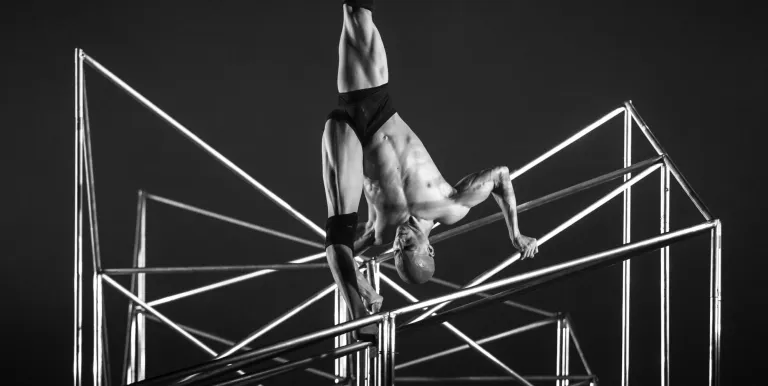
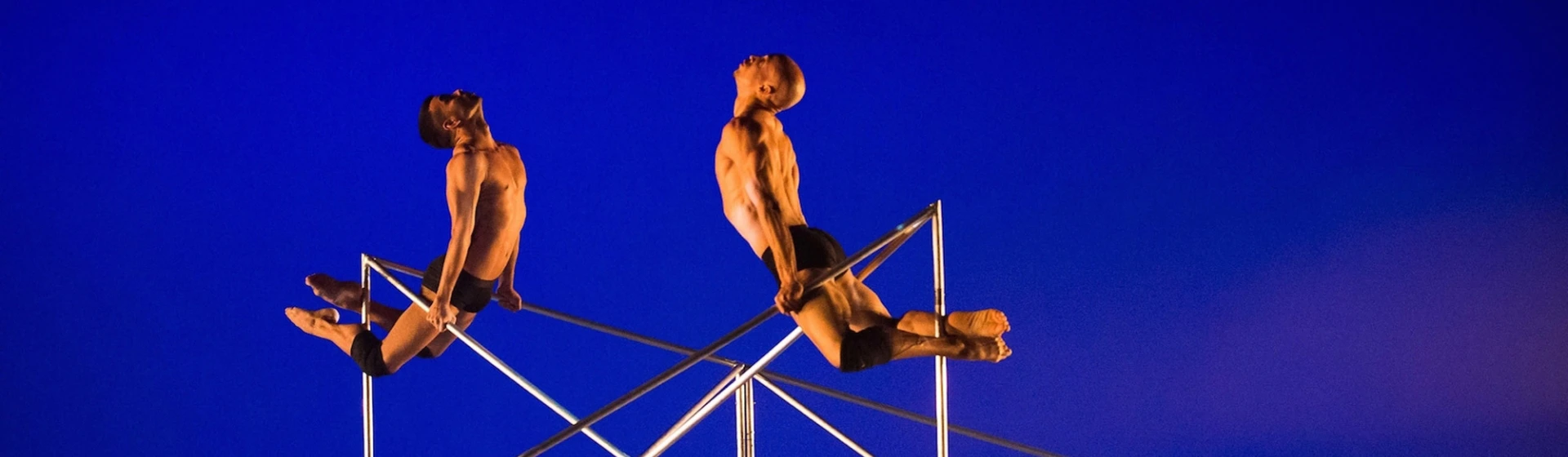
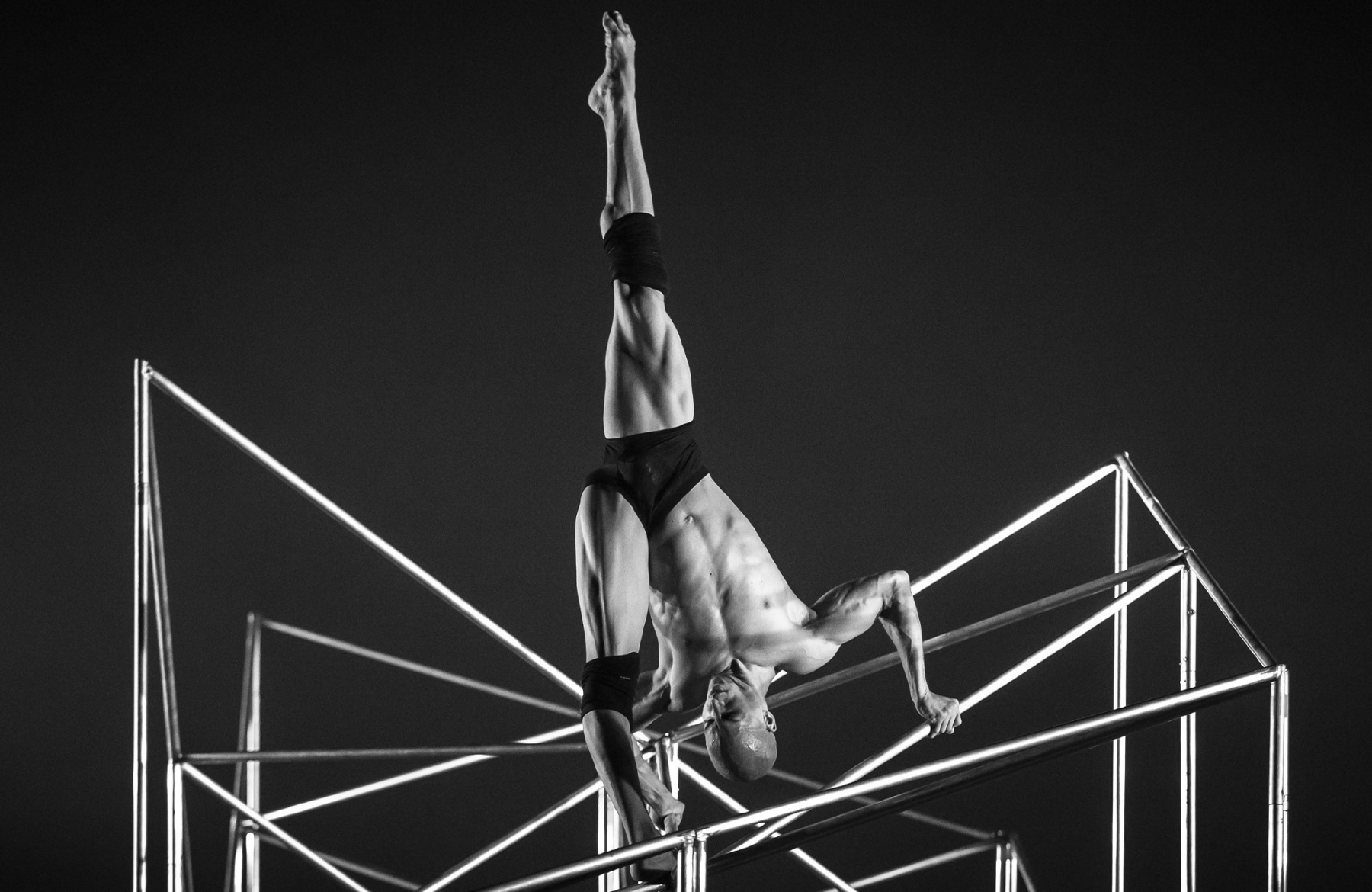
In collaboration with the architects at Planbureau, Frenák has created a special set for this dance piece, a freely navigable metal labyrinth inspired by the innovative spatial puzzle game Logifaces and built from elements nearly two and a half metres in height.
In Frenák’s view, “Birdie is a physical and mental escape from a limited, impossible state, a search for a way out and self-realisation. Everyone has at one time or another found themselves in a life situation that appeared to offer no way out. We need to look deep inside ourselves to identify where the spiritual, intellectual and physical strength that allows us to move forward and find new opportunities lies!”
The premiere was an event of the Budapest Spring Festival, presented by Müpa Budapest and National Dance Theatre.
-
Featuring:
dance Péter Holoda
Gergő Cserháti
Balázs Buda
Emma Lőrincz
Zsolt Szlavoszky
Eoin Mac Donncha
Latasha Pugh
Léna Árvay-Vasscello Endre KertészCreators:
music Norman Levylighting Máté Vajdaset design Dániel Lakos, Tervhivatal/Planbureauchoreography and concept FrenÁkcostume designer Victoria Frenakalpine technology György Zoltaiaudio technician András Horváthconsultant Dr. Nóra Horváth -
Born in Budapest, Pál Frenák’s childhood was marked by the fact that his parents were deaf and hard of hearing, so the first means of expression he learned was sign language, which made him especially sensitive to facial expressions and gestures. In the mid-1980s he moved to Paris, where he worked with several leading figures in classical ballet and studied the dance technique of Cunningham and Limón. Among the sister arts, he was greatly influenced by the films of Pier Paolo Pasolini, the paintings of Francis Bacon and the writings of French philosopher Gilles Deleuze. In 1998, he spent more than six months in Japan – an experience that had a profound impact on his art. In 1999, enrolling young Hungarian dancers, he transformed the by then ten-year-old Compagnie Pal Frenak into a Hungarian-French company, which was based in Paris and Budapest and instigated a unique dance idiom. The important features of the latter are the integrated use of facial expressions, sign language and body movement, and the incorporation of the sister arts (circus, theatre, fashion show, contemporary music).
This is not the first time that Pál Frenák has employed a new cast and introduced new experiences to revisit an earlier work of his. And this is exactly what is happening now, as he re-launches his emblematic piece Birdie exactly ten years after its premiere. Check out the official trailer of the performance here:
The concept of borders is one of the most essential – if not the most essential – themes in FrenÁk’s diverse creative universe. In Birdie, the artist once again reflects on the fluid boundaries where confinement and isolation meet freedom and endlessness, with the walls that rise within and around us, as well as the possibilities for overcoming them, also featuring into the production. This choreography developed for seven FrenÁk Company dancers accompanied by a cellist raises questions that can be asked regardless of time and space or cultural and social background, while also boldly addressing the barriers that separate and connect us.
In collaboration with the architects at Planbureau, Frenák has created a special set for this dance piece, a freely navigable metal labyrinth inspired by the innovative spatial puzzle game Logifaces and built from elements nearly two and a half metres in height.
In Frenák’s view, “Birdie is a physical and mental escape from a limited, impossible state, a search for a way out and self-realisation. Everyone has at one time or another found themselves in a life situation that appeared to offer no way out. We need to look deep inside ourselves to identify where the spiritual, intellectual and physical strength that allows us to move forward and find new opportunities lies!”
The premiere was an event of the Budapest Spring Festival, presented by Müpa Budapest and National Dance Theatre.